Lisbon’s famous funiculars: Bica, Gloria, Lavra, spectacular viewpoints & ‘Art in movement’

The funiculars Bica, Gloria and Lavra in Lisbon taking you up to spectacular viewpoints (miradouros).

Bica funicular silver tourist information

The (normally yellow) and famous tourist attraction funicular in Bica  (YouTube)

Artist Alexandre Farto  covered the outside of the funicular with mirror-acrylic, called it ‘Espectro’  (Spectre) and pays tribute to the neighbourhood that is reflected in the lift during the journey, as if it were a film…. (From January – June 2010). Amazing!

Bica funicular silver March 2010 3 street

Bica funicular Lisbon

This project  ‘Art in movement’  (“Arte em Movimento”) is part of a Cultural Program for the promotion of Public Art, which CARRIS  (bus & tram services including timetables) intends to carry out in some vehicles of its public service fleet. In 2010, the chosen vehicles were one lift (the Santa Justa) and the 3 funiculars, all of them are national monuments since 2002.

Bica funicular March 2010 hanging laundry

Street view Bica funicular

Typical Portuguese:  hanging laundry, drying in the wind.

Bica funicular silver March 2010 2 street

View from Bica funicular

It climbs the Rua da Bica de Duarte Belo for 245 metres from the Rua Sao Paulo.

Bica funicular March 2010 restaurant cafe

Largo de Santo Antoninho, right next to Bica’s funicular downhill starting point.

Restaurant ‘The Temptations of Goa’ Lisbon & Indo-Portuguese cuisine

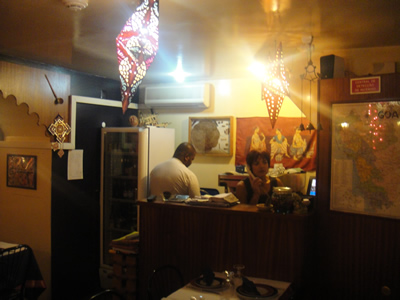
Restaurant “Tentações (Temptations) de Goa” really is a blessing! Located in a  narrow alley, a little bit hidden in Lisbon’s old neighborhood of Mouraria , Rua São Pedro Mártir 23 (Street of martyr Saint Pedro).

Lisbon Tentacoes Jesus Maria2

Restaurant “Tentações (Temptations) de Goa” Lisbon

Update 2016: Jesus Lee started his own restaurant in Lisbon

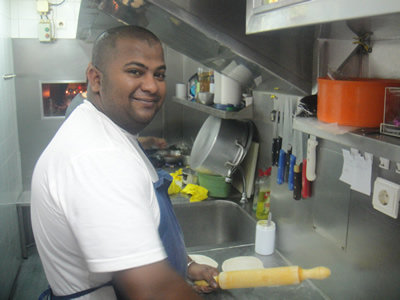
Cook Jesus Lee (Goan origin) and owner Maria dos Angus (Maria of the Angels) are really nice people. The genuine Goan family food is created with Jesus’ love !

Lisbon Tentacoes Goa Kitchen3

Restaurant “Tentações (Temptations) de Goa” Lisbon

Jesus Lee: “I was born in Goa in 1979. My mother expected a Christmas baby, but I finally arrived January 5. She is a fan of Jesus and my father admires Bruce Lee. I learned cooking from my mother, she really is a talented cook and I love it too. After finishing school, at the age of 14, I came to Portugal. In 1996 I met Maria, the owner of this restaurant and then we started to work together”. “I’m still a bachelor, looking for a nice woman 😉

Lisbon Tentacoes Goa food7

Restaurant “Tentações (Temptations) de Goa” Lisbon

The atmosphere is very cosy and informal. I like the local cuisine very much, but the taste of the dishes (hot or medium hot) of the former Portuguese colony is delicious!  Lisbon has many immigrants from all the former colonies – amongst them the folks from Goa.

Lisbon Tentacoes Goa food3

Restaurant “Tentações (Temptations) de Goa” Lisbon

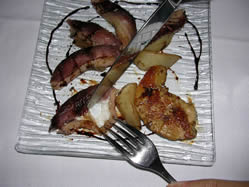
Camarão rechado (Prawn Massala 13,50 euro), small bottle of white wine 7.50, Chetni of coriander (sauce), Goan curry sauce, Chapati (Goan bread).

Delicious. Whow! From now, I am a fan of Jesus (Lee) 😉

Sony Lisbon sept Tentacoes Goa men1

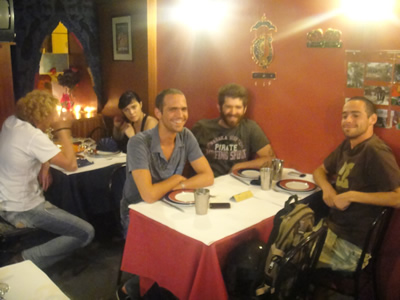
Francisco Torres, Antonio Policarpo and José Pedro Torres

Tentações de Goa”, Rua S. Pedro Mártir, nº 23. Open for lunch from 12:00, dinner from 19:00 – 00:00. Closed on Sundays and Holidays. It is advised to make reservations! Vegetarian friendly. Call (00351) 218875824, Tlm: (00351) 914 814 043.

Lisbon Tentacoes Goa Entree Rua Pedro Martir 23

Restaurant “Tentações (Temptations) de Goa” Lisbon

History: Goa, visited by lots of tourists each year, is India’s smallest state, located on the west coast of India. Vasco da Gama is the largest city, named after the Portuguese explorer. The city of Margao still exhibits the influence of Portuguese culture. The Portuguese overseas territory existed for about 450 years, until it was annexed by India in 1961.

Lisbon Tentacoes Goa street by day Roa Pedro Martir6

The tiny street in Mouraria in the afternoon.

Lisbon’s area Mouraria, is one of the oldest of Lisbon and a narrowed maze of tiny streets and stairs. Really worth a visit!  🙂

Lisbon Tentacoes Goa Jesus Maria Rua P Martir 2

Jesus & Maria are taking a break….

Lisbon’s craziest night June 12: true love, basil & street parties

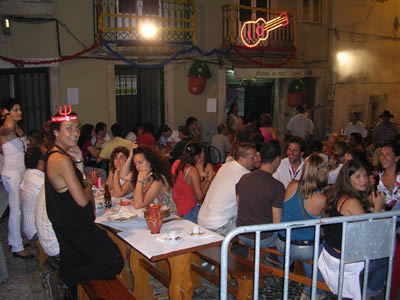
The month of June is party time in Lisbon! One of Portugal’s most popular saints, Santo António (Saint Anthony of Padua), was a Fransiscan friar canised by the Catholic Church in record time, one year after his death (on June 13, 1232). On the eve of June 13th Lisbon (and in all of Portugal) turns into one big party, the craziest night of the year!

Lisbon Santo Antonio Mouraria june 09 romantic manjerica2

Mouraria, June 12, 2009

Santo Antonio is also the matchmaker saint. A charming custom on the eve of June 12 is for young men to present a newly sproutet basil (manjerico), for a newly sprouted love) to the girls they hope to wed. A frilled and fluted tinsel-trimmed paper carnation of various colors blooms in each pot. Within the petals is a poem or message which indicates the young man’s passion. Often the flower is accompanied by a painted toy, a pretty fan, or some other trifle calculated to appeal to a maiden’s fancy.

Santo Antonio Mouraria june 09 Largo do Terreirinho dancing1

Largo do Terreirinho  Mouraria Lisbon

On the Eve of June 13 young girls try various methods of finding out whom they will wed. One favorite way is for a girl to fill her mouth with water and hold it until she hears a boy’s name mentioned. The name she hears is sure to be that of her future husband!
Santo Antonio Mouraria june 09 Largo do Terreirinho sardines 6

Largo do Terreirinho  Mouraria Lisbon

In June, the month of the Festas dos Santos Populares (Feast Days of the Popular Saints), the Lisbon nights are filled with lively festivities, parades and live music that take over the city’s historical center. The main Saints’ days are for Anthony (Antonio June 12-13), John (June 23-24) and Peter (June 28-29). Parades, feast, sardines, wine & live Fado music (2)

Santo Antonio Mouraria june 09 Largo do Terreirinho live music

Largo do Terreirinho Mouraria Lisbon

Live music, dancing and plenty of food and drinks like gaseous lemonade, wine, beer or sangria.

Lisbon Santo Antonio Mouraria june 09 Largo do Terreirinho sardines9

Largo do Terreirinho Mouraria Lisbon

Traditionally millions of big and tasty sardines (sardinhas), accompanied by traditional bread, are grilled in the month of June in Portugal, high season for this delicious silvery fish. They were already eaten in the XV Century and grilled outdoors, due to the strong aroma that they free when roasting.
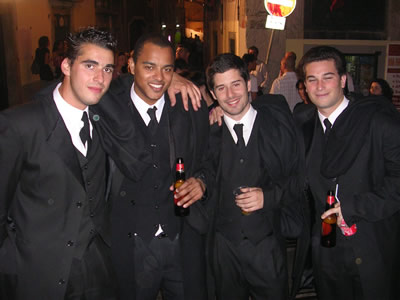
Lisbon Santo Antonio Mouraria june 09 Largo do Terreirinho students3

Largo do Terreirinho Mouraria Lisbon

Party time, also for students! Universidade Lusófona de Humanidades e Tecnologias, Lisbon

Lisbon Santo Antonio Mouraria june 09 Largo macho students

Largo do Terreirinho Mouraria Lisbon

The streets are filled with the delicious smell (and the smoke!) of sardines being grilled. After a couple of beers some students show the girls that boys are created with very strong muscles…..whow! 25 push ups!

Lisbon Santo Antonio Mouraria june 09 Largo do Terreirinho bar restaurant Anos 60 1

Largo do Terreirinho Mouraria Lisbon Restaurant ‘Anos 60’ (the sixties)

Unique bar and restaurant  ‘Anos 60’ has been established in the nineties in this neighborhood  More…….
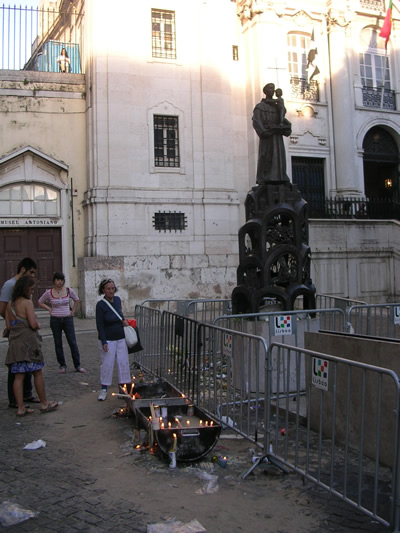
Santo Antonio church Largo Santo Antonio a Sé Alfama.

Santo António was born in 1195 in Lisbon’s oldest neighborhood Alfama, where the small church of Santo António da Sé now stands. Young people write letters asking him to furnish sweethearts. These epistles are dropped into a box in the church. When love affairs prosper and suitable mates are found, the box receives thank offerings from the grateful lovers. Mass marriages known as “St. Anthony’s Weddings” are held during the mid-June St. Anthony’s Day celebrations.

More information  ‘Festas de Lisboa’ (visit Lisboa 2014)

Santo Antonio Mouraria june 09 5 tram sardines

Largo do Terreirinho Mouraria Lisbon

In June you can enjoy musicians singing fado music in the old trams, some are decorated with sardines…

Thanks to Dorothy Gladys Spicer

Restaurant ‘Clube de Jornalistas’ Lisbon: gorgeous garden & André Magalhães

You don’t need to be a member of Lisbon’s ‘Clube de Jornalistas’ (‘the Press Club’) to visit this restaurant, and it’s really worth it! Among it’s habituées you can find diplomats, politicians and, of course, journalists.

Lisbon Restaurant Clube de Jornalistas Rua das Trinas

Restaurant ‘Clube de Jornalistas’ Lisbon

The Press Club’s restaurant is set in a very charming 18th century building with a lovely inner-garden. The kitchen offers creative Mediterranean food (vegetarian friendly) and the wine cellar is representative of the portuguese winemaking tradition. Located in the centre of Lapa, Rua das Trinas 129.

Lisbon Restaurant Clube de Jornalistas garden4

The wonderful inner-garden of Restaurant ‘Clube de Jornalistas’

‘Clube de Jornalistas’ is a perfect venue for group gathering or a celebration. Journalists and eating out go hand in hand, so Lisbon’s ‘Clube’ was a natural progression for local chef and Co-owner André Magalhães with his years of media experience.

Lisbon Clube de Jornalistas garden dinner 11

Restaurant ‘Clube de Jornalistas’ Lisbon, garden

The excellent wine list is also served by André Magalhães, a leading light in the slow food movement and a talented food & wine journalist, writing for Wine Passion magazine, Beer Passion, Lisbon Golden Guide, Slowfood and others.

Lisbon Clube de Jornalistas Restaurant inner-garden

Restaurant ‘Clube de Jornalistas’ Lisbon, inner-garden

We enjoyed outside dining in the wonderful quiet inner-garden, surrounded by trees and flowers.

Restaurant ‘Clube de Jornalistas’ is a mixture of old Portuguese architecture and modern cuisine with an exotic touch.

Lisbon Clube de Jornalistas Lapa dining inside

Restaurant ‘Clube de Jornalistas’ Lisbon: a dining rooms inside

‘The Club’ was founded in 1986. During the Salazar period (Salazar was a dictator who ruled Portugal from 1931 to 1970), the Casa da Imprensa in Chiado was a secret meeting place. After the revolution, some of the members went on to found the ‘Clube de Jornalistas’.

Restaurant Clube de Jornalistas garden creative cuisine dinner5

Tuna “escabeche” with fried portuguese polenta and clam sauce (14.50 €)

‘The Club’ is an inviting space to long conversations at lunch time and to cheerful gatherings at night’.

Clube de Jornalistas, Lapa/Estrela (facebook)
Rua das Trinas
129
1200-857 Lisbon
+(351) 213 977 138/ 21 396 57 74. Mail: cj@clubedejornalistas.pt
Open: Monday through Saturday 12.00-02.00

Restaurant Clube de Jornalistas Press club garden dinner1Restaurant Clube de Jornalistas Press club garden dinner4

Carpaccio of Tuna from the Azores, wild rocket and S. Jorge cheese (10.00 €) house-smoked duck breast and sauted Pears (12.00 €)

Visit ‘Palace of Independence’ Lisbon & conspiracy Spanish occupation 1640

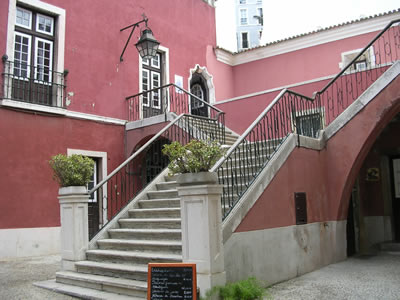
The beautiful Palácio da Independência (Palace of Independence), located in Lisbon close to the Rossio Square (near national theatre D. Maria II ), on the north side of the Largo de São Domingos , is known by two names.

Lisbon Indepence Palaca near Rossio Suqare Entrance

Palácio da Independência (Palace of Independence) Lisbon

It was given its original name of Palácio de Almada in honor of its former owner, the Count of Almada. The name Palácio da Independência (‘Independent Palace’) recalls a curious event that occured in 1640. Philip II of Spain had occupied Portugal in 1580, a year later he was recognized as King of Portugal.

Independence Palace Rossio entrance1 restaurant

Palácio da Independência (Palace of Independence) Lisbon

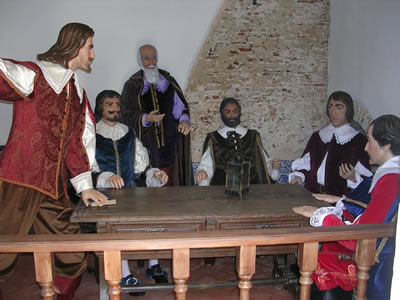
The loss of some colonies and the intense pressure of taxes levied to finance the Spanish wars led about 60 years later to a conspiracy among several of the Portuguese nobility. On December 1st, 1640 there ensued a successful rebellion, followed by the restoration of Portugal’s independence.

Independence Palace Lisbon near Rossio the conspiracy room

Palácio da Independência (Palace of Independence) Lisbon

About 40 conspirators prepared for the action under the leadership of the Duke of Bragança (or Braganza) in the grounds of this palace.

Lisbon Independence Palace near Rossio garden azulejos

Palácio da Independência (Palace of Independence) & garden Lisbon

The Duke, from who’s grandmother the royal family descended, was crowned João IV, King of Portugal. From a neighboring monastery the nobles reached the palace garden from across part of the old 14th C. city wall and gathered there in a small, isolated pavillion. It has even been suggested that there was an underground path linking the garden with the Baixa along which people could pass unseen.

Independence Palace Rossio garden azulejos 1

Palácio da Independência (Palace of Independence) Lisbon

Beautiful azulejos (tiles) representing the story of the conspiracy

Lisbon Independence Palace near Rossio

Palácio da Independência (Palace of Independence) Lisbon

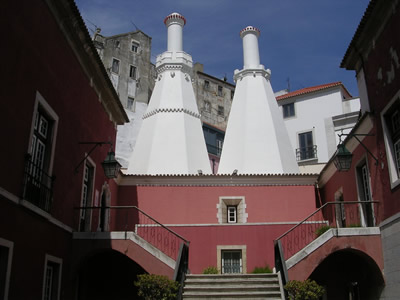
The building’s foundation stone was laid in 1509 and some of Manueline details from this time can still be detected in the inner courtyard, for example the door decorations. Two conical kitchen chimneys are reminiscent of the royal palace at Sintra.

Independence Palace Lisbon near Rossio kitchen chimneys

Palácio da Independência (Palace of Independence) Lisbon

The Sociedade Historica da Independência de Portugal has its seat in this Palace. This society has awarded itself the task of keeping alive the memory of the happenings of December 1st, 1640 and the general consciousness of Portugal’s national history.

Every year on December 1st official memorial events take place both in the Palácio da Independência and at the nearby square Praça dos Restauradores

Independence Palace Lisbon Ana Maria Proserpio

Palácio da Independência (Palace of Independence) Lisbon

Ana Maria Proserpio, Directora dos Serviços Culturais (Director of Portuguese Cultural Services). In Ana Maria’s hand the keys of the palace. If you are in Lisbon you can visit the palace .

Monday to Friday from 10am to 1pm and 2pm to 6pm | Sat. and Sunday is also possible  (visits have a minimum of 5 people).
Price: € 3 per person or € 25 per group.

Palácio da Independência
Largo de São Domingos, 11
1150-320 Lisboa

Phone: 21 324 14 70 Facebook  Email: ship.geral@ship.pt

The strange history of National Theatre Doña Maria II Lisbon & backstage guided tours

Teatro Nacional Doña Maria II has a strange history, like a lot of historical buildings in Lisbon. It was built on the ruins of one of the city’s finest buildings, the Palácio dos Estaus, which had burned down and which had housed the court of the Holy Inquisition. The liberal revolution and the end of the civil war created a climate in Portugal that was conducive to the development of arts in general and the theater in particular.

National Theatre Dona Maria II Lisbon 1 Teatro Nacional

National Theatre D. Maria II Lisbon

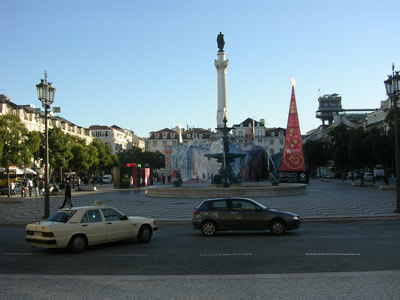
In 1836, by order of Queen D. Maria II, Almeida Garrett (famous author and poet) was charged with creating a conservatoire for the dramatic arts. The site chosen for this colossal task was the finest in the city at Praça Dom Pedro IV, commemorates Portugal’s first liberal king. The square is usually simply referred to as Rossio (big square).

National Theatre Dona Maria II Rossio and wave pavement

National Theatre D. Maria II Lisbon

The theatre opened to the public on April 13 1846, the date of the anniversary of the queen it is named after, but the acoustics were poor and the theatre closed the very next day for improvements. It reopened several years later to notable success. In late November 1964, the theatre staged Shakespeare’ Macbeth. A strange superstition, or more appropiately a curse, hangs over theatres that perform this play: one week after the first show the whole building burned down except for its outer walls. It was reopened in 1978. Since then, countless plays, by the finest playwrights of the past and of today, have been performed and staged.

Rossio Lisbon Theatre National Dona Maria II and ginja cafe

National Theatre D. Maria II Lisbon

Today, Teatro D. Maria II is not merely a concert hall. Besides its majestic Garrett room, it also has a smaller room, while the great hall has been turned into a theatre/ studio, covering a whole world of activities that very often burst out from behind its venerable walls.

Theatre Dona Maria II Lisbon near Rossio Station

National Theatre D. Maria II Lisbon

On the other side of the theatre you’ll find the unique Rossio train- and metro station (Estação do Rossio)

National Theatre Dona Maria Rossio Lisbon hall

National Theatre D. Maria II Lisbon

You can discover the theater (or take the time to enjoy a good show).

From Monday to Friday 10:00 am to 13:00/ 15:00 to 17:00 there are guided tours, in several languages, to the backstage of the theater. A journey that reveals the secrets and stories of Teatro Nacional D. Maria II.  (website)

Lisbon National Theatre Dona Maria II view from cafe Garett Rossio Christmas

National Theatre D. Maria II Lisbon: view Rossio square

Christmas time. Café Garrett, beside the theatre’s foyer, one of the most perfectly located cafés in Lisbon, facing the lively Rossio Square

Lisbon cafe Garrett Theatre Dona Maria II facing Rossio

National Theatre D. Maria II Lisbon

Hair saloon Salão S. Tomé e Principe Unissexo in historical area Mouraria Lisbon & Antonia

Mouraria, one of the oldest, historical areas in Lisbon, is an intriguing earthy place. Nowadays it’s a melting pot: there are the people with their origin from the once Portuguese colonies, especially from Angola, Cape Verde and Guinea-Bissau, São Tomé and Príncipe Islands, but also from other African countries; the Indian and the Chinese, the biggest representatives of Asia. There’s lots of small shops: typical Portuguese, Indian and a lot of Chinese.

Antonia in front of the saloon Salão S. Tomé e Principe Unissexo Centro Comercial Mouraria Lisbon

Antonia is my favorite hairstylist in Lisbon and she always makes me very happy 😉

Antonia hairdresser Salão S. Tomé e Principe Unissexo Centro Comercial Mouraria Lisbon

In the Mouraria shopping centre, you’ll find African hairdressers, Indian and Chinese food stores and all manner of Brazilian kitsch and knock-off gold in between.

Salão S. Tomé e Principe Unissexo

Antonia worked in Tomé Costa’s AfroLuso hair saloon, now it does not exist anymore. Happily for me Antonia works nearby in the neighbourhood in a saloon called Salão S. Tomé e Principe Unissexo

Tomé Costa 2 years ago:” We started a hair saloon in 1998 in a very small place. About 2 years  ago we opened our new saloon. Among our clients are tourists, but also lots of people who live in this neighborhood. We are very appy with this place”. ‘”Our parents moved to Portugal, we are born here, coming from the São Tomé and Príncipe Islands , a former Portuguese colony located near the northwestern coast of Gabon”. (The islands achieved independence in 1975).”

Tomé Costa African hairdresser Mouraria14

Ladies, gentlemen and children haircuts (from 5-8,50 euro), colouring (from 15 euro), manicure, pedicure and make-up (Kerli products) ; or maybe you prefer an old-fashioned barbershop-shave? (3,50)

Tomé Costa Afro hairdresser Calcada do Mouraria Lisbon5

The atmosphere in the saloon is very warm and welcoming, the staff is super friendly. While waiting for clients these two nice hairsylists enjoy the music….

Tomé Costa Afro Luso hairdresser Calcada da Mouraria Lisbon 9

Ankls Leima Sacramento Neto

The saloon is open from Monday to Saturday 09:00 – 19:00, Sundays and Holidays from 10:00 – 17:00.

Phone number Antonia: 00351 964845367

Antonia extentions

Hair extensions, fuzzy hair or braids? Antonia prefers extensions..

Tomé Costa Afro hairdresser Calcada da Mouraria Lisbon6


Teahouse Confeitaria Nacional Lisbon: international award & the King’s cake

This famous traditional teahouse opened in 1829 when Portugal was divided by the liberal struggles. It still remains in the hands of the same family today and has won recognition in various international exhibitions both for its traditional Portuguese cakes and pastries, and for its creative innovation over the years.

Lisbon Confeitaria Nacional10 rabbit coelhinho

Teahouse Confeitaria Nacional Lisbon

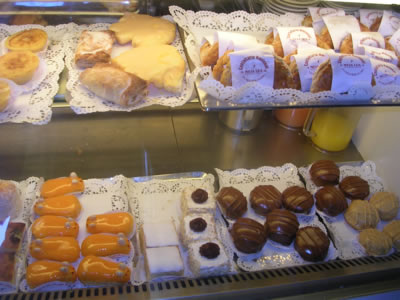
Very creative, very sweet, but delicious: ‘coelinho‘ (small rabbit): 1,30 euro

Confeitaria Nacional, Lisbon’s oldest Confectionary, once supplier of the Royal Family2

Teahouse Confeitaria Nacional Lisbon

The interior has not changed since it was opened, and this teahouse is very popular with locals who cannot pass up the oportunity of good tea (c), with traditional (and fabulous) Portuguese sweets and pastries.

Confeitaria Nacional, Lisbon’s oldest Confectionary, once supplier of the Royal Family3

Teahouse Confeitaria Nacional Lisbon

Confeitaria Nacional launched the “Bolo Rei” (The Kings Cake), customarily associated with Christmas (who gets the bean?) brought to Portugal by the son of the founder in the middle of the 19th Century.

Confeitaria Nacional, Lisbon’s oldest Confectionary, once supplier of the Royal Family6

Teahouse Confeitaria Nacional Lisbon

Tearoom upstairs. Taste the most typical Portuguese cakes, such as Queijadas de Sintra or Doces de Ovos de Aveiro , a sweet paste made with just eggs and sugar.

Confeitaria Nacional, Lisbon’s oldest Confectionary, once supplier of the Royal Family11

Teahouse Confeitaria Nacional Lisbon

Confeitaria Nacional, Lisbon’s oldest Confectionary, once supplier of the Royal Family4

Confeitaria Nacional ,

Praça da Figueira 18B, Lisbon, more…. 

Confeitaria Nacional, Lisbon’s oldest Confectionary, once supplier of the Royal Family9

Teahouse Confeitaria Nacional Lisbon

Museum Casa dos Bicos Lisbon, restaurants & famous fish cannery shop

Quite close to the historic Alfama neighborhood, a very nice street to walk around at Lisbon’ city center is Rua dos Bacalhoeiros (street of the cod fish sellers). The buildings that face the Tejo River look lovely, but if you take a closer look, they mostly are in a worse condition.

Lisbon Rua dos Bacalhoeiros near Casa dos Bicos

Rua dos Bacalhoeiros Lisbon

Walking from Praça do Comércio in the direction to Alfama, you will get to Rua dos Bacalhoeiros. The famous 28 tram (eletrico) passes here on its way to the Santa Apolonia station.

Lisbon Rua dos Bacalhoeiros terraces near Casa dos Bicos

Rua dos Bacalhoeiros Lisbon 2009

This part of the street is really beautiful. The small restaurants with a terrace outside are popular; even in wintertime when the sun is shining you can enjoy a beer or have lunch outside.

Lisbon Rua dos Bacalhoeiros Adega do Atum near Casa dos Bicos

Rua dos Bacalhoeiros Lisbon

Just near ‘Casa dos Bicos’ is restaurant ‘Adega do Atum‘, The waiters are friendly and not too agressive. They serve traditional fish and meat meals and have the Portuguese Sagres beer on tap (imperial). Try ‘Salade de Atum’ (tuna fish € 7 ) for lunch 🙂

Lisbon Rua dos Bacalhoeiros Casa dos Bicos

Rua dos Bacalhoeiros Lisbon & Casa dos Bicos (House of the pointed stones)

Casa dos Bicos (House of the pointed stones).  

This Palace was built in the early 16th century, a notable part of Lisbon’s heritage and one of the few examples with traces of the 15th C. architecture.

From 1981 to 1982, Casa dos Bicos was the site of excavations, many archaelogical findings were unearthed (ceramic and glass pieces a.o.). Worth a visit!

Lisbon Rua dos Bacalhoeiros3 shop nr 117 Silva & Feijó

Rua dos Bacalhoeiros Lisbon

You will find various shops in this street. Silva & Feijó, on the other side of Casa dos Bicos, sells a.o. wines and typical Portuguese handicrafts.

Lisbon Rua dos Bacalhoeiros lots of restaurants

Rua dos Bacalhoeiros Lisbon

Lunchtime in Lisbon. This part of the street is filled with lots of restaurants, from traditional Portuguese to Chinese.

A Churrasqueira is a restaurant serving grilled meat or fish, many offering as much as you can eat: the waiters move around the restaurant with the skewers, slicing meat onto your plate. Frango de Churrasco with piri piri (a kind of salty roasted chicken spiced with hot red chili sauce) is very popular.

Lisbon Rua dos Bacalhoeiros restaurant espetada

Rua dos Bacalhoeiros Lisbon

Restaurant Churrasqueira Santo António.

Carlos Marcalo, Rua dos Bacalhoeiros 133, invites you to try their ‘espetada‘, a typical Portuguese dish made of large chunks of fish or beef rubbed in garlic and salt with vegetables such as onions and bell peppers.

Lisbon Rua dos Bacalhoeiros shop canned fish

Luís Vieira.

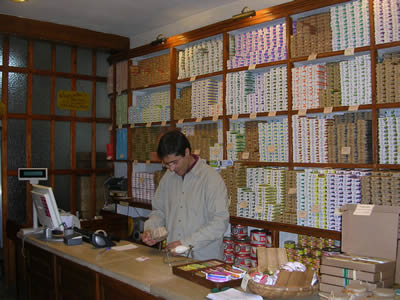
Conserveira de Lisboa (The Lisbon Cannery), nr 34.  Famous! Wonderful very old preserved-fish store with hundreds of colourful tins of the Portuguese favorite fish. This shop opened 80 years ago, nothing has changed.

Lisbon Roa do Comerico shit

Rua do do Comércio ,

The shit of today will fertilize tomorrow...” 😉 a building drawing, just around the corner of Rua dos Bacalhoeiros and Rua da Madalena

Museum of Decorative Arts Lisbon, former Palace, lovely tiles & fascinating collection

In this wonderful former Palace in Lisbon (Museu-Escola de Artes Decorativas), Museum and school, it’s forbidden to make pictures. After taking a few ones a guard warned me. Suddenly, walking from room to room, 4 guards kept an eye on me …..

Lisbon Museum of Decorative Arts1

The entrance: ‘Coupé Berlin, 18th Century.

Portugal’s most important furniture collection can be viewed here: valuable wooden Portuguese, French and English furniture dating from the 15th to the 18th C.

You can wander freely from room to room and get right up close to the pieces on display.

Lisbon Museum of Decorative Arts3

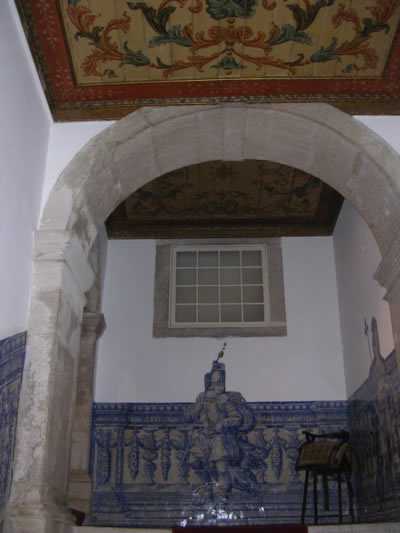
The grand staircase leading to 1st floor has lovely tiles.

An on-site collection of tiles (azulejos), several of which originallly pertained to the Palace, while others were integrated therein during the restorations works, in the end of the 1940s.

In the 17th C. former city palace of the Count of Azurara , currently houses the Museum of Decorative Arts. Banker Ricardo do Espirito Santo Silva, acquired the palace in 1947 and donated his collection to the museum.

Lisbon Museum of Decorative Arts4

Beautiful ceiling and azulejos! Sorry, no more pictures (the guards…).

The museum has a remarkable collection of faience, local silver and ceramics, paintings, bedrooms, dining rooms and dressing rooms. Each room is more ornated than the next, in an aristocratic environment. Anyone interested in decorative arts in general and the Portuguese Empire in particular will find this collection fascinating.

Lisbon Museum of Decorative Arts7

Museum of Decorative Arts, Alfama

Largo das Portas do Sol, 2 . More information, videos and Museum shop  http://www.fress.pt/  . Near the famous viewpoint (miradouro) Portas do Sol (‘Gates to the Sun’)

Closed: New year’s Day, Easter, May 1st and Christmas (December 25). Cost Adult 4.00, free entrance for children aged 12 or under. Opening hours 10 a.m to 5 a.m. Lovely patio with cafetaria-restaurant.