Historic square ‘Largo do Carmo’ Lisbon & April 25 bloodless military coup

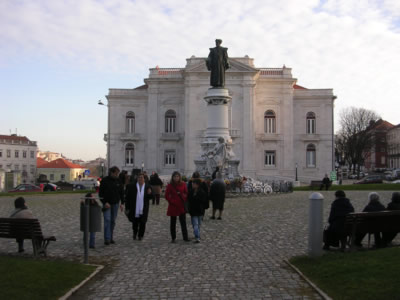
Wonderful Largo do Carmo  is one of my favorite squares in Lisbon!  Beautiful trees, historical buildings, fascinating church ruins, the extraordinary Santa Justa elevator and amazing city views!

Largo do Carmo Lisbon, September 2017

This picturesque square is very popular, well known for the terraces, in addition to being the scene of several shootings, both (science fiction) films or documentaries and commercials. Music and traditional dance are performed here during the summer.

Lisbon Largo do Carmo1

Largo do Carmo Lisbon

Springtime 2014

Lisbon square Largo do Carmo kiosk 2

Largo do Carmo Lisbon

A unique fountain stands under trees right in the middle of the square. The Chafariz (fountain) do Carmo was built here in 1796.

Largo do Carmo wikipedia jacarandas

Largo do Carmo and blossoming jacarandas.

Originally from South America, these beautiful trees of the Bignoniaceae family arrived in Lisbon in the mid-17th century and ever since, between May and June when they’re in flower, they have lovely bunches of lilac-toned petals.

Largo do Carmo Military Police Station

Largo do Carmo Lisbon

Portugal’s history & Carnation Revolution

The headquarters of Carmo (Quartel do Carmo) is a very important building for Portugal’s history. Marcelo Caetano (former dictator António de Oliveira Salazar’s replacer) found refuge in the main Lisbon military police station at the time of the revolution.

On April 25, 1974, the day of  the Carnation Revolution, this building was surrounded by the MFA (Portuguese Armed Forces), which pressured Marcelo Caetano to cede power to general Spínola. It was here where the Estado Novo (New Regime) officially came to an end after almost 50 years. More..

25-abril Carnation Revolution 1974 Lisbon

Largo do Carmo Lisbon April 25 1974

1974: The Carnation Revolution (Revolução dos Cravos) &  Eurovision Song Contest

The Carnation Revolution was a largely bloodless coup. Remarkable: there were two secret signals in the military coup: first the airing of the song “E depois do adeus” (“And after the farewell”) by Paulo de Carvalho, Portugal’s entry in the 6th of April 1974 Eurovision Song Contest, which alerted the rebel captains and soldiers to begin the coup.

Largo do Carmo Lisbon & entrance Carmen Convent

Next, on April 25, 1974 at 12:15 am, the national radio broadcast Grândola, Vila Morena, a song by Zeca Afonso, a progressive folk singer forbidden on Portuguese radio at the time. This was the signal that the MFA gave to take over strategic points of power in the country and “announced” that the revolution had started.

More details, videos and songs on Joana Morais’ blogspot

Here you can also find an entrance to the famous Archeological Museum, the gothic ruins of the 14th century Igreja (church) Convento do Carmo).
 –
Lisbon Largo do Carmo church museum Santa Justa2
Ruins of the Convento do Carmo & horrible earthquake in 1755
Open from Monday- Saturday 10h – 18h, cheap entrance. The construction of this monument started in 1389 by order of Nuno Álvares Pereira. The church was destroyed the first of November of 1755 by the horrible and well known earthquake. A lot of people died. More information..
 –
Lisbon Largo do Carmo church museum Santa Justa3
Largo do Carmo  Lisbon: amazing view over Lisbon
The famous tourist attraction ‘Santa Justa elevator’ (Elevador de Santa Justa video), Rua do Santa Gusta, built around 1900 to connect the Baixa and Chiado districts (around 32 m high), can bring you to the Carmo Square.  
 –
Beautiful city view of Lisbon : Santa Justa Lift and Carmo Convent
From the roof terrace of Pollux, a huge warehouse, Rua dos Fanqueiros 276. There’s a pleasant roof terrace & bar/cafe : LESS

Restaurant ‘O Prego da Peixaria’ Lisbon: excellent steak & chips à la Marilyn Monroe

Restaurant ‘O Prego da Peixaria’ in Lisbon pays tribute to the Portuguese steak sandwich, the prego, also a traditional snack in seafood restaurants. Recommendable!

Restaurant ‘O Prego da Peixaria’ Lisbon area Principe Real & wonderful designed wall

Portuguese way of life & artist Gonçalo Mar

The wall, designed by artist Gonçalo Mar, is a humorous re-creation of a well-known image of Marquis of Pombal, an 18th-century Portuguese statesman. The term Pombaline is used to the architectural style adopted in Lisbon after the great earthquake in 1755.

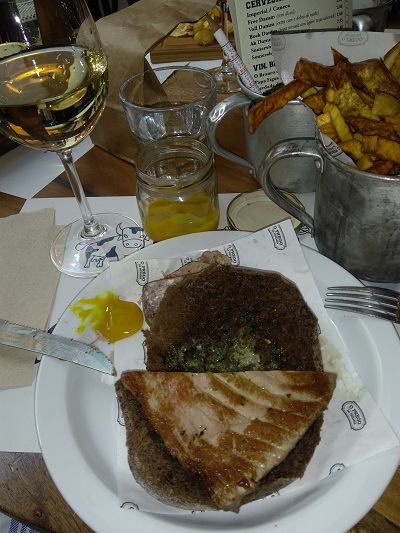
Restaurant ‘O Prego da Peixaria’ Lisbon area Principe Real & sandwich with tuna fish

It looks delicious and it sure is! 🙂 . Burger with grilled tuna fish 13 € (um prego com atum dos Açores), bread (bolo do caco de alfarroba , Carob tree), accompanied with fried sweet potatoes (batada doce) 1.50 €. Glass of white wine: Papa Figos, 4.00 €.

YouTube: traditional bread from the isle of Madeira , bolo do caco, very tasty!

Restaurant ‘O Prego da Peixaria’ Lisbon area Principe Real March 2017: Pedro & Dina

Boeuf de Wagyu (Japanese super-beef) & Marilyn Monroe potatoe chips

2 croquetes 3.80 €, 1 Rissól de Camarão (shrimp) 1.90 €, Pavé (filet) Yuppie Pão 9.50 €, Prato Pavé de boeuf de Wagyu (dish with vegetables and ‘Marilyn Monroe’ potatoe chips) 11.50 €, 2 fried sweet potatoes (batata doce) 3.00 €, 2 glasses of red wine (O Tinto d’ O Prego) 7.00 €.

Why potato chips (wavy, extremely thin and crispy , as indicated on the menu card) à la Mariliyn Monroe? I assume her famous wavy dress? and maybe Marilyn’s ‘potato sack’ dress?  😉

Restaurant ‘O Prego da Peixaria’ Lisbon area Principe Real March 2017

Order a steak sandwich in a fishery??

O Prego da Peixaria litterally means ‘the fishery’s steak sandwich’. It sounds confusing but it has to do with a Portuguese tradition: after enjoying a meal in a seafood restaurant it’s usual to order a steak sandwich, o prego .. litt. nail, referring to the full stomach after eating one, as someone told me.. 😉  

Restaurant ‘O Prego da Peixaria’ Lisbon area Principe Real March 2017

Portuguese history & Casas de Pasto (pasture house) 

The decor is fantastic! The idea is reviving the atmosphere in the cafes and the old Casas de Pasto.

Old Casa de Pasto ‘pasture house’ in Portugal – around 1920 … Source: Kuentro blogspot

Lisbon people (Lisboetas) once had the curious custom of going to stroll gardens to withdraw from the city to enjoy some pleasure of the countryside, usually on Sundays. They organised family picnics or simply had lunch in de old Casas de Pasto, so called because initially only giving fodder to the animals while the owners were negotiating at the fair. In many of them still retain the rings that held the animals.

With the time the owners of the Casas de Pasto also began to feed the animal owners and so flourished a business that came to give rise to the modern restaurants. Source: folclore de Portugal

Restaurant ‘O Prego da Peixaria’ Lisbon area Principe Real & menu card: with a pencil you can specify which prego or dish you like to order and how: rare, medium or well-done.

Restaurant ‘ O Prego da Peixaria’. No reservations
Rua da Escola Politécnica, 40 | Lisbon | phone 213 471 356, 
facebook . Open: every day from 12:00 tot 24:00.
website   
 –

Lisbon’s unique Lavra funicular, steep slope & statue dr. Sousa Martins

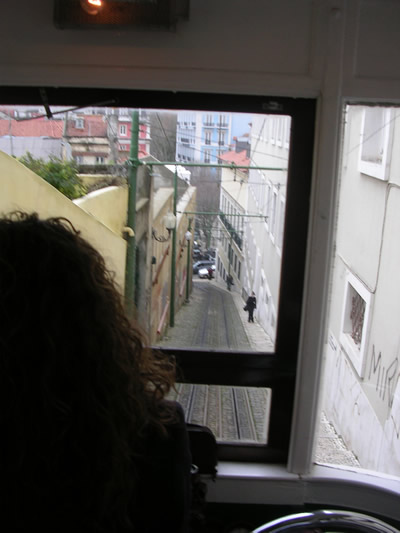
The Lavra funicular was the first street funicular in the world. It opened on 19 April 1884 and carried 3000 people, free of charge, on that day alone! Originally water-powered, it was converted to electricity in 1915.

Lisbon funicular Lavra1 Rua de Sao Jose

YouTube Lavra funicular Lisbon

It runs from the Rua de São José (near Largo da Anunciada) to Travessa do Forno do Torel. To reach the bottom of the funicular, turn right off the Avenida da Liberdade, or, from Rossio Square, it’s a 10 minute-walk through Rua das Portas de Santo Antão.

Lisbon Lavra funicular Rua de São José6

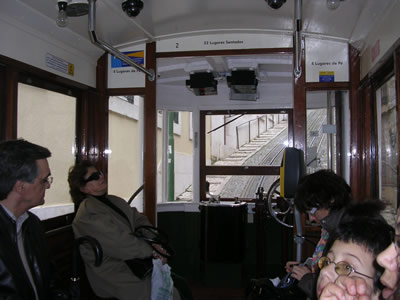
Waiting for the driver……

Lisbon has three working street funiculars: Lavra, Gloria and Bica, which allow its citizens and visitors to move to and from its hilly districts more easily. All are operated by Carris, (including timetables and funicular’s history) the Lisbon city transport undertaking.

Lisbon Lavra funicular Travessa do Forno do Torel

For me, it is still a miracle!

When you turn left off the funicular, after passing Rua do Instituto Bacteriológico, there’s a lovely park, Campo dos Mártires da Pátria, located on one of the 7 hills of Lisbon, the view from here is really wonderful!

Monument dr Martin Sousa

Here you will be surprised by the spontaneous religious fervour of Portuguese people who have honoured the statue of doctor Sousa Martins in front of the Faculty of Medicine. Yet since the memorial was erected in 1904, it has become the focal point for a religious devotion. People who come here believe that by praying to him and asking for his intervention, they will be cured. More….

Lisbon Lavra funicular driver

Lavra funicular hours of operation: 07:00-22:45, every day except Sunday, when the opening time is 09:00. One way ticket: cheap.

The ‘miraculous’ cures of Dr. Sousa Martins & Memorial Statue Lisbon

Dr. José Tomás de Sousa Martins (1843-1897) was a doctor and pharmacist renowned for his work amongst the poor in Lisbon. After his death, a secular cult has arisen around him in which he is thanked for ‘miraculous’ cures.

Lisbon Monument Dr Sousa Martins Campo de Santana10

Campo dos Mártires da Pátria Lisbon

Born in Alhandra Dr. Sousa Martins moved to Lisbon in his youth, and qualified in pharmacy (1864) and medicine (1866). He then practiced as a doctor in the Pena area of Lisbon, specialising in the treatment of tuberculosis. His work was entirely on a secular basis, but he was noted in his life for the care he gave to the poor.

Suicide

In 1897, realising that he has contracted tuberculosis himself and could only expect a painful death, he committed suicide.

Lisbon Monument Dr Sousa Martins Campo de Santana8

Campo dos Mártires da Pátria Lisbon

Religious devotion

Yet since the memorial was erected in 1904 at Campo dos Mártires da Pátria outside the main Faculty of Medicine, it has become the focal point for a religious devotion to Dr. Sousa Martins. People who come here believe that by praying to him and asking for his intervention, they will be cured.

After more than 100 years after his life, people still pray to the doctor and burn candles, to ask or thank him for medical cure.

Lisbon Monument Dr Sousa Martins Campo de Santana9

Campo dos Mártires da Pátria Lisbon

It’s quite amazing to see how devoted people are to a dead doctor….

Lisbon Monument Dr Sousa Martins Campo de Santana1

Campo dos Mártires da Pátria Lisbon

Those who have been healed offer their gratitude in the way of marble plaques.

Lisbon Monument Dr Sousa Martins Campo de Santana3

Campo dos Mártires da Pátria Lisbon

The foot of the statue is surrounded by marble plaques giving thanks to him for unexpected cures, candles burn and flowers are placed around the monument.

Lisbon Monument Dr Sousa Martins Campo de Santana7

Campo dos Mártires da Pátria Lisbon

A little child’s picture on a marble plaque… The veneration of dr. Sousa Martins was never recognized by the Catholic Church but it remains until nowadays.

Lisbon Monument Dr Sousa Martins Campo de Santana5

Campo dos Mártires da Pátria Lisbon

Flowers, wax candles, and religious articles are for sale here. In the nearby lovely park is a small cafe “O Coreto’. Besides: this place is located on one of the 7 hills of Lisbon, the view from here is really wonderful.

Lisbon dr Sousa Martins wax candles small shops

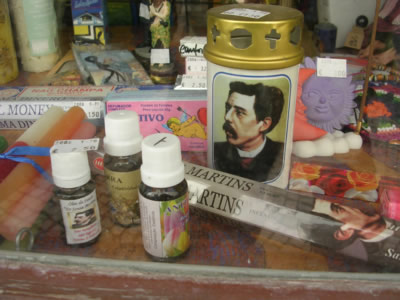
Candles with dr Sousa Martins’ picture are for sale in lots of small shops in Lisbon.

How to reach this place

Bizarre bar Pavilhão Chines Lisbon: 1900s style curiosities & kitsch

A ‘must-see’ when you visit Lisbon! Once an old grocery store, this 1900s style bar, 10 minutes walk from  Bairro Alto ‘s nightlife is really unique!

Lisbon Paviljao Chines7 bar retaurant

Pavilhão Chines Lisbon: one of the most interesting and unusual decorated bars I’ve ever seen!

A good start to Lisbon’s nightlife. You have to ring the doorbell, like in many other Portuguese places. The reason for the closed doors is that the owners want to welcome you personally.

Lisbon Pavilhao Chines naked woman menu book

Erotic art: menu book bar Pavilhão Chines Lisbon

If you wish, you can buy a fine menu book with a lot of beautiful pictures and stories (20 euro) as a reminder of your visit.

Lisbon Paviljao Chines8 bar restaurant

Pavilhão Chines bar Lisbon

Fascinating collection of all sort of things, like lead soldiers, contemporary engravings, humorous ceramics and models of war planes.

Lisbon Pavilhão Chines3

Pavilhão Chines Lisbon: miniscule toy soldiers are perfectly aligned.

Walking from room to room is like going through a museum with curiosities and kitch from all over the world. It is said that only one man collected all this stuff….almost unbelievable!

Lisbon Pavilhão Chines4 bar restaurant

Pavilhão Chines Lisbon: nothing is for sale

Once sitting down at one of the beautiful tables, the choice of drinks (nothing is for sale, except the drinks and it’s a bit expensive..) is quite large: from tea, wine, cocktails to champagne.

Lisbon Pavilhão Chines9 bar restaurant

Pavilhão Chines Lisbon

You can have a drink while listening to the jukebox playing classic rock songs from the 60’s and 70’s or play snooker, and then walk down to the  Bairro Alto and enjoy the night..

Top 10 bars with live music in  this area, Bairro Alto

Lisbon Pavilhão Chines 10 unique bar and restaurant

Pavilhão Chines Lisbon, open from 18:00 – 02:00, smoking allowed

Address: Rua Dom Pedro V 89-91, Bairro Alto. Tel: (00351)213 424 72.

Lisbon Pavilhao Chines Bar

FACEBOOK https://www.facebook.com/pavilhaochineslisboa

Village Underground Lisbon: creative community & Polly Robbins

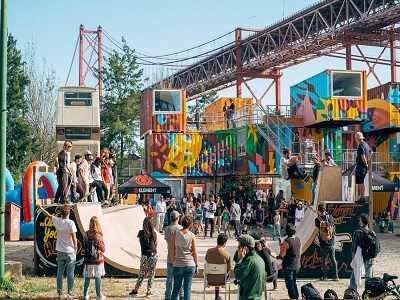
How about a delicious dinner in a dubble-decker retro bus beneath the 25th April Bridge? A great experience, but Village Underground in Lisbon offers much more! It’s a coworking center for creative- and event industries located at the Santo Amaro station in Alcântara, next to the Carris vintage trams & buses Museum.

village-underground-lisbon-1

Village Underground Lisbon in summertime

Lisbon: the hippest place to be

For years, Lisbon was somewhat off the beaten track for young travellers, or millennials seeking a new home. The Portuguese capital crumbled romantically while London, Paris, Barcelona and more recently Berlin enjoyed the cultural status. Yet in the last 10 years the city has seen an explosion in culture, tourism and entrepreneurialism, and is now surpassing its European rivals as the hippest place to be!

village-underground-polly-robbins-november-2016-3

The Village Underground in Lisbon & Polly Robbins, November 2016

Who are you and how have you found yourself at Village Underground?

Polly Robbins: “I come from London. I love London, but the pace of life is crazy and I felt like spending some time in another European capital. Lisbon particularly attracted me because I’m interested in urban cultural development. I studied sociology, looking at how art movements develop in cities, and for the last 3 years I’ve been running a business in London that takes over empty spaces and makes them into venues for culture”.

village-underground-lisbon-dubble-decker-buses-and-containers-3

Village Underground Lisbon

Ex-pats & tourists in Lisbon

Polly Robbins: ‘I heard about Village Underground Lisbon from a contact who knows the London branch. So I contacted Mariana (Director VU), got some funding from the EU Erasmus Young Entrepreneurs scheme, and here I am. At Village Underground I am developing marketing and communications, specifically for the ex-pat and tourists in Lisbon. I’m also developing ways for the co-working community to share their skills and feel more part of a community”.

village-underground-lisbon-live-music

Village Underground Lisbon

So what is Village Underground?

Polly:” It’s a project that began in London in 2009 when a group of friends had a crazy idea to hoist to some decommissioned tube train carriages onto the roof of a building and create a co-working space in Shoreditch. Mariana Duarte Silva, who is the Director of Village Underground Lisbon, was working in London when she came across the space and took a desk to set up her own music agency. She fell in love with it and brought the concept back to Lisbon, where the doors opened in 2012″.

village-underground-lisbon-dubble-decker-bus

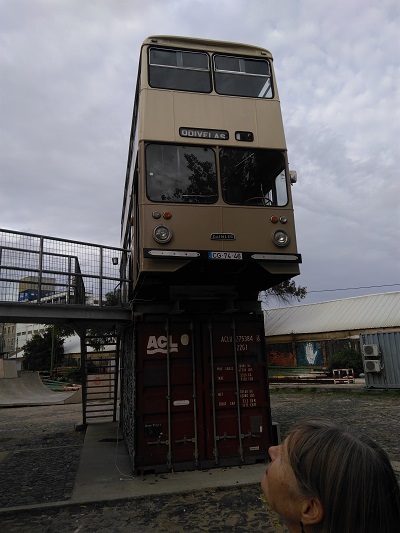
Village Underground Lisbon & one of the retro dubble-decker buses

Creative community

Polly: “Village Underground Lisboa sits at the end of the municipal tram yard, beneath the iconic Ponte 25 de Abril. It consists of 14 shipping containers which act as a co-working space for the creative industries. There are about 35 people working here, in web design, graphic design, video making, branding, theatre and music”.

village-underground-lisbon-dubble-decker-bus-december-16-2

Village Underground Lisbon & one of the dubble-decker retro buses, November 2016

Cafe/restaurant & events from January 2017

“There are 2 converted retro buses, one is a café, open to the public every lunchtime and for dinner on Fridays and Saturdays. And in addition, there’s a warehouse space used for events and exhibitions, a recording studio, a large space outside used for events and a skate ramp.

There is a great range of events going on at Village Underground, from parties with electronic and live music, to markets, to exhibitions and performance. Starting January 2017 these will be hosted every Friday and Saturday”.

village-underground-lisbon-dinner-dubble-decker-bus-december-2nd-16

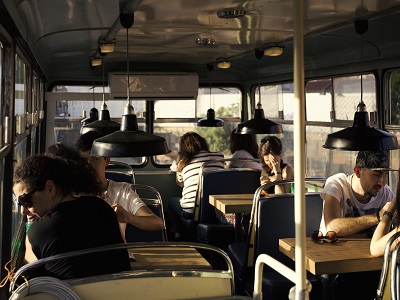
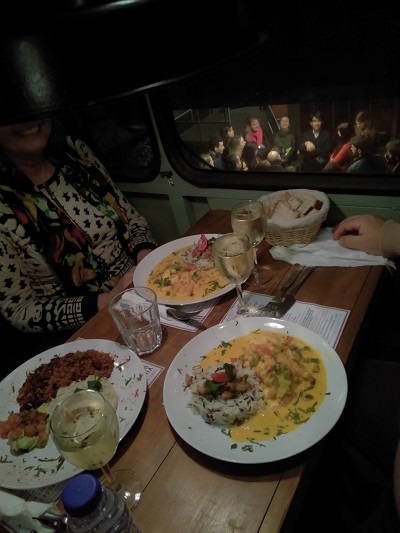
Village Underground Lisbon & delicious dinner in a dubble-decker retro bus 🙂

Tasty food & affordable prices

Our dinner: tapas; Peixe (fish): Moqueca de camarão com arroz selvagem (shrimp Moqueca with wild rice)Chili com carne com basmati de coentros (Cili con carne, basmati rice with coriander): wine , water, sobremesa (dessert). Bill: 77 euro (3 persons). A vegetarian dish is also available.

village-underground-lisbon-dinner-dubble-decker-bus-december-16-view-window

Village Underground Lisbon & a group of visitors

Why should people visit Village Underground?

Polly: “It’s a really interesting space to be in physically, particularly if you like to be surrounded by cool architecture, street art and disused trams and buses! The café serves incredibly tasty food and the team working there is lovely. The people who gravitate towards Village Underground are an amazing bunch – I’ve been warmly welcomed! They come from all walks of life and you don’t have to be chatting too long before you discover that they’re involved in all sorts of weird and wonderful projects”

Village Underground Lisbon delicious lunch January 2017

Village Underground Lisbon & delicious lunch in a dubble-decker retro bus

Muito obrigada! Great food & great service 🙂 🙂

Mafalda Rodrigues, Tania Pines & Mafalda Pais

Village Underground Lisbon delicious lunch January 2017 2

Village Underground Lisbon & delicious lunch in a dubble-decker retro bus

Vegetarian dish, sandwich with salmon, sweet potatoes, 2 glasses of wine, small bottle of water & coffee: 18 euro


Village Underground Lisbon

Both the interior and the terrace have free Wi-Fi. There is free parkingThe only entrance to the Cafeteria is the main gate of the Carris Museum, located at Rua Primeiro de Maio, 103.

Top tourist attraction Lisbon: bronze sculpture famous poet Pessoa & history

The bronze sculpture in Lisbon of Portugal’s famous writer and poet Fernando Pessoa (1888-1935) is extremely popular.

Lisbon cafe A Brasileira tourist attraction statue Fernando Pessoa

Sculpture of famous poet Fernando Pessoa, kissed by a young girl, almost 80 years after his death!   🙁

Top tourist attraction

Famous cafe ‘A Brasileira’  ‘s terrace in Lisbon (Rua Garrett 120) is a real tourist attraction. Poet Fernando Pessoa once was a regular customer. His table in bronze was created by Lagoa Henriques.

Pessoa statue Rua Garett A Brasileira9

Famous old cafe ‘A Brasileira’  (‘The Brazilian’, opened in 1905) Lisbon, Rua Garrett

Who was poet and writer Fernando Pessoa?

Pessoa was largely unknown in Portugal until after his death in 1935. The man has no idea he’s mobbed by lots of tourists nowadays, all day long!

Lisbon Pessoa statue Rua Garrett & friend Hans

Sculpture poet Fernando Pessoa Lisbon & Dutch admirer Hans

‘The best way to travel is to feel’ Pessoa wrote, ‘so feel everything in every possible way.’ Pessoa was born in Lisbon in 1888.

Apart from his high school years which he spent with his mother and half brothers in South Africa, he lived in Lisbon without a break, without taking public holidays, without traveling abroad. He did so with the help of heteronyms, inventing many lives (and cities) out of his own, spent between the Chiado area, where he lived.

Restaurant Martinho da Arcada table Pessoa famous Portuguese writer

Quality Restaurant Martinho da Arcade, Lisbon.

Restaurant Martinho da Arcade Lisbon & Pessoa’s table

Portugal’s famous poet and writer Pessoa spent a lot of his time in cafes (like Cafe Martinho da Arcada, where he wrote and drank a lot . He died in 1935, aged 47.

Pessoa’s table is still there…

Fernando Pessoa

Fernando Pessoa

Casa (house) Fernando Pessoa, Rua Coelho da Rocha, 16, Campo de Ourique.

Open from Monday – Saturday 10:00-18:00.

Pessoa drawing Travessa do Sequeiro

Drawing Fernando Pessoa, Travessa do Sequiero Lisbon

“Acordar”, poem by Álvaro de Campos, one of Fernando Pessoa’s various ‘heteronyms’ (imaginary characters).

“Acordar da cidade de Lisboa mais tarde do que as outras
Acordar da Rua do Ouro
Acordar do Rossio, as portas dos cafés
Acordar…..
E no meio de tudo a gare, que nunca dorme
Como um coração que tem que pulsar através de vigilia e do sono”

“The waking up of Lisbon, later than other cities
The waking up of Rua do Ouro
The waking up of Rossio Square, at the doors of its cafes
Waking up…..
And in the middle of it all the train station, which never rests
Like a heart that has to beat in both waking and sleeping hours”

Pessoa drawing Rua 1 Dezembro Lisbon

Rua Primeiro de Dezembro, April 2009

Restaurant Bairro do Avillez Lisbon: suprising seating areas & tasty dishes

José Avillez’ new restaurant in Lisbon, Bairro do Avillez (Avillez’ ‘neighborhood’) is located in Chiado. A spacious and spectacular location, with 2 separated seating areas.

restaurant-bairro-do-avillez-lisbon-window-erika-pateo-2016

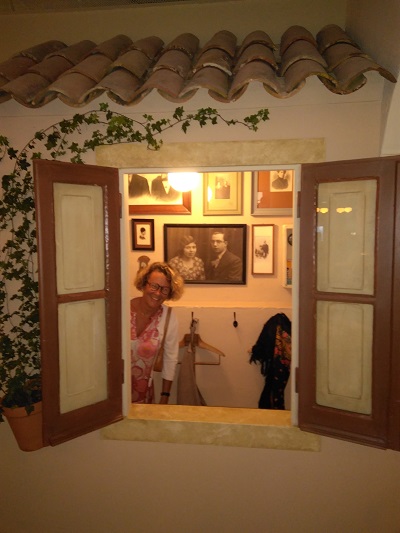
Patio Restaurant Bairro do Avillez decorated as a traditional downtown Lisbon neighborhood & ‘neighbor’ Erika Reusens 😉

 2 Michelin stars

José Avillez is one of the most renowned chefs in Portugal. He currently owns six restaurants, five in Lisbon and one in Oporto. His cooking style, contemporary and of Portuguese inspiration, has earned him a Michelin star in 2012 (restaurant Belcanto in Lisbon) and, in 2014, it received a second one, making it the first restaurant in Lisbon to have this honour).

restaurant-bairro-do-avillez-lisbon-wonderful-pateo-typical-lisbon-neighborhood

Restaurant Bairro do Avillez Lisbon & wonderful decorated spacious patio

Patio restaurant representing a traditional Lisbon neighborhood

The Patio restaurant is really surprising: a huge open kitchen and a wonderful creative decoration. A large skylight lets in plenty of natural light. There are different doors, typical Portuguese tiles and closed- or open windows to give you the idea of being in a traditional downtown Lisbon neighborhood, where people often hanging out of their windows. YouTube

restaurant-bairro-do-avillez-lisbon-august-16-dinner

Restaurant Bairro do Avillez Lisbon & our dinner end of August 2016

Our dinner: 2 couvert 7.00, Bife de Lombo (tenderloin steak) 18.00; Legumes Salteados (sautéed vegetables) 4.00; French fries € 3.00; 1 Bife Tártaro (tartar steak) € 14.00; água Vitalis (bottle of water) 3.00; Wine: Casa Passarella (bottle of white wine) 16.00; (by the glass 4.00). Desert: Avelã (hazelnut cream); Mil Folhas Pastel de Nata 6.00 (litt. ‘thousand sheets’ Pastel de Nata (famous Portuguese egg tart pastry) 6.00.

Bill for 2 persons: 91.00.

restaurant-bairro-do-avillez-lisbon-august-16-dinner-dessert-pastel-de-nata-2

Restaurant Bairro do Avillez Lisbon & delicious desserts

Bairro Avillez patio restaurant: tasty dishes & great ambiance

Once we were seated it took quite some time before a waiter came to our table. This restaurant just opened its doors, it’s understandable. The food was tasty, rather expensive in Lisbon (ca. € 45 p.p.), but the great ambiance was worth it!  🙂

restaurant-bairro-do-avillez-lisbon-entrance-taberne-aug-16

Restaurant Bairro do Avillez Lisbon & Taberna (Tavern)

Three concepts in one space: restaurant, tavern & grocery/gift store

Once you enter number 18 of Rua Nova da Trindade there’s the Taberna (tavern), a good idea to enjoy lunch, dinner or an ‘in-between’ snack in the afternoon. In de Tavern it is not possible to make reservations.

Mercearia (grocery & gift store)

Not just cheeses, sausages and canned goods but also kitchen accessories, books and aprons. More…... (website José Avillez). The charcuterie specialties rely on the advice of the illustrious shop in Lisbon:  Manteigaria Silva’.

restaurant-bairro-do-avillez-lisbon-august-16-mercearia-grocery-store

Restaurant ‘Bairro’ do Avillez Lisbon & the grocery store’s creative decoration

Bairro do Avillez, Rua Nova da Trindade 18. Lisbon

Opening hours: Taberna (tavern) & Mercearia (grocery/gift shop): daily from 12:00 pm till midnight.

Patio restaurant: daily, from 12:00 pm to 15:00 pm and from 19:00 pm till midnight. Closed on public holidays, December 24 (dinner) and 25. Phone: (351) 215 830 290 (reservations). Facebook

restaurant-bairro-do-avillez-lisbon-wonderful-patio-erika-reusens

Patio Restaurant Bairro do Avillez Lisbon, Erika Reusens & the friendly waitress

‘Shoemakers’ street Lisbon: 19th C. Art Nouveau strip club, peep shows & picanha

In the 19th century, Baixa was Lisbon’s commercial heart, with streets named according to their trades. Rua dos Sapateiros means ‘the shoemakers’ street.

Lisbon Rossio Rua dos Sapateiros1 Arco do Bandeiro

The entrance to the Rua dos Sapateiros is spanned by the decorative arch Arco do Bandeiro.

This bears the name of the wealthy sponsor Pires Bandeiro who commissioned it at the end of the 18th C.

Rua dos Sapateiros2 Art Nouveau old Cinema peep shows

Strip Club Rua dos Sapateiros Lisbon

Strip club & Art Nouveau style

Passing through the arched gateway on Rossio you see one of Lisbon’s remaining examples of Art Nouveau: this old movie house, the Animatógrafo , is a strip club nowadays. Lisbon’s earliest cinema hall opened in 1907, by brothers Ernesto and Joaquim Correia Cardoso. It has remained unaltered since then. The beautiful facade is adorned with a highly detailed Art Nouveau style, which consists of Azulejos tiled panels, which depict Edwardian styled females surrounded by fruits and flowers.

Rua dos Sapateiros: cafes, cheap traditional Portuguese restaurants & peep shows2

Rua dos Sapateiros Lisbon

It was not easy to make a picture without snapping visitors going in and out, because this beautiful house is rather popular….. 🙂

Traditional restaurants & picanha meat, ‘melt-in-your mouth’

Rua dos Sapateiros Lisbon: cheap traditional cafes, restaurants & peep shows5 Restaurant Adego Mo

Restaurant Ádega da Mo’, R. dos Sapateiros 199, Lisbon

Restaurant ‘Adega da Mo‘ is  a typical Portuguese restaurant.

Almoçar (lunch): Picanha, (meat from Brazil) is generally considered to be the number one cut, even better than beef fillet. Picanha (pick-ahn-yeh) is much better than a steak, meltin-in-your mouth….: € 7.50

Lisbon Leitaria Camponeza22

Rua dos Sapateiros Lisbon

Another beautiful example of Portuguese Art Nouveau in this street is Leitaria ‘A Camponeza’

Rua dos Sapateiros Lisbon: cheap traditional cafes, restaurants & peep shows street

Rua dos Sapateiros, Lisbon

Bar/Cafe ‘Sol e Pesca’ Lisbon: canned fish decor & vintage memorabilia

Portugal is famous for the beautiful coloured tin cans of tuna, squid and sardines . Tin cans serve as wall decoration in cafe/bar “Sol e Pesca ” ( litt.Sun and Fishing), but are also intended for consumption. A great idea!

Cafe/bar “Sol e Pesca“, Lisbon decorated with lovely coloured fish tin cans

Former old shop

This bar used to be an old shop with fishing equipment and that past now inspires the décor (like rods and hooks). Now the shop is also decorated with hundreds of colorful tins of the Portuguese favorite fish.

Cafe/bar “Sol e Pesca“, Lisbon

“Sol e Pesca also inspires what is served (or sold to be enjoyed at home), because in addition to the drinks (beer and local wines) it offers cans of a variety of fish that, if you like it, can be accompanied by bread and wine.

Mauro Fialho, Cafe/bar “Sol e Pesca“, Lisbon

Nowadays the Cais do Sodré area in Lisbon is a trendy place to go after  the bars in the Bairro Alto close their doors. You’ll find here some clubs like Roterdão, and Musicbox. In July 2010 “Sol e Pesca” opened its doors.

Cafe` Sol e Pesca`Lisbon: Catarina Rebelo Lucas is preparing the mise en place

Catarina: ” In this area (Cais do Sodré) near the river Tagus there are a lot of shops for fishermen. This typical Portuguese old store closed 20 years ago and all the old stuff associated with fish is still there…

The new owner, sr. Henrique Vaz Pato (pato means duck in Portuguese)  😉  bought the shop and opened cafe ‘Sol e Pesca’ (Sun and Fishing) in July 2010″.

Muxama, a delicacy typical of the south region of the Iberian Peninsula, consisting of filleted salt-cured tuna.

The Arabs developed this salt curing technique and the term muxama comes from the Arab word musama which means “dry”. However, Phoenicians and Romans also used a similar process to preserve the fishes caught until the return of the fishing boats ashore.

Nowadays, in Portugal muxama is produced in the Algarve region, following a technique used for more than 1000 years almost unchanged.

Delicious! Muxama, salad, sardines, olives, bread, white wine, a small bottle of water: 22 euro

Bar/cafe Sol e Pesca (Sun and Fishing),  Rua Nova de Carvalho 14, Lisbon

Hours: Monday to Friday from 18:00 to 02h00, Saturday from 18.00 to 04h00.  Closed on Sundays, Facebook

MINERVA – Portuguese sardines

Minerva is a well-known Portuguese canned fish brand. Famous Lisbon city center cannery store Conserveira de Lisboa

Lisbon, Cais do Sodré , the new hotspot, December 2011

Nowadays the Cais do Sodré area in Lisbon is a trendy place to go after bars in the nearby Bairro Alto area close their doors