Teahouse Confeitaria Nacional Lisbon: international award & the King’s cake

This famous traditional teahouse opened in 1829 when Portugal was divided by the liberal struggles. It still remains in the hands of the same family today and has won recognition in various international exhibitions both for its traditional Portuguese cakes and pastries, and for its creative innovation over the years.

Lisbon Confeitaria Nacional10 rabbit coelhinho

Teahouse Confeitaria Nacional Lisbon

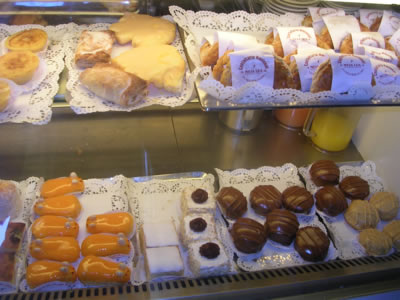
Very creative, very sweet, but delicious: ‘coelinho‘ (small rabbit): 1,30 euro

Confeitaria Nacional, Lisbon’s oldest Confectionary, once supplier of the Royal Family2

Teahouse Confeitaria Nacional Lisbon

The interior has not changed since it was opened, and this teahouse is very popular with locals who cannot pass up the oportunity of good tea (c), with traditional (and fabulous) Portuguese sweets and pastries.

Confeitaria Nacional, Lisbon’s oldest Confectionary, once supplier of the Royal Family3

Teahouse Confeitaria Nacional Lisbon

Confeitaria Nacional launched the “Bolo Rei” (The Kings Cake), customarily associated with Christmas (who gets the bean?) brought to Portugal by the son of the founder in the middle of the 19th Century.

Confeitaria Nacional, Lisbon’s oldest Confectionary, once supplier of the Royal Family6

Teahouse Confeitaria Nacional Lisbon

Tearoom upstairs. Taste the most typical Portuguese cakes, such as Queijadas de Sintra or Doces de Ovos de Aveiro , a sweet paste made with just eggs and sugar.

Confeitaria Nacional, Lisbon’s oldest Confectionary, once supplier of the Royal Family11

Teahouse Confeitaria Nacional Lisbon

Confeitaria Nacional, Lisbon’s oldest Confectionary, once supplier of the Royal Family4

Confeitaria Nacional ,

Praça da Figueira 18B, Lisbon, more…. 

Confeitaria Nacional, Lisbon’s oldest Confectionary, once supplier of the Royal Family9

Teahouse Confeitaria Nacional Lisbon

Lisbon: Campo dos Mártires da Pátria, hospital São José & funeral cars

Campo dos Mártires da Pátria is really worth a visit! You can walk up the rather steepy hill at the end of Rua de São José or take the funicular of Lavra, the first transportation to overcome a hill in Lisbon, 120 years ago.

Campo dos Mártires da Pátria 1 Park view Castelo

Campo dos Mártires da Pátria, view on castle of São Jorge .

Students are taking a break in the park. Here you find the memorial statue of  Dr. Sousa Martins, erected in 1904, outside the main Faculty of Medicine, historic City Campus of the University of Lisbon, home to several faculties including Law and Medicine.

In the nearby lovely park (Jardim da Cordoaria is a small cafe “O Coreto. This place is located on one of the 7 hills of Lisbon, the view from here is really wonderful.

Monument dr Martin Sousa13 Jardim da Cordoaria cafe “O Coreto’

The nearby lovely large tree-lined park (Jardim da Cordoaria) and small cafe “O Coreto’ (the Kiosk).

You can walk down the hill, not too steepy, to the center’s Rossio Square with many restaurants and shopping zones. A few pictures from my walk starting at Rua Manuel Bento de Sousa:

Walking around hospital São José car coffins

Hospital São José, near the Faculty of Medicine.

Waiting for a dead body

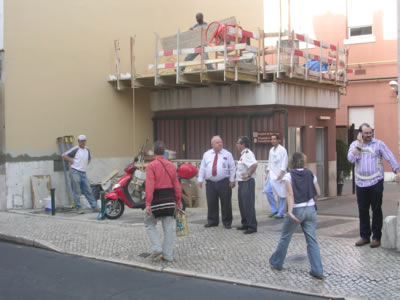
It is said that funeral cars are waiting here in line, like a taxi queue, to be the first one to pick up a dead body… anyway, when I was passing by I saw a truck delivering new coffins…..

Lisbon Hospital entrance São José Rua do Sao Lazaro

Hospital São José , ortopedia entrance at Rua de Sao Lazaro.

Lisbon Hospital São José1

Walk until Travessa do Hospital and go right.

Hospital São José is an immense building, strechting out toward Praça Martim Moniz.

walking from Hospital São José2 view Castelo Sao Jorge

View on Castle São Jorge

Walking around Hospital São José4 rainbow

View from the hospital’s parking lot

Hospital São José19 beautiful

Beautiful entrance at Rua José a Serrano. The name of the hospital São José is paying hommage to King Joseph I.

Lisbon Rua da Arco da Graca1

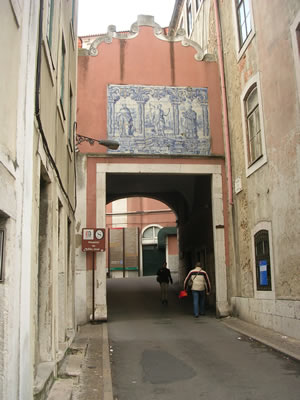
Rua do Arco da Graça. On the left side of this street, a lot of new apartments are being built.

Lisbon Rossio Square

Rossio Square beautiful and very popular tourist attraction.

Lisbon Mercado da Ribeira: Sunday morning coin & stamp collectors

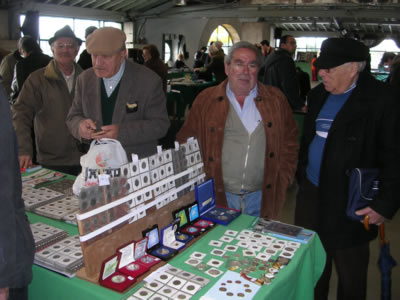
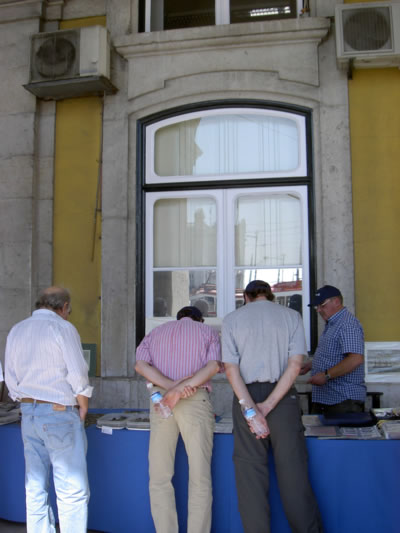
On every Sunday morning from 09:00 – 13:00, the second floor of the old market Mercado da Ribeira (map)  (Market near the river since 1882), is reserved for coin and stamp collectors.

Lisbon Mercado da Ribeira Coin Collectors Market1

Mercado da Ribeira Lisbon – coin and stamp collectors

A good Dutch friend of mine is a coin collector, he asked me to browse the markets in Lisbon.  I’m not really interested in coins, but this is worth a visit!

Lisbon Mercado da Ribeira Coin Collectors Market2

Mercado da Ribeira Lisbon – coin and stamp collectors

It seems that mostly men are interested in coin collection………and they are trading furiously!

On the background you see covered market stalls: on the other days of the week market Mercado da Ribeira, Lisbons biggest open food market , is selling fom fresh fish to fruit, from ‘hot’ piri-piri to funeral flowers waiting for a dead body….

Lisbon Mercado da Ribeira Coin Collectors Market4

Mercado da Ribeira Lisbon – coin and stamp collectors

It’s really nice to walk around here, even if you are not looking for coins or old stamps. They sell more, like calendars, very old postcards and paper money. The 2nd floor of the market has also been converted into a touristy cultural center, selling locally produced items such as port, honey, and handicrafts.

Coins collectors Feira da Ladra

Feira da Ladra Lisbon

Also at Lisbon’s famous flea market Feira da Ladra, you can find all kind of coins….

Lisbon Flea market Praca do Comercio saturday3 coins Joao

Flea market Praça do Comércio. Lisbon

….and on every Sunday there’s a small flea market at  Praça do Comércio. This is João, don’t be afraid to negotiate the price!

Lisbon Flea market Praca do Comercio saturday3 coins Joao and Jack

Praça do Comércio. – Sunday morning & coin collectors

Lisbon Walker: guided walks through historical Lisbon

Lisbon has steadily built up an image of one of the world’s most interesting cities to visit. Its stunning location and historic significance is generously complemented by remarkable aesthetics, making it stand out as one of the few capital cities still human in pace and in scale.

17thcenturyportal.jpg

To discover Lisbon in the company of friendly and knowledgeable tour guides is the whole point of Lisbon Walker, overtaking the limitations of guidebooks to unveil the real personality of this unique location. All walking tours are in English.

s_joao-praca-22.jpg

If you want to join one of the tour guides for a walk through Lisbon, just choose one of the historical tours on the Lisbon Walker Website and all you need to do is show up at the meeting point near Praça do Comércio, according to the timetable of the walks. Regular walking tour ticket (2008) – €15.00 per person/tour. Under 26, over 65, holders of Lisboa Card or valid tickets from TAP, CP or Sightseeing tours: €10.00 per person/tour. Children under 12 free tour. Each walk takes between 2 and 3 hours.

Lisbon Walker Fish Market

Fish Market

Lisbon Walker Bairro Alto

Bairro Alto

Lisbon walker Carmo Square

Square (Praça) do Carmo

Lisbon Walker Alfama

Alfama


Famous Cafe ‘A Brasileira’: wonderful Art Deco style & poet Pessoa’s table

Elegant shopping street Rua Garrett,  lIsbon, that leads from the Baixa to Chiado, is named after the author and poet Joao Almeida Garrett (1799-1854). The area is also an important cultural area, with several museums and theatres.

winkelen Rua Garrett2
Rua Garett, June 2008.

On the background cafe ‘A Brasileira’ s terrace. You will see young locals here just socialising or window shopping.

Lisbon shopping Rua Garrett building

Rua Garrett, Lisbon

The most famous street of Lisbon, that mixes traditional chic and modern commercial shops, is also beloved by tourists.

Pessoa statue Cafe A Brasileira tourists

Cafe ‘A Brasileira’ (Rua Garrett 120) is famous for having had the enigmatic poet Fernando Pessoa  (1888-1935) among his customers.

Pessoa still has his table in bronze on the terrace (the work of sculptor Lagoa Henriques).

Portugal’s famous writer has no idea he’s mobbed by lots of tourists, all day long!

The downstairs seating area is a favourite with locals for a set lunch of traditional Portuguese specialties. The cafe once was the setting for tertulías literárias (lively discussion groups) in which debate would often culminate in chair throwing, cup smashing and brawls.

Lisbon shopping: Rua Garett cafe a Brasileira outside

‘A Brasileira’ (‘The Brazilian woman’), opened in 1905 as a shop selling genuine Brazilian coffee.

It was the first shop to sell the ‘bica’, a small cup of strong coffee, similar to espresso.

Lisbon shopping Rua Garrett cafe A Brasileira inside

The interior of ‘A Brasileira’ is grandiose: decorated in Art Deco style, with a green-and-gold entrance, mirrored walls, brass fittings, and a long oak bar.

However: bad service and inattentive staff  for tourists. It’s a very popular tourist destination, and prices are high.

Market Mercado de Arroios Lisbon: fresh fish, flowers, fruit & friendly people

If you like browsing through local markets, go to Mercado de Arroios in Lisbon!

Lisbon Shopping: Mercado do Arroios fresh food & fish market

Mercado de Arroios in Lisbon

The always very nice Portuguese people are proud to show you the fresh fish…

Lisbon Shopping: Mercado de Arroios fish

Mercado de Arroios in Lisbon

…..and take their time to make a friendly neighbourly talk.

Lisbon Shopping: Mercado de Arroios vegetables

Mercado de Arroios in Lisbon

This lively fresh produce & fishmarket is open from Monday-Saturday 07-00 till 14:00.

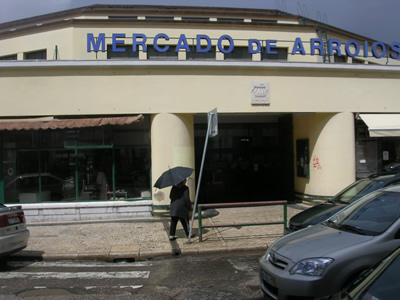
Lisbon shopping: Mercado de Arroios building

Mercado de Arroios, Rua Ângela Pinto, near the Arroios metro station, close to Estefania.
Selling locally sourced fish, meat, fresh fruit, vegetables and flowers.

Mercado da Ribeiro, famous market near the Tagus river

Restaurant ‘A Travessa’, one of Lisbon’s best & unique location

We had heard great things about ‘A Travessa’, a trendy restaurant located in a former convent in Bairro da Madragoa, and one of Lisbon’s best: from food, service to location.

Restaurante A Travessa inside

Restaurant ‘A Travessa’ Lisbon

The building used to be a 17th century convent. Set in the very peaceful quarter in Santo (Lapa) this is one of the most atmospheric restaurants in Lisbon. There are at least three dining areas; the main room, a small side room and a terrace in the old courtyard. In the bar right next to the restaurant you can have an appetizer while waiting for your table. In winter, you can dine inside by the fireplace, and in summertime ‘al fresco’ in the wide courtyard.

Restaurant A Travessa dining outside

Restaurant ‘A Travessa’ Lisbon

The menu is Portuguese-Belgian, but international as well. Before you order they do provide you with some original hors d’oeuvres. The wine list includes many of Portugal’s best, including an extensive selection of Douro reds. The place is stunning, the people are really nice and the food is excellent!

There’s no parking area – so don’t go driving, instead use a taxi.

A Travessa (website including the history of the Convent and a virtual tour)
Travessa do Convento das Bernardas, 12
Bairro da Madragoa
Santo
1200-638 Lisbon
Tel: (+351) 21 390 20 34 / 21 394 08 00

Prices: more expensive than average.  Open on 24, 25 & 31 December and 1st January.

Viviane Durieu owner A Travessa restaurant Lisbon

The creator of restaurant ‘A Travessa’ in Lisbon is Viviane Durieu (Belgian origine), read her story and Viviane’s favorite places in Lisbon

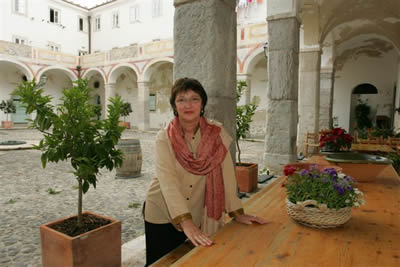
Viviane Durieu, creator of ‘A Travessa’ Lisbon, famous restaurant & 17th-century convent

Viviane Durieu is creator of ‘A Travessa’, one of Lisbons best restaurants, set in a 17th-century convent, with a picturesque courty yard.
Lisbon people Viivane Durieu 3

“When I arrived in Lisbon in December 1969, two days before Christmas, I thought the climate and the light were fantastic. Especially because I had arrived from Belgium where it’s cloudy for nine months of the year and we only get a few months of blue sky. I remember being surprised to see the leaves still on the trees at that time of year.

I fell in love with the city, and still I’m fascinated by the humanism of the Portuguese and the beautiful light.
Viviane Durieu restaurant

My background is in photography, I worked in this field until we opened restaurant ‘A Travessa’, which only started as a bit of a joke between me, my husband and a friend.

We opened a small restaurant with good products: coffee that you couldn’t find in Portugal at that time, good bread and good wine, just round the corner from the current ‘A Travessa’, next to the Portuguese Parliament building and surrounded by embassies. Because we were French speakers we got lots of clients from the Belgian and French embassies. It was a hit. We just developed from there and it’s been 30 years this year since we opened. Time flies…..!”

‘A Travessa’ , Travessa do Convento das Bernardas, 12 Bairro da Madragoa – Santo, more details about the restaurant and the menu

“I live in the historic area near the Sao Jorge Castle (Castelo de São Jorge), a delight for residents, with limited car access. The narrow streets of uneven cobbles make life in the centre of the city like living in a village”.

Lisbon entrance Castelo Sao Jorge

Castelo Sao Jorge, entrance

“When I arrived in Lisbon, I use to go to Sintra a lot. As it’s colder there, I felt closer to Belgium and I dreamt about having a house there. World Heritage Site, this historic town lies 40 km from Lisbon, a must for any visitor!”

Sintra Palacio Nacional da Pena

Sintra: National Palace da Pena, now a museum. The very old Palace stands on the top of a hill above the town of Sintra. On a clear day it can easily seen from Lisbon.

“In Lisbon, I like to shop in the Baixa and Chiado areas. I don’t like shopping centers, I prefer traditional shops, it’s much nicer to walk around the town”.
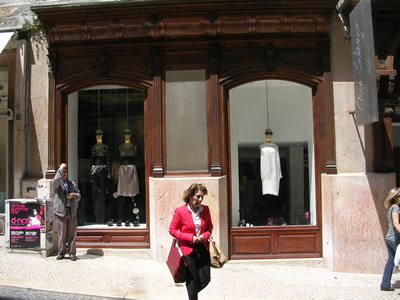
Lisbon shopping Rua do Carmo Ana Salazar

Lisbon, Rua do Carmo, Baixa

“i like going to Belém. The Jeronimus Monastery and the famous classic Belém custard tarts (Pasteis de Belém) , always warm, are real musts! And I like the shows at Centro Cultural de Belém, which has got the best concert hall in Lisbon.”
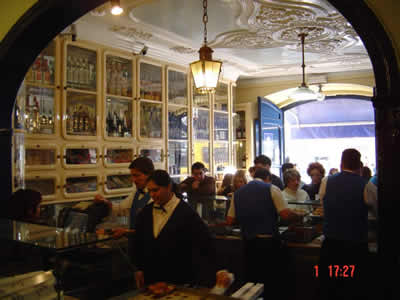
Belem Pasteis de Nata

Antiga Confeitaria, since 1837. The recepe of Lisbon’s most celebrated custard tarts is still a well-kept secret…open 7 days a week.

Lisbon Belem Pasteis de Belem
History: at the beginning of the Nineteenth Century, in Belém, next to the Mosteiro dos Jerónimos (the Heironymite Monastery) there was a sugar cane refinery linked to a small general store. As a result of the liberal revolution of 1820, all convents and monasteries in Portugal were shut down in 1834, the clergy and labourers expelled.

In an attempt at survival, someone from the monastery offered sweet pastries for sale in the shop; pastries that rapidly became known as ‘Pasteis de Belém’.

Graças a Maria Ventura

High-speed train Alfa Pendular from Lisbon Oriente station & online reservation

Station Oriente is a very beautiful and very famous station, the hub for the various networks of public transportation serving the eastern area of Lisbon, with a metro station, trains, buses, taxis and easy airport links.  The station was created by master architect Santiago Calatrava with a roof of glass and steel.

Oriente Station

Station Oriente. A ticket from Lisbon Oriente Station to Faro (or vice versa) cost about 19 euro.

Alfa Pendular train

The Alfa Pendular is a very comfortable, fast and luxury train.

Address station: Ed. Gare do Oriente, piso 1 – Av. D. João II. You can buy a ticket via internet, also from International station Santa Apolonia. The best thing to do is to reserve a ticket (and a chair number) from 30 days to at least one day before your journey.

Alfa Pendular connects the cities of Braga, Porto, Aveiro, Coimbra, Santarém, Lisbon, Albufeira and Faro, among others.
Website Alfa Pendular (online ticket reservation, from 30 days to at least one day before your journey.)
Aquaduct Lisbon

View from train Alfa Pendular

You can overlook the fine views (picture: Aquaduct in Lisbon) during the 3 -hours trip, or work: sockets for laptops are at many of the seats.

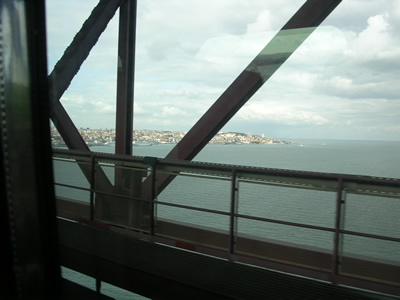
Public transport Alfa Pendular train view 25 April Bridge Lisbon downtowm

View from train Alfa Pendular : April 25 Bridge on Lisbon downtown

In the Alfa Pendular train there’s also a buffet car, mini bar, audio and video channels (ear-phones are distributed), toilets and special places reserved for reduced mobility passengers.

Alfa Pendular view Alcantara Lisbon

View from Alfa Pendular train

Alcantara Lisbon cruise port just beyond the April 25 bridge.

Traditional Fado Vadio Lisbon: taverna ‘Tasca do Jaime’ & black shawl of mourning

UPDATE 2015

Enjoy the real fado while munching on freshly-fried cod pastries in the late afternoon in Tasca do Jaime, one of the most intriguing of Lisbon’s ‘tavernas’. Traditionally, the Fado houses are popular and a meeting spot for families and friends. Close to Lisbon’s legendary flea market ‘Feira da Ladra’

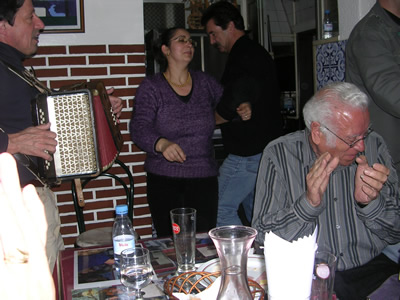
tasca do jaime 2

‘Tasca do Jaime’ taverna Lisbon: real fado music

You won’t always find the best fadistas, but don’t let that scare you off. This is real traditional fado, out of the tourist circle, where the fado singers can enter spontaneously and improvise.

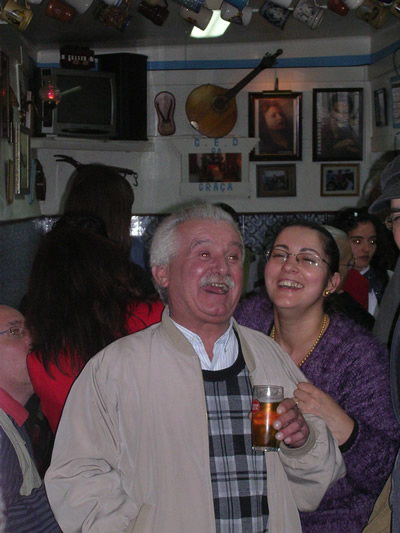
tasca do jaime 1

‘Tasca do Jaime’ taverna Lisbon, Saturday afternoon

As soon as somebody gets up to sing the audience stops talking and all the attention is on the singer. The Portuguese have a lot of respect for the performers and it is of utmost importance that the singers can concentrate and express their emotions in their singing. When the song is about to finish the audience starts applauding and cheering.

tasca do jaime 3

‘Tasca do Jaime’ taverna Lisbon

Fado Vadio on Saturdays, Sundays and public Holidays from 16:00 to 20:00, Rua da Graça 91, Lisbon.

tasca do jaime 4

‘Tasca do Jaime’ taverna Lisbon

Fadistas, as fado singers are known, often wear a black shawl of mourning, as one of Maria Severa did after her heartbreak. Her story epitomizes fado’s connection with saudade, “a feeling of longing or nostalgia”.