Breathtaking views Lisbon: ferry to Cacilhas, restaurant Farol & elevator Cristo Rei statue

A few days in Lisbon? Take the ferry from Lisbons’ Cais do Sodré (every 10 minutes) to Cacilhas , a part of Almada, Lisbon, at the other side of the river Tagus. (Returnticket: cheap)

Ferry Lisbon Tagus River Martijn Kramers

Cais do Sodré, Lisbon, ferry to Cacilhas (near the railway station). Picture: Martijn Kramers

Cacilhas is a picturesque neighborhood of Lisbon in the banks of the river best known by its Cervejarias (traditional beer houses) also offering shellfish, seafood, and fresh fish.
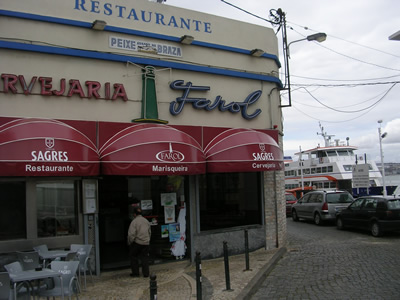
Lisbon restaurants O Farol Cacilhas

Cervejaria/restaurant Farol Lisbon

Ferry timetable from Lisbon to Cacilhas

Restaurant/CervejariaFarol” (lighthouse) is just by the ferry-terminal, the food is finger licking good! We enjoyed a fresh dourada (sea bream). A Cervejaria is a ‘beerhouse’, where beer is produced (or used to be produced) and where you can eat as well. There are many cervejaria’s around and in Lisbon and the quality of the food is normally very good.

Lisbon restaurants ‘O Farol’ seafood Dourada

Restaurant/CervejariaFarol”: delicious sea bream (dourada) Lisbon

Website restaurant ‘Farol Delicious food! Not very expensive  🙂 🙂  YouTube

From restaurant ‘Farol’ you can walk along the river to the elevator to reach the famous Cristo Rei statue and enjoy the wonderful view on downtown Lisbon.
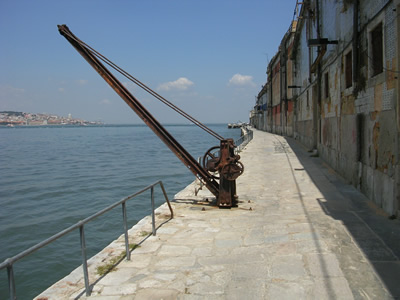
Lisbon Cacilhas Amada ruined warehouses

Abandoned and ruinous old warehouses in Cacilhas, Lisbon on the other side of the river Tagus

Elevator to Cristo Rei Statue

After passing some abandoned and ruinous very old warehouses (wonderful old buildings!) and 2 restaurants: ‘Atire-te-ao-rio’, which means ‘throw yourself into the river’, and restaurant Ponto Final, you can go by elevator to reach the Cristo Rei statue.

Restaurant ‘Atira-te-ao-rio’, 10 minutes walk from the ferry, September 2017

Brasilian restaurant and a perfect romantic location for a great dinner overlooking Lisbon by night.

Lisbon Restaurant Ponto Final view bridge

Restaurant ‘Ponto Final’,  Lisbon

Very good Portuguese cuisine, beautiful views!

Lisbon restaurant Ponto Final, Hans Arjen

Restaurant ‘Ponto Final’, Lisbon

Amazing view, especially while the sun is fading….(romantic!)

Lisbon elevator to Cristo Rei statue

Close: elevator to reach the Cristo Rei Statue.

Lisbon Cristo Rei statue

Cristo Rei Statue Lisbon

A sweeping view of the city and Ponte 25 de Abril (25th of April Bridge) from the top of the 82m (270ft) high pedestal (by elevator). This enormous monument is built in 1959 in thanks to God for having spared Portugal during World War II, inspired by the famous statue in Rio de Janeiro. ‘God opens his arms to the city’. View from Cristo Rei Movie

You can go back to the Cacilhas ferry terminal by bus # 101.

Cristo Rei view Tagus river

Ferry timetable from Lisbon to Cacilhas

Lisbon’s craziest night: June 12, Eve of Saint Anthony & street parties

Lisbon in June: wine, sangria, beer, the smell of grilled sardines, mojitos, caipirinhas, fado, pimba music and lots of people eating, drinking and dancing in the streets of the historical areas.

On the eve of Saint Anthony day, the ‘matchmaker ‘ (Santo António, June 13), Lisbon turns into a huge open air party!

June 12, party time! Historic area Mouraria Rua da Guia Lisbon: Eve of Santo António (Saint Anthony)

In June, the month of the Festas dos Santos Populares (Feast Days of the Popular Saints), the Lisbon nights are filled with lively festivities that take over the city’s historical center. In the ancient Alfama, Mouraria, Graça and Bairro Alto neighbourhoods it all takes place. Of course, you are welcome to join the festivities!

Historic area Mouraria Lisbon, Santo António, Rua João do Outeiro.

Santo António (Saint Anthony), Lisbon’s most popular saint

Santo António (Saint Anthony of Padua), was a Portuguese catholic priest. Many miracles have been attributed to him and he is considered a protector of the souls of purgatory, guardian of good marriages, defender of animals, healer, and advocate of lost objects. Saint Anthony was born in Alfama (1195) near Mouraria, one of the oldest areas of Lisbon.

Lisbon craziest night of the year in area Alfama, nearby Mouraria (YouTube)

Restaurant ‘Zé da Mouraria in June, Rua João do Outeiro 34, Lisbon

Restaurant ‘Zé da Mouraria’ : delicious typical Portuguese food and a popular tourist attraction in a former Moorish quarter of Lisbon, Mouraria. In the month of June, all the streets in the historical center are decorated with garlands and lights.

June 12 in Lisbon: Adamastor, Santa Catarina  near the Tagus River, a popular viewpoint & gathering place.

In the ancient neighbourhoods it all takes place, but this party is also held in other parts of Lisbon, like Adamastor, a popular Tagus viewpoint, with the most breathtaking views on the Tagus river, the 25th of April Bridge and the Cristo Rei monument, overlooking the city of Lisbon.

Lisbon, June 12, Bairro Alto area

The entire month of June in Lisbon is devoted to the Saints festivities, but June 12 is a very special day. While walking around you see people eating and drinking in the streets. The crowds can be immense, there’s music everywhere and everyone around you is in a very good mood, a wonderful feeling! ‘

June 12, 2011. Famous Bica funicular Lisbon, a popular tourist attraction
Partying in the small streets around the famous Bica funicular, highly valued by tourists.

A cool and very popular lounge bar in this street is Bicaense, near the bars of the bohemian district of Bairro Alto , possibly one of the best spots in Europe for a night out. Not only in June, but every night hundreds of people from all over the world are drinking mojitos, caipirinhas and beer out of plastic cups in the narrow streets.

Pastelaria and restaurant “D. João I”, Rua D. Duarte 1-B , Lisbon

Pimba music (songs with naughty lyrics)

On June 12 the festivities in Lisbon already start around noon, and everywhere you hear music coming out of the cafes and restaurants.

YouTube “Quero Cheirar o teu bacalhau” (by Quim Barreiros): ‘I would like to smell your codfish’ 😉 😉

Even the beggar near the cafe started dancing spontaneously …..people are dancing on Pimba music – a term used for a variety of popular Portuguese folk solo singers and bands whose songs are frequently driven by metaphors with sexual meanings.

Historical area Mouraria in June: Rua da Guia, Lisbon

In the month of June all the narrow streets in Lisbon’s historical areas are packed with stalls selling sangria and beer. Everywhere there’s the sizzling aroma of grilled sardines – the traditional food of the Saint Anthony celebrations are grilled sardines – but you can also go for barbecued chicken, chouriços (sausage) or pork.

June 12 Lisbon historical area : Arraial da Mouraria, dancing in the streets

There’s lots of dancing through the night. The best thing to do is just keep going and enjoy! Throughout old Lisbon there are open air parties everywhere. The party goes on until dawn 🙂

More about Lisbon’s craziest night of the year in Mouraria

manjerico-santo-antonio-june-08

Mouraria Saint Anthony Lisbon – pots with manjerico (basil) & small love poems

Basil & love poems

During the Santo Antonio (Saint Anthony) festival it is a tradition to offer a small pot of basil to loved ones, and in the narrow streets there are also stands where pots with manjericos (basil) are sold. Traditionally bought by boyfriends and given as a present to their girlfriends in Saint’s Anthony’s night.

Historical area Mouraria Lisbon in June: religious procession

Yearly parade

At Avenida da Liberdade, from around 8h30 pm June 12, there will be the yearly parade, with people dressed up in beautiful costumes. There’s also the Saint Anthony’s brides.

Youtube movie Saint Anthony festivities 2011

Historic square ‘Largo do Carmo’ Lisbon & April 25 bloodless military coup

Wonderful Largo do Carmo  is one of my favorite squares in Lisbon!  Beautiful trees, historical buildings, fascinating church ruins, the extraordinary Santa Justa elevator and amazing city views!

Largo do Carmo Lisbon, September 2017

This picturesque square is very popular, well known for the terraces, in addition to being the scene of several shootings, both (science fiction) films or documentaries and commercials. Music and traditional dance are performed here during the summer.

Lisbon Largo do Carmo1

Largo do Carmo Lisbon

Springtime 2014

Lisbon square Largo do Carmo kiosk 2

Largo do Carmo Lisbon

A unique fountain stands under trees right in the middle of the square. The Chafariz (fountain) do Carmo was built here in 1796.

Largo do Carmo wikipedia jacarandas

Largo do Carmo and blossoming jacarandas.

Originally from South America, these beautiful trees of the Bignoniaceae family arrived in Lisbon in the mid-17th century and ever since, between May and June when they’re in flower, they have lovely bunches of lilac-toned petals.

Largo do Carmo Military Police Station

Largo do Carmo Lisbon

Portugal’s history & Carnation Revolution

The headquarters of Carmo (Quartel do Carmo) is a very important building for Portugal’s history. Marcelo Caetano (former dictator António de Oliveira Salazar’s replacer) found refuge in the main Lisbon military police station at the time of the revolution.

On April 25, 1974, the day of  the Carnation Revolution, this building was surrounded by the MFA (Portuguese Armed Forces), which pressured Marcelo Caetano to cede power to general Spínola. It was here where the Estado Novo (New Regime) officially came to an end after almost 50 years. More..

25-abril Carnation Revolution 1974 Lisbon

Largo do Carmo Lisbon April 25 1974

1974: The Carnation Revolution (Revolução dos Cravos) &  Eurovision Song Contest

The Carnation Revolution was a largely bloodless coup. Remarkable: there were two secret signals in the military coup: first the airing of the song “E depois do adeus” (“And after the farewell”) by Paulo de Carvalho, Portugal’s entry in the 6th of April 1974 Eurovision Song Contest, which alerted the rebel captains and soldiers to begin the coup.

Largo do Carmo Lisbon & entrance Carmen Convent

Next, on April 25, 1974 at 12:15 am, the national radio broadcast Grândola, Vila Morena, a song by Zeca Afonso, a progressive folk singer forbidden on Portuguese radio at the time. This was the signal that the MFA gave to take over strategic points of power in the country and “announced” that the revolution had started.

More details, videos and songs on Joana Morais’ blogspot

Here you can also find an entrance to the famous Archeological Museum, the gothic ruins of the 14th century Igreja (church) Convento do Carmo).
 –
Lisbon Largo do Carmo church museum Santa Justa2
Ruins of the Convento do Carmo & horrible earthquake in 1755
Open from Monday- Saturday 10h – 18h, cheap entrance. The construction of this monument started in 1389 by order of Nuno Álvares Pereira. The church was destroyed the first of November of 1755 by the horrible and well known earthquake. A lot of people died. More information..
 –
Lisbon Largo do Carmo church museum Santa Justa3
Largo do Carmo  Lisbon: amazing view over Lisbon
The famous tourist attraction ‘Santa Justa elevator’ (Elevador de Santa Justa video), Rua do Santa Gusta, built around 1900 to connect the Baixa and Chiado districts (around 32 m high), can bring you to the Carmo Square.  
 –
Beautiful city view of Lisbon : Santa Justa Lift and Carmo Convent
From the roof terrace of Pollux, a huge warehouse, Rua dos Fanqueiros 276. There’s a pleasant roof terrace & bar/cafe : LESS

Lisbon’s unique Lavra funicular, steep slope & statue dr. Sousa Martins

The Lavra funicular was the first street funicular in the world. It opened on 19 April 1884 and carried 3000 people, free of charge, on that day alone! Originally water-powered, it was converted to electricity in 1915.

Lisbon funicular Lavra1 Rua de Sao Jose

YouTube Lavra funicular Lisbon

It runs from the Rua de São José (near Largo da Anunciada) to Travessa do Forno do Torel. To reach the bottom of the funicular, turn right off the Avenida da Liberdade, or, from Rossio Square, it’s a 10 minute-walk through Rua das Portas de Santo Antão.

Lisbon Lavra funicular Rua de São José6

Waiting for the driver……

Lisbon has three working street funiculars: Lavra, Gloria and Bica, which allow its citizens and visitors to move to and from its hilly districts more easily. All are operated by Carris, (including timetables and funicular’s history) the Lisbon city transport undertaking.

Lisbon Lavra funicular Travessa do Forno do Torel

For me, it is still a miracle!

When you turn left off the funicular, after passing Rua do Instituto Bacteriológico, there’s a lovely park, Campo dos Mártires da Pátria, located on one of the 7 hills of Lisbon, the view from here is really wonderful!

Monument dr Martin Sousa

Here you will be surprised by the spontaneous religious fervour of Portuguese people who have honoured the statue of doctor Sousa Martins in front of the Faculty of Medicine. Yet since the memorial was erected in 1904, it has become the focal point for a religious devotion. People who come here believe that by praying to him and asking for his intervention, they will be cured. More….

Lisbon Lavra funicular driver

Lavra funicular hours of operation: 07:00-22:45, every day except Sunday, when the opening time is 09:00. One way ticket: cheap.

Village Underground Lisbon: creative community & Polly Robbins

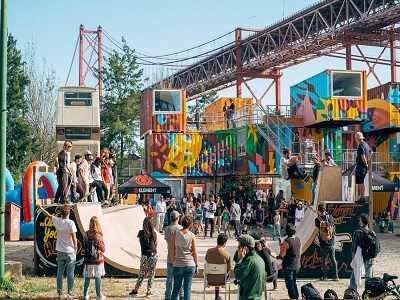
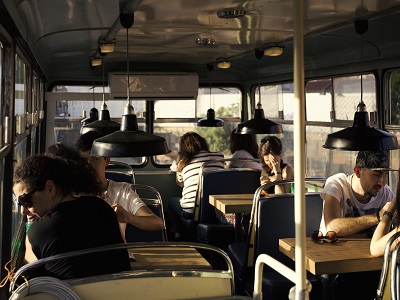
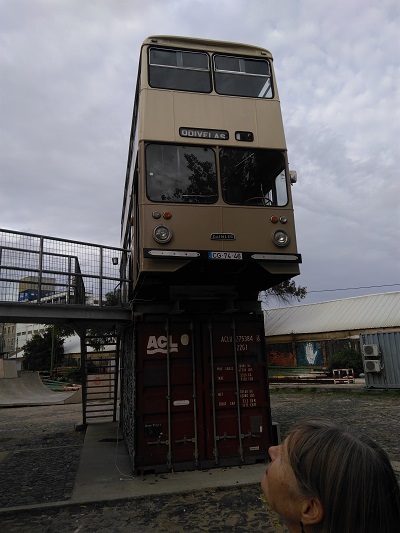
How about a delicious dinner in a dubble-decker retro bus beneath the 25th April Bridge? A great experience, but Village Underground in Lisbon offers much more! It’s a coworking center for creative- and event industries located at the Santo Amaro station in Alcântara, next to the Carris vintage trams & buses Museum.

village-underground-lisbon-1

Village Underground Lisbon in summertime

Lisbon: the hippest place to be

For years, Lisbon was somewhat off the beaten track for young travellers, or millennials seeking a new home. The Portuguese capital crumbled romantically while London, Paris, Barcelona and more recently Berlin enjoyed the cultural status. Yet in the last 10 years the city has seen an explosion in culture, tourism and entrepreneurialism, and is now surpassing its European rivals as the hippest place to be!

village-underground-polly-robbins-november-2016-3

The Village Underground in Lisbon & Polly Robbins, November 2016

Who are you and how have you found yourself at Village Underground?

Polly Robbins: “I come from London. I love London, but the pace of life is crazy and I felt like spending some time in another European capital. Lisbon particularly attracted me because I’m interested in urban cultural development. I studied sociology, looking at how art movements develop in cities, and for the last 3 years I’ve been running a business in London that takes over empty spaces and makes them into venues for culture”.

village-underground-lisbon-dubble-decker-buses-and-containers-3

Village Underground Lisbon

Ex-pats & tourists in Lisbon

Polly Robbins: ‘I heard about Village Underground Lisbon from a contact who knows the London branch. So I contacted Mariana (Director VU), got some funding from the EU Erasmus Young Entrepreneurs scheme, and here I am. At Village Underground I am developing marketing and communications, specifically for the ex-pat and tourists in Lisbon. I’m also developing ways for the co-working community to share their skills and feel more part of a community”.

village-underground-lisbon-live-music

Village Underground Lisbon

So what is Village Underground?

Polly:” It’s a project that began in London in 2009 when a group of friends had a crazy idea to hoist to some decommissioned tube train carriages onto the roof of a building and create a co-working space in Shoreditch. Mariana Duarte Silva, who is the Director of Village Underground Lisbon, was working in London when she came across the space and took a desk to set up her own music agency. She fell in love with it and brought the concept back to Lisbon, where the doors opened in 2012″.

village-underground-lisbon-dubble-decker-bus

Village Underground Lisbon & one of the retro dubble-decker buses

Creative community

Polly: “Village Underground Lisboa sits at the end of the municipal tram yard, beneath the iconic Ponte 25 de Abril. It consists of 14 shipping containers which act as a co-working space for the creative industries. There are about 35 people working here, in web design, graphic design, video making, branding, theatre and music”.

village-underground-lisbon-dubble-decker-bus-december-16-2

Village Underground Lisbon & one of the dubble-decker retro buses, November 2016

Cafe/restaurant & events from January 2017

“There are 2 converted retro buses, one is a café, open to the public every lunchtime and for dinner on Fridays and Saturdays. And in addition, there’s a warehouse space used for events and exhibitions, a recording studio, a large space outside used for events and a skate ramp.

There is a great range of events going on at Village Underground, from parties with electronic and live music, to markets, to exhibitions and performance. Starting January 2017 these will be hosted every Friday and Saturday”.

village-underground-lisbon-dinner-dubble-decker-bus-december-2nd-16

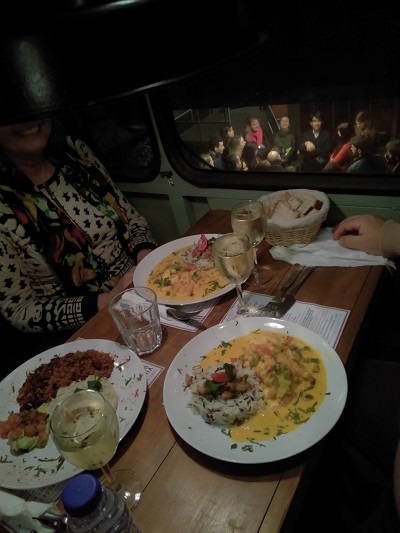
Village Underground Lisbon & delicious dinner in a dubble-decker retro bus 🙂

Tasty food & affordable prices

Our dinner: tapas; Peixe (fish): Moqueca de camarão com arroz selvagem (shrimp Moqueca with wild rice)Chili com carne com basmati de coentros (Cili con carne, basmati rice with coriander): wine , water, sobremesa (dessert). Bill: 77 euro (3 persons). A vegetarian dish is also available.

village-underground-lisbon-dinner-dubble-decker-bus-december-16-view-window

Village Underground Lisbon & a group of visitors

Why should people visit Village Underground?

Polly: “It’s a really interesting space to be in physically, particularly if you like to be surrounded by cool architecture, street art and disused trams and buses! The café serves incredibly tasty food and the team working there is lovely. The people who gravitate towards Village Underground are an amazing bunch – I’ve been warmly welcomed! They come from all walks of life and you don’t have to be chatting too long before you discover that they’re involved in all sorts of weird and wonderful projects”

Village Underground Lisbon delicious lunch January 2017

Village Underground Lisbon & delicious lunch in a dubble-decker retro bus

Muito obrigada! Great food & great service 🙂 🙂

Mafalda Rodrigues, Tania Pines & Mafalda Pais

Village Underground Lisbon delicious lunch January 2017 2

Village Underground Lisbon & delicious lunch in a dubble-decker retro bus

Vegetarian dish, sandwich with salmon, sweet potatoes, 2 glasses of wine, small bottle of water & coffee: 18 euro


Village Underground Lisbon

Both the interior and the terrace have free Wi-Fi. There is free parkingThe only entrance to the Cafeteria is the main gate of the Carris Museum, located at Rua Primeiro de Maio, 103.

Restaurant Bairro do Avillez Lisbon: suprising seating areas & tasty dishes

José Avillez’ new restaurant in Lisbon, Bairro do Avillez (Avillez’ ‘neighborhood’) is located in Chiado. A spacious and spectacular location, with 2 separated seating areas.

restaurant-bairro-do-avillez-lisbon-window-erika-pateo-2016

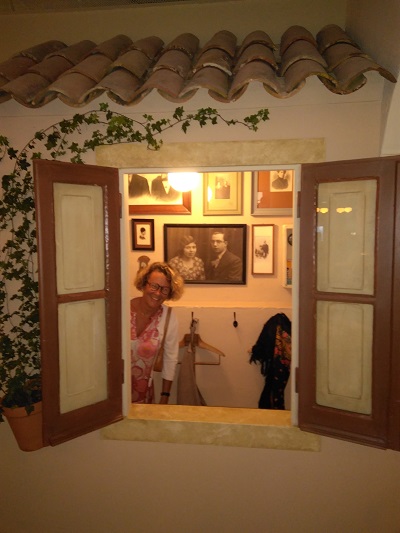
Patio Restaurant Bairro do Avillez decorated as a traditional downtown Lisbon neighborhood & ‘neighbor’ Erika Reusens 😉

 2 Michelin stars

José Avillez is one of the most renowned chefs in Portugal. He currently owns six restaurants, five in Lisbon and one in Oporto. His cooking style, contemporary and of Portuguese inspiration, has earned him a Michelin star in 2012 (restaurant Belcanto in Lisbon) and, in 2014, it received a second one, making it the first restaurant in Lisbon to have this honour).

restaurant-bairro-do-avillez-lisbon-wonderful-pateo-typical-lisbon-neighborhood

Restaurant Bairro do Avillez Lisbon & wonderful decorated spacious patio

Patio restaurant representing a traditional Lisbon neighborhood

The Patio restaurant is really surprising: a huge open kitchen and a wonderful creative decoration. A large skylight lets in plenty of natural light. There are different doors, typical Portuguese tiles and closed- or open windows to give you the idea of being in a traditional downtown Lisbon neighborhood, where people often hanging out of their windows. YouTube

restaurant-bairro-do-avillez-lisbon-august-16-dinner

Restaurant Bairro do Avillez Lisbon & our dinner end of August 2016

Our dinner: 2 couvert 7.00, Bife de Lombo (tenderloin steak) 18.00; Legumes Salteados (sautéed vegetables) 4.00; French fries € 3.00; 1 Bife Tártaro (tartar steak) € 14.00; água Vitalis (bottle of water) 3.00; Wine: Casa Passarella (bottle of white wine) 16.00; (by the glass 4.00). Desert: Avelã (hazelnut cream); Mil Folhas Pastel de Nata 6.00 (litt. ‘thousand sheets’ Pastel de Nata (famous Portuguese egg tart pastry) 6.00.

Bill for 2 persons: 91.00.

restaurant-bairro-do-avillez-lisbon-august-16-dinner-dessert-pastel-de-nata-2

Restaurant Bairro do Avillez Lisbon & delicious desserts

Bairro Avillez patio restaurant: tasty dishes & great ambiance

Once we were seated it took quite some time before a waiter came to our table. This restaurant just opened its doors, it’s understandable. The food was tasty, rather expensive in Lisbon (ca. € 45 p.p.), but the great ambiance was worth it!  🙂

restaurant-bairro-do-avillez-lisbon-entrance-taberne-aug-16

Restaurant Bairro do Avillez Lisbon & Taberna (Tavern)

Three concepts in one space: restaurant, tavern & grocery/gift store

Once you enter number 18 of Rua Nova da Trindade there’s the Taberna (tavern), a good idea to enjoy lunch, dinner or an ‘in-between’ snack in the afternoon. In de Tavern it is not possible to make reservations.

Mercearia (grocery & gift store)

Not just cheeses, sausages and canned goods but also kitchen accessories, books and aprons. More…... (website José Avillez). The charcuterie specialties rely on the advice of the illustrious shop in Lisbon:  Manteigaria Silva’.

restaurant-bairro-do-avillez-lisbon-august-16-mercearia-grocery-store

Restaurant ‘Bairro’ do Avillez Lisbon & the grocery store’s creative decoration

Bairro do Avillez, Rua Nova da Trindade 18. Lisbon

Opening hours: Taberna (tavern) & Mercearia (grocery/gift shop): daily from 12:00 pm till midnight.

Patio restaurant: daily, from 12:00 pm to 15:00 pm and from 19:00 pm till midnight. Closed on public holidays, December 24 (dinner) and 25. Phone: (351) 215 830 290 (reservations). Facebook

restaurant-bairro-do-avillez-lisbon-wonderful-patio-erika-reusens

Patio Restaurant Bairro do Avillez Lisbon, Erika Reusens & the friendly waitress

Tasty & cheap: restaurant ‘O Cantinho do Custódio’ Lisbon & Garden Cerca da Graça city views

Not trendy or chic, but very tasty and cheap: typical Portuguese food in Mouraria, historic area of Lisbon, close to a new park with wonderful old town city views. Easy to reach from square Praça Martim Moniz (tram 28). Closed on Sundays.

Restaurant ‘O Cantinho do Custódio’ Mouraria Lisbon, owners & daughter Ilda

Away from tourist areas in Lisbon you can find good and cheap restaurants, like restaurant ‘O Cantinho do Custódio’ (Custódio ‘s Corner) in historic area Mouraria: tasty Portuguese food for a very good price: around 5-7 euro pp  😉

Restaurant ‘O Cantinho do Custódio’ Mouraria Lisbon: good and cheap Portuguese food

Our bill: bife da casa 7.00 € (Portuguese fried beef with an egg on top of the meat, rice, or fried potatoes and salad), polvo (octopus): 5.00 €, carafe of house wine 0.50 l (vinho da casa): 1.40 €, bottle of water (agua): 0.85 €, dessert (sobremesa): maçã assada (roasted apple) 1.50  €, 2 coffee: 1.20  €, licor Beirão  (Portuguese liqueur) : 0,75  €

Restaurant ‘O Cantinho do Custódio’ Lisbon: polvo & batata cozida (octopus & potatoes) 5.00 €

Very popular: bitoque (Portuguese steak)

The Portuguese steak, bife, is a slice of fried beef served in a wine-based sauce with fried potatoes, rice, or salad.
Bitoque (toque means touch), comes from the idea that the meat only ‘touches’ the grill twice, meaning that it does not grill for too long before being served, resulting in a rare to medium-rare cut of meat. A fried egg is placed on top of the meat.

Restaurant ‘O Cantinho do Custódio’  area Mouraria Lisbon: tasty and cheap Portuguese food

Restaurant ‘O Cantinho’ do Custódio
Calçada Do Monte 3
Mouraria Lisbon
Tel.: (00351) 218860826, no WiFi

About 10 minutes walk from starting point tram 28 square Martim Moniz

More about  ‘eléctrico 28′. This legendary tram is a tourist attraction in itself. It goes all around town.

Mouraria Lisbon O Cantinho restaurant 2011 Arjen

Restaurant ‘O Cantinho do Custódio’  area Mouraria Lisbon: very tasty and cheap Portuguese food

Eat & drink like a local

Although this restaurant is quite close to the touristy areas of Lisbon, this is a local place that serves typical Portuguese food. You are very welcome, but the owners do not speak English.

Restaurant ‘O Cantinho do Custódio’  area Mouraria Lisbon & roasted apple 1.50 €

Historical area Mouraria & history

Historical area Mouraria exists more than 900 years, together with Alfama Lisbon’s oldest neighborhoods of great historical value. The former Moorish quarter is a muddle of very narrow streets, stairs and small squares, which gives the visitor a glimpse of a forgotten age.

Garden Jardim da Cerca da Graça Lisbon, wonderful views & the Saint George castle

Nearby garden Jardim da Cerca da Graça & wonderful old town city views

The new garden, with an area of ​​1.7 hectares, was inaugurated on 17 June 2015. It is the largest green space for public access to historic districts of Lisbon, the connection between the neighborhoods of Graça and Mouraria, opened to the public.

Garden Jardim da Cerca da Graça Lisbon & wonderful city views

Kiosk & childeren’s playground

According to the Lisbon Municipality, the project implemented on site included the planting of about 180 trees and shrubs. It was closed to the public for centuries.
There are three viewpoints, a picnic park, an orchard, a playground for children and a kiosk with a terrace. They serve soups, sandwiches and homemade cakes. ​

Garden Jardim da Cerca da Graça Lisbon, kiosk & beer: 1 euro 🙂

Jardim da Cerca da Graça
Calçada do Monte 46,
Graça, Lisbon
Opening hours: 10:00 to 22:00 (also on Sundays)
near children’s play ground, Wifi available

Garden Jardim da Cerca da Graça Lisbon & wonderfull city views

More pictures

Remarkable Cemetery of ‘Pleasures’ Lisbon & resting place Portuguese celebrities

This remarkable ‘city of the deads’ is really an interesting place to visit.  Famous Portuguese personalities are buried here, mainly actors,  TV talk show hosts, singers, writers & painters

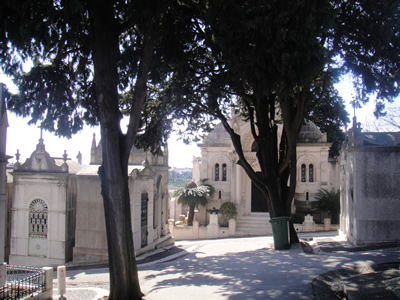
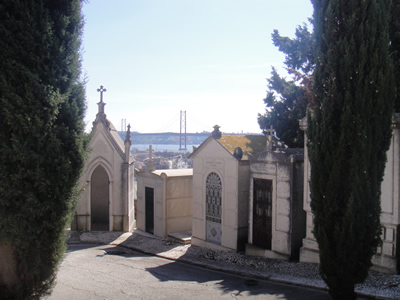
‘City of the deads’: cemetery of ‘Pleasures’ Lisbon: a funerary chapel & 4 garbage bins……??  😉

Famous fado artist Amália Rodrigues 

The mortal remains of  Amália Rodrigues, the famous fado artist,  were transferred to the National Pantheon  in Lisbon (under enormous pressure from her admirers and a change in the law requiring a minimum of four years before repatriation).

Cemetery of ‘Pleasures’ Lisbon

City of the deads: cemetery of ‘Pleasures’ ? (Cemitério dos Prazeres)

After the city of Lisbon was hit by an outbreak of cholera in 1833, causing thousands of deaths,  it was urgent to create a large cemetery for both rich and poorer victims. It has the weird name of  Cemetery of ‘Pleasures’, called after the nearby neighborhood (Prazeres) with the same name. Many of its tombs are big mausoleums, some with the size of small chapels.

Cemetery of Pleasures Cemitério dos Prazeres 2 Lisbon

Cemetery of ‘Pleasures’ Lisbon & one of the 70 ‘streets’

Tranquility & landing/take-off zone of Lisbon’s airport

Once you enter the cemetery the sound of the city fades and the tranquility overwhelms you. Beautiful trees, a strange atmosphere and joyful singing of birds. You imagine yourself walking in a previous century, only disturbed by plane noise, rather loud, every 10 minutes. The cemetery is located close to the landing/take-off zone of Lisbon’s airport.

As far as I know nobody at this cemetery seems to complain 😉 🙂

Cemetery of Pleasures Cemitério dos Prazeres 3 Lisbon

Cemetery of ‘Pleasures’ Lisbon

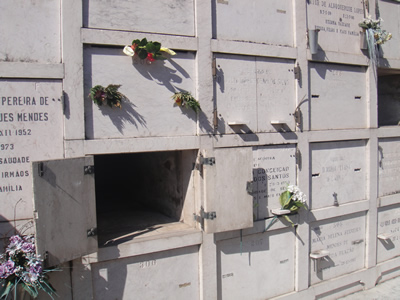
Most of the Prazeres mausoleums belong to rich, old or ‘important’ families, like f.i. the Palmela family. Many of the mausoleums are richly elaborated, have fine sculptures and decorations. There are also statues of the deceased. It’s like a ‘city in a city’ for the dead, with well-defined lanes (70! ) and funerary chapels that were built to look like little houses.

Cemetery of Pleasures Cemitério dos Prazeres 4 Lisbon river view

Cemetery of ‘Pleasures’ Lisbon

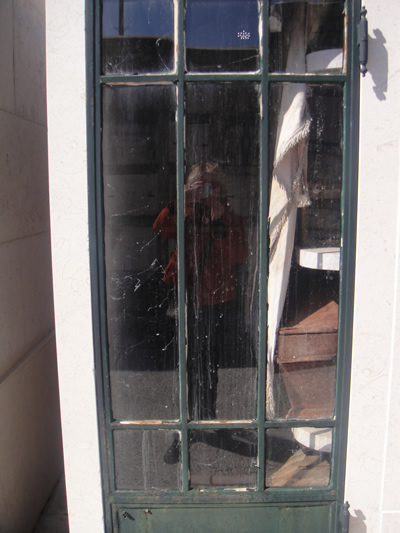
The unusual about a lot of these graves is that they have little “front doors” with glass windows through which you can see the caskets and remnants of the dead and their visitors. Most of the trees are a species cypress (Cupressus sempervirens), much used in Portuguese cemeteries.

Cemetery of Pleasures Cemitério dos Prazeres 5 Lisbon river Tejo views

The cemetery also provides great views over the Alcântara valley, the river Tagus and the 25 April Bridge (Ponte 25 de Abril).

Until 1985, the great Portuguese poet Fernando Pessoa was burried here. Thereafter his mortal remains were transferred to the cloisters of the Mosteiro dos Jerónimos

Cemetery of Pleasures Cemitério dos Prazeres 7 Lisbon

Cemetery of ‘Pleasures’ Lisbon

An example of a ‘front door’ with glass windows through which you can see the caskets.

Cemetery of Pleasures Cemitério dos Prazeres 8 Lisbon

Cemetery of ‘Pleasures’ Lisbon

TRAM 28 – last stop

The cemetery, one of the largest of the Portuguese capital, can be reached by taking Electrico 28, which is a traditional and charming Lisbon tram, to its last stop in Prazeres. Open every day of the week from 09:00 – 17:00 (May – September 09:00 – 18:00). Largo dos PrazeresPraça São João Bosco 

More about cemeteries in Portugal

Cemiterio Prazeres entrance

Cemetery of ‘Pleasures’ Lisbon : entrance

YouTube

Amateur Fado Lisbon: cafe/bar ‘Tasca do Jaime’ & Dutch (!) Fado singer Henriquinha

Fado is a part of the culture in Portugal and many Portuguese have the idea they can sing just as wonderful as Carlos do Carmo or like the legendary Amália Rodrigues, Queen of fado, Lady of Lisbon..

Café/bar ‘Tasca do Jaime’ Lisbon & very talented Dutch Fado singer Henriquinha; Guitarra Portuguesa: Custódio Magalhaes; Viola do Fado: Duarte Nunes

Fadista (fado singer) Henriquinha Maria (Hendriktje Ruiter, born and professionally trained in Holland) is a very talented singer living in Lisbon. She really loves it to sing the fado; now she’s becoming famous in Portugal due to a Fado song contest on Portuguese TV.

YouTube Hendriktje ‘Amor de mel, amor de fel’

Hendriktje Dutch Fado singer Portuguese TV Ha Tarde dec 14 2

Dutch singer Henriquinha Maria & host Herman José on Portuguese TV, ‘Grande Premio do Fado’

Dutch singer Hendriktje Ruiter participated in a Fado talent show on Portuguese TV. After two rounds she won enough points to perform in the semi-final of this song contest in May 2015.

Interested to know where this Dutch fadista will sing in Lisbon? Mail to: hendriktje@gmail.com ; more pictures: facebook ; phone: 00351 917 035 578

Tasca do Jaime lisboa 3 Henriktje Fado Vadio

Lisbon, cafe/bar ‘Tasca do Jaime’ December 2014 & Fado Vadio (amateur fado)

Amateur setting of Portuguese Fado is called FADO VADIO

In the old neighborhoods of Lisbon there are local bars or tascas where everybody can sing fado (max. 2 songs). Even you, if you might like it! 😉 …. In this setting only the guitarists are paid to accompany the singers.

Tasca do Jaime Lisboa Dec 2014

Café/bar ‘Tasca do Jaime’ Lisbon December 2014

Silêncio que se vai cantar o fado (Silence)

In case you don’t understand the Portuguese language: when the light is dimmed, it means that ‘silence is asked because fado is going to be singed” …

Lisbon Tasca do Jaime Graca Libon dec 14 2

Tasca do Jaime Graca area Lisbon, FADO VADIO December 2014: fadista Fernanda Proença. (YouTube). This lady has a wonderful voice! 🙂

Fado Vadio: ‘Dying cats or divine song’

The Portuguese have a lot of respect for the performers who like to express their emotions. You can enjoy a fado singer who sings so beautiful it will give you goosebumps, followed by someone who think he or she is a really good singer…..

Or, as Tasca do Jaime’s neighbors Mike and Alice described on their blog: ‘ It’s a very authentic little cafe bar in our neighborhood. The fado heard there can sound like dying cats or divine song..’ 😉

Read more about Fado Vadio….

Tasco Jaime Graca dancing nov 3014

Tasca do Jaime Lisbon, Fado vadio December 2014: Zita & João Soeiro (YouTube)

Café/bar ‘Tasca do Jaime ‘ FADO afternoons & atmosphere

Seven years ago I wrote about this Tasca, but now the atmosphere has changed. The décor is really nice and authentic but the wine and petiscos (tapas) are overpriced: we paid about € 20 pp.  A small plate of ham and cheese or pasteis (pastries) and a jarro (garafe, ca. 3 glasses) filled with not the best quality of Portuguese wine 🙁   are obliged (on fado afternoons between 16:00 to 20:00). If standing at the counter or on the sidewalk watching pass the electric tram 28, has no such obligation.

Anyway, the performances of the guitar players and the fado singers were very good that day!

Tasca Jaime december 2014 Alexandra e Louis

Tasca do Jaime’ Lisbon December 2014: friends Alexandra & Louis

Café/bar ‘Tasca do Jaime’ Lisbon,  Rua da Graça 91, Lisbon. Fado Vadio on Saturdays, Sundays and public Holidays from 16:00 to 20:00. Phone : 351 21 8881560

Museum of Decorative Arts Fress Lisbon: Portuguese 17th-18th C. nobility collection & arts and crafts ateliers

Would you like to see how the Portuguese nobility lived in their luxury palaces during the 17th and 18th Century? If you are planning to visit Lisbon take the opportunity to visit the Museum of Decorative Arts, the former city palace.

Museum of Decoratve Arts Lisbon 1

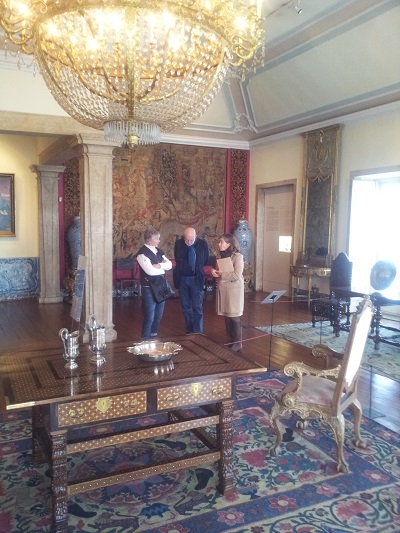
Museum of Decorative Arts Fress Lisbon (Museu Artes Decorativas Fress) 2014: visitors from Holland Ans de Graaf and Loek Polack & tour guide Margarida Serra

The Portuguese nobility, during the 17th and 18th Century among the world’s wealthiest, embraced the sumptuous style of ‘Versailles’ and acquired lavishly decorated items throughout the continent.  “While everyone else in Europe was leveraged in that period, the Portuguese were fully financed.” More….

But there’s much more to see in this Museum, like the beautiful Portuguese tiles (azulejos).  And a visit to the ateliers next to the museum is a wonderful experience!

Museum of Decorative Art Fress Lisbon King Jose Room 2

Museum of Decorative Arts Lisbon: King Jose room (1714 – 1777):  exuberantly carved furnishings in ‘Rococo’ style. Remarkable rosewood table (movie)

An example of a noble house in the 17th and 18th centuries. Portuguese aristocrats loved shopping, also in other countries: beautiful decorative arts including textiles, furniture, paintings, jewelry, collections of silverware, woven fabrics, China crockery and ceramics.

Museum of Decorative Arts 2009 2

Entrance Museum of Decorative Arts Lisbon: ‘Coupé Berlin, 18th Century.

In 2009 I also wrote about this museum, at that time you were not allowed to take pictures. Now you can wander freely from room to room and take time to make photos. The Museum has suffered several changes and it is really worth a visit.

Museum Decorative Arts Fress Lisbon Panel azulejos children 2

Museum of Decorative Arts Fress Lisbon: a beautilful tile panel & guided tour for children

Besides preservation, exhibition and research of the peaces in display, the Museum also promotes information throughout different audiences, converging the guided tours, as well as carrying out conferences and thematic arts- and craft workshops.

Museum of Decorative Arts Fress Lisbon- Portuguese Chairs Room

Museum of Decorative Arts Lisbon: new is a room with beautiful antique Portuguese chairs

The Ricardo do Espírito Santo Silva (1900 – 1955) Foundation

Ricardo do Espírito Santo Silva was the third son of a Portuguese banker with a remarkable name, because Espírito Santo means ‘Holy Ghost’.  This business man, art lover and Maecenas, and besides famous as one of the most renowned Portuguese bankers, donated to Portugal the wonderful Azura Palace and a decorative art collection.

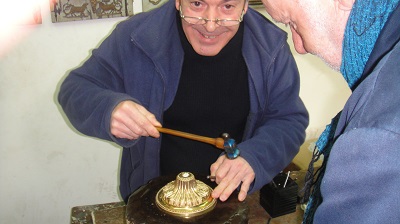
Ana Sim-Sim, our guide to the traditional Art & Crafts Ateliers and mr. Artur Sousa

Make a visit to the ateliers: an extraordinary experience!

In the former Palace there are 18 traditional Arts & Craft ateliers. Besides restoration of ancient pieces, new ones are manufactured with high technique and artistic quality, incorporating traditional techniques and methodes. A wonderful combination of modernity and tradition! Very creative people are at work here, dedicated to traditional breeding and restoration of old pieces (cabinet-making, inlays, wood carving, chiselling, book decoration, trimings and upholstery)

Museum Decorative Arts Fress Lisbon beautiful patio for lunch

Museum of Decorative Arts Lisbon: romantic and quiet patio to enjoy lunch, but today it’s raining  🙁

The Museum’s Cafetaria (there’s also a space inside for rainy days): from 12:30 to 14:30 you can enjoy soup, dish, vegetarian pie, salad, bread and olives, dessert, fruit, cold tea / juice, water, coffee (€ 10.00). The buffet changes every day.

Museum of Decorative Arts Fress Lisbon formeer palace entrance ateliers

Museum of Decorative Arts Lisbon, Largo das Porta do Sol 2 & entrance to Arts & Crafts Ateliers

The Foundation Ateliers are open to guided tours without pre-booking on Monday (11 am + 3 pm), Wednesday (11 am + 3 pm) and Thursday (3 pm). In English or Portuguese (in other languages according availability). Pre-booked guided tours are available from Monday to Friday. Call (00351) 21 881 46 39/00 ​

View from one of the Museum’s windows February 2014: popular tourist viewpoint Portas do Sol

Museum of Decorative Arts, Largo das Portas do Sol, 2 , located in the historic area Alfama, one step away from one of Lisbon’s most popular tourist attractions: viewpoint (miradouro) Portas do Sol: stunning river Tagus views!

Musum of Decorative Arts Lisbon atelier1

Mr. Artur Sousa at work in one of the Museum’s ateliers. Website (FRESS) with presentation: (several Movies)

Museum of Decorative Arts, Largo das Portas do Sol  Alfama , easy to reach by legendary tram 28.

Facebook  Closed: New year’s Day, Easter, May 1st and Christmas (December 25). Adults 4.00 euro, free entrance children aged 12 or under. Open: 10:00 to 17:00.