Saint Anthony Lisbon party time in June: parades, sardines & Fado music

In June, the month of the Festas dos Santos Populares (Feast Days of the Popular Saints), the Lisbon nights are filled with lively festivities, parades and live music that take over the city’s historical center.

Lisbon Santo Antonio June garlands Mouraria

Mouraria

The main Saints’ days are for Santo Antonio (June 12-13), John (June 23-24) and Peter (June 28-29). Program Festas de Lisboa’ (also in English)

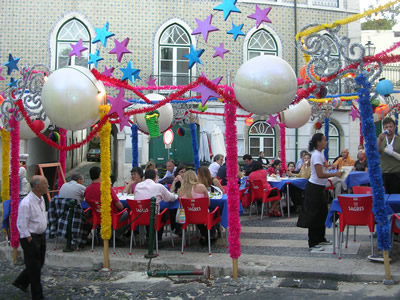
All the streets in the historical center are decorated with garlands and lights.

Lisbon Santo Antonio 2 women Alfama

Historic Alfama, in June 2008.

Santo Antonio festivities & Portuguese flags (EFC) football

Lisbon craziest night of the year in area Alfama, nearby Mouraria (YouTube)

Lisbon Santo Antonio June restaurant A Tasquinha

Restaurant ‘A Tasquinha’,

Largo Contador Mor, Castelo area, really good sardines!

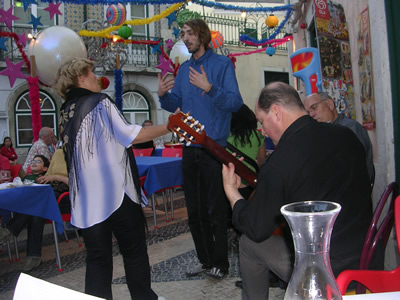
Lisbon Santo Antonio June Fado Restaurante A Tasquinha area Castelo

Eating sardines while listening to the fado singers.

Fado came long after Saint Anthony, but its major theme is nostalgia and longing-for what is lost and for what has never been gained. Anthony fits right into this scene!

Lisbn June Santo Antonio Faso Alfama

Live fado music in Alfama

The streets are filled with the delicious (strong) smell of sardines being grilled. It’s not a good time for the sardines 😉 though as everywhere in Lisbon you see people grilling sardines outside their homes and the narrow streets fill up people in party mood.

Lison Santo Antoinio June sardines

Sardines & Saint Anthony festivities belong together

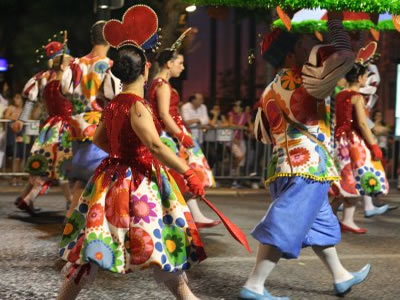
On the night of June 12 you can enjoy the famous yearly Santo Antonio costume Parade. All the clubs and associations of Lisbons’ neighbourhoods descend on Avenida da Liberdade to compete for the best parade, music, costume and choreography.

Santo Antionio costume Parade Lisbon

More…..

Santo Antonio (Saint Anthony) Mouraria 2 girls

Fábulas Lisbon: restaurant, café, unique gallery & Joanna Latka’s wonderful art

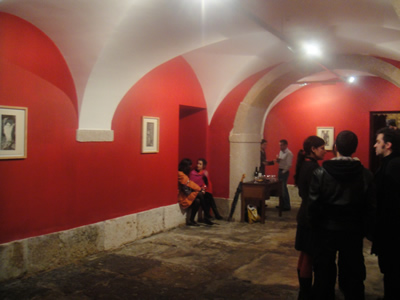
Fábulas , located in Chiado Lisbon, is a combination of a restaurant, café, wine bar and a unique gallery. There is an exhibition every other month. The month when there is no exhibition, there are various activities such as concerts or cinema cycles.

Fabulas Joanna Latka Lisbon 5

Fábulas Lisbon

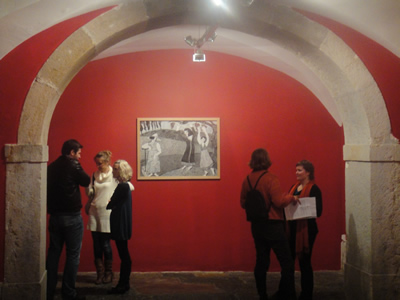
March 2010. Fábulas is showing the latest wonderful works by a Polish artist, Joanna Latka (r), currently living in Portugal, actively integrated in the Lisbon art scene with a Masters in Fine Art.

Fabulas Lisbon Joanna Latka 1

Fábulas Lisbon

The stone arches give this space a unique characteristic. Antique furniture where some tables are old sewing machines.

Fabulas Joanna Latka Lisbon dinner 2

Fábulas Lisbon

Our choice: Cuzcus Prince (€ 7), soup (€ 2,60), glass of wine (€ 2,40). The atmosphere is very relaxed, it’s also a great place for lunch or just lounging.

Fabulas restaurant cafe gallery Joanna Latka Lisbon

Fábulas Lisbon

The menu honors the fables (Fábulas means fables in Portuguese), like Cinderela, a delicious warm pumpkin salad, spinach and chevre foam…or Figaro, (chickpea, pumpkin, eggplant, cherry tomato and goat cheese….)

Fabulas Joanna Latka Lisbon 3


Fábulas Lisbon

The exhibitions are organized by Galeria das Salgadeiras 

Fabulas Joanna Latka Lisbon 7

Joanna Latka, fine art printmaking – illustration – drawing

Continually producing for exhibitions, presently incorporating unique variations of contemporary ink techniques in illustration and etching – inspired from personal life-experience and autobiographical interpretations.

Fabulas restaurant cafe gallery Joanna Latka Lisbon 6

Fábulas, Calçada Nova de São Francisco, 14, Lisbon

Phone (00351) 213 476 323, open from 10:00 – 24:00, Saturday from 10:00 – 01:00, Sunday from 11:00 – 19:00. Highly recommended!

Fabulas Joanna Latka Lisbon 8

Fábulas Lisbon

In summertime it has a pleasant terrace on the sidewalk.

Fabulas Restaurant cafe Baixa street

Website: http://www.fabulas.pt/ Facebook

Restaurant ‘The Temptations of Goa’ Lisbon & Indo-Portuguese cuisine

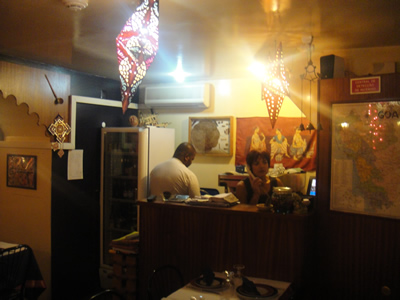
Restaurant “Tentações (Temptations) de Goa” really is a blessing! Located in a  narrow alley, a little bit hidden in Lisbon’s old neighborhood of Mouraria , Rua São Pedro Mártir 23 (Street of martyr Saint Pedro).

Lisbon Tentacoes Jesus Maria2

Restaurant “Tentações (Temptations) de Goa” Lisbon

Update 2016: Jesus Lee started his own restaurant in Lisbon

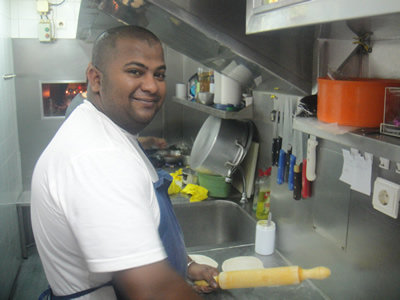
Cook Jesus Lee (Goan origin) and owner Maria dos Angus (Maria of the Angels) are really nice people. The genuine Goan family food is created with Jesus’ love !

Lisbon Tentacoes Goa Kitchen3

Restaurant “Tentações (Temptations) de Goa” Lisbon

Jesus Lee: “I was born in Goa in 1979. My mother expected a Christmas baby, but I finally arrived January 5. She is a fan of Jesus and my father admires Bruce Lee. I learned cooking from my mother, she really is a talented cook and I love it too. After finishing school, at the age of 14, I came to Portugal. In 1996 I met Maria, the owner of this restaurant and then we started to work together”. “I’m still a bachelor, looking for a nice woman 😉

Lisbon Tentacoes Goa food7

Restaurant “Tentações (Temptations) de Goa” Lisbon

The atmosphere is very cosy and informal. I like the local cuisine very much, but the taste of the dishes (hot or medium hot) of the former Portuguese colony is delicious!  Lisbon has many immigrants from all the former colonies – amongst them the folks from Goa.

Lisbon Tentacoes Goa food3

Restaurant “Tentações (Temptations) de Goa” Lisbon

Camarão rechado (Prawn Massala 13,50 euro), small bottle of white wine 7.50, Chetni of coriander (sauce), Goan curry sauce, Chapati (Goan bread).

Delicious. Whow! From now, I am a fan of Jesus (Lee) 😉

Sony Lisbon sept Tentacoes Goa men1

Francisco Torres, Antonio Policarpo and José Pedro Torres

Tentações de Goa”, Rua S. Pedro Mártir, nº 23. Open for lunch from 12:00, dinner from 19:00 – 00:00. Closed on Sundays and Holidays. It is advised to make reservations! Vegetarian friendly. Call (00351) 218875824, Tlm: (00351) 914 814 043.

Lisbon Tentacoes Goa Entree Rua Pedro Martir 23

Restaurant “Tentações (Temptations) de Goa” Lisbon

History: Goa, visited by lots of tourists each year, is India’s smallest state, located on the west coast of India. Vasco da Gama is the largest city, named after the Portuguese explorer. The city of Margao still exhibits the influence of Portuguese culture. The Portuguese overseas territory existed for about 450 years, until it was annexed by India in 1961.

Lisbon Tentacoes Goa street by day Roa Pedro Martir6

The tiny street in Mouraria in the afternoon.

Lisbon’s area Mouraria, is one of the oldest of Lisbon and a narrowed maze of tiny streets and stairs. Really worth a visit!  🙂

Lisbon Tentacoes Goa Jesus Maria Rua P Martir 2

Jesus & Maria are taking a break….

Restaurant ‘Clube de Jornalistas’ Lisbon: gorgeous garden & André Magalhães

You don’t need to be a member of Lisbon’s ‘Clube de Jornalistas’ (‘the Press Club’) to visit this restaurant, and it’s really worth it! Among it’s habituées you can find diplomats, politicians and, of course, journalists.

Lisbon Restaurant Clube de Jornalistas Rua das Trinas

Restaurant ‘Clube de Jornalistas’ Lisbon

The Press Club’s restaurant is set in a very charming 18th century building with a lovely inner-garden. The kitchen offers creative Mediterranean food (vegetarian friendly) and the wine cellar is representative of the portuguese winemaking tradition. Located in the centre of Lapa, Rua das Trinas 129.

Lisbon Restaurant Clube de Jornalistas garden4

The wonderful inner-garden of Restaurant ‘Clube de Jornalistas’

‘Clube de Jornalistas’ is a perfect venue for group gathering or a celebration. Journalists and eating out go hand in hand, so Lisbon’s ‘Clube’ was a natural progression for local chef and Co-owner André Magalhães with his years of media experience.

Lisbon Clube de Jornalistas garden dinner 11

Restaurant ‘Clube de Jornalistas’ Lisbon, garden

The excellent wine list is also served by André Magalhães, a leading light in the slow food movement and a talented food & wine journalist, writing for Wine Passion magazine, Beer Passion, Lisbon Golden Guide, Slowfood and others.

Lisbon Clube de Jornalistas Restaurant inner-garden

Restaurant ‘Clube de Jornalistas’ Lisbon, inner-garden

We enjoyed outside dining in the wonderful quiet inner-garden, surrounded by trees and flowers.

Restaurant ‘Clube de Jornalistas’ is a mixture of old Portuguese architecture and modern cuisine with an exotic touch.

Lisbon Clube de Jornalistas Lapa dining inside

Restaurant ‘Clube de Jornalistas’ Lisbon: a dining rooms inside

‘The Club’ was founded in 1986. During the Salazar period (Salazar was a dictator who ruled Portugal from 1931 to 1970), the Casa da Imprensa in Chiado was a secret meeting place. After the revolution, some of the members went on to found the ‘Clube de Jornalistas’.

Restaurant Clube de Jornalistas garden creative cuisine dinner5

Tuna “escabeche” with fried portuguese polenta and clam sauce (14.50 €)

‘The Club’ is an inviting space to long conversations at lunch time and to cheerful gatherings at night’.

Clube de Jornalistas, Lapa/Estrela (facebook)
Rua das Trinas
129
1200-857 Lisbon
+(351) 213 977 138/ 21 396 57 74. Mail: cj@clubedejornalistas.pt
Open: Monday through Saturday 12.00-02.00

Restaurant Clube de Jornalistas Press club garden dinner1Restaurant Clube de Jornalistas Press club garden dinner4

Carpaccio of Tuna from the Azores, wild rocket and S. Jorge cheese (10.00 €) house-smoked duck breast and sauted Pears (12.00 €)

Restaurant ‘Chaminés do Palácio’ Lisbon, great lunch & Palace of Independence

There are a lot of high quality restaurants crowding the downtown streets of Lisbon, but if you like to enjoy a great Portuguese lunch located in the heart of Lisbon in a pleasant and historic environment, I can recommend ‘Chaminés do Palácio’ (‘the chimneys of the Palace’).

Independece Palace Lisbon Restaurant Chamines do Palacio chimneys

Restaurant ‘Chaminés do Palácio’ (‘the chimneys of the Palace’) Lisbon

The restaurant’s entrance and the beautiful patio of the Palácio da Independência  (Palace of Independence), located near Rossio Square on the north side of the Largo de São Domingos. The building’s foundation stone was laid in 1509 and some of Manueline details from this time can still be detected in the inner courtyard, for example the door decorations. The two conical kitchen chimneys are reminiscent of the royal palace at Sintra.

Restaurant Chemines do Palacio Lisbon Independence Palace 1

Restaurant ‘Chaminés do Palácio’ (‘the chimneys of the Palace’) Lisbon

Paulo Saraiva de Reffóios (with sunglasses): “Recently I started (February 2009) this restaurant. I used to work as a hotel director for 20 years but besides I always had a real passion for Portuguese gastronomy and for many years I enjoyed cooking for friends”. “At the moment you are welcome to enjoy a (Portuguese) lunch here (June 2009), dining is possible on request from 12 persons”.

The other 2 gentlemen are José Cardoso (and daughter Filipa) and Henrique Santos, ‘Lucinda Tudo Bom’ wine producers. At the table a delicious bottle of Douro wine: Fraga Alta (High Crag) Douro Doc 2003.

Lisbon Restaurant Chamines do Palacio Independence Palace Rossio Paulo owner

Restaurant ‘Chaminés do Palácio’ (‘the chimneys of the Palace’) Lisbon

My friend Erika Reusens and Paulo Saraiva de Reffóios, the very friendly and always joking restaurant owner. Our choice for lunch: salada de rucola com requeijao (salad with cream cheese) € 8; salmão fumada com boulgour (smoked salmon with bulgur) € 12; agua (water) € 2,50; um copo do vinho branco (glass of white wine) € 2,50; bread and delicious salted butter € 3.

Lisbon Restaurant Chamines do Palacio Independence Palace inside

Restaurant ‘Chaminés do Palácio’ (‘the chimneys of the Palace’) Lisbon

Visit the Independece Palace: each Friday at 15:00

If you wish you can enjoy your lunch inside of this beautiful building.The name Palácio da Independência (‘Independence Palace’) recalls a curious event that occured in 1640: a conspiracy against the Spanish occupation. If you are in Lisbon you can visit the palace. More information…….

Independent Palace restaurant Chamines do Palacio azulejos ship

Restaurant ‘Chaminés do Palácio’ (‘the chimneys of the Palace’) Lisbon: beautiful tiles

The walls of this former palace are decorated with beautiful azulejos (Portuguese tiles). The azulejo is a form of Portuguese painted, tin-glazed, ceramic tilework. They have become a typical aspect of Portuguese culture. Azulejo comes from the Arabic word az-zulayj, meaning polished stone.

Independence Palace restaurant Chemanes do Palacio patio garden 1

Restaurant ‘Chaminés do Palácio’ (‘the chimneys of the Palace’) Lisbon

Wherever you go in Portugal, azulejos are to be found inside and outside cafes, churches, palaces, ordinary houses and even ceilings, train- or subway stations. Many azulejos chronicle major historical and cultural aspects of Portuguese history.


 Independence Palace Rossio 12 entrance restaurant Chamines do Palacio

Restaurant ‘Chaminés do Palácio’ (‘the chimneys of the Palace’) Lisbon

‘Chaminés do Palácio’, Largo de Sao Domingos 11.  Mail: chaminesdopalacio@gmail.com

Tlm (0351) 919450754

Largo Duque de Cadaval Lisbon near Rossio Station & sunny open-air cafes

Right on the leftside of the Rossio Station in Lisbon, there’s Largo Duque de Cadaval. It ‘s a bit hidden behind the Rossio train station, full of sunny open-air cafes.

Lisbon Largo Duque Cadaval Rossio Station3

Largo (square) ‘Duque de Cadaval’ Lisbon near Rossio Station

This place is a good idea while you’re waiting for the train. A coffee (bica) 0.95 euro). Even in wintertime when the sun is shining you can sit outside, the terraces are protected from the wind.

Lisbon Largo Duque Cadaval Rossio Station8

Largo Duque de Cadaval Lisbon near Rossio Station

Restaurants and cafés has been created here, apart from all the noice and traffic.

Lisbon Largo Duque Cadaval Rossio Station4

Largo Duque de Cadaval Lisbon near Rossio Station

On the background you see Calcada do Duque, the beginning of the more than 300 stairs leading to Bairro Alto

Lisbon Largo Duque Cadaval Rossio Station7

Square ‘Largo Duque de Cadaval’  Lisbon near Rossio Station

The ice cream shop Gelateria Finzi Contini. From outside it does not look like an ice cream shop, but it is, and a good one.

Lisbon Largo Duque Cadaval Rossio Station6

Square ‘Largo Duque de Cadaval’  Lisbon near Rossio Station

Natural ingredients and recipes are an Italian/Argentinian fusion. 4.00 euro and delicious! Besides they serve home made pastry, sandwiches and crepes.

Lisbon Largo Duque Cadaval Rossio Station9

Square ‘Largo Duque de Cadaval’  Lisbon next to Rossio Station

After all the renovations this place is this really beautiful.

Lisbon Largo Duque Cadaval Rossio Station11

Square ‘Largo Duque de Cadaval’  Lisbon near Rossio Station

Finzi Contini ice cream shop, Gislaine Nazario. Largo do Duque, de Cadaval Lisbon

Restaurant/bar ‘Tropical do Meco’ in Aldeio do Meco (40 km from Lisbon): great gastronomy

Aldeio do Meco is a small rural village, about 1 km away from the fabulous and famous sandy Meco beaches, ca. 40 km from Lisbon. In Meco village you can find a few trendy bars and a number of restaurants offering the best local gastronomy, in particular seafood and fish dishes, but in case you love meat there’s plenty of choice.

Meco Village Restaurant Tropical do Meco terrace

Restaurant/bar “Tropical do Meco”, Meco village in September

During our stay in Meco village we ate in several restaurants in the previous days. Our favorite: Restaurant/bar “Tropical do Meco. At night the weather is turning a bit colder in this time of the year (end of September and close to the Atlantic!), so we enjoyed our dinner at the veranda (smoking allowed).

Meco Restaurant Tropical do Meco smoking allowed veranda

Restaurant/bar “Tropical do Meco”

Restaurant’s specialties (especialidades): Mexilhões de cebolada (Mussels prepared with onions) ; Caldeirada de Peixe-espada com amêijoa (a fishstew of scabbard fish and small clams); Filetes de Peixe-espada preto fritos com arroz de tomate (Fried black scabbard fish fillets with tomato rice).

Aldeio do Meco restaurant Tropical do Meco fish espetadaRestaurante Aldeio do Meco ‘Tropical do Meco’ picanha

Our choice: Espetada Tamboril Camarao, € 12,50 and Picanha Carvao (Grilled Picanha, € 11,00) .

The espetada is a typical Portuguese dish made of chunks of beef or fish rubbed in garlic and salt, skewered onto a bay leaf stick with vegetables such as onions and bell peppers and left to grill over smouldering wood chips.

Picanha (meat from Brazil) is generally considered to be the number one cut, even better than beef fillet. Picanha (pick-ahn-yeh) is much better than a steak, meltin-in-your mouth !

Meco restaurant Tropical do Meco owners Sergio Nuno and mother

The restaurant service was really great, professional and friendly.

Tropical do Meco’ owners Hugo, Sergio (brothers) and their mother Teresa. Besides being a great restaurant, Tropical de Meco is also thé place for the Meco beachcrowd for late night cocktails and other drinks (try a caipinrinha!).

Restaurante Tropical do Medo kitchen

Restaurant ‘Tropical do Meco’

We also got invited to a tour of the kitchen: Teresa, Isabel, Gladys, Clarice and Niso.

Restaurant ‘Tropical Meco’ Meco wine Montado and liqueur Moscatel Roxo

Restaurant ‘Tropical do Meco’

To accompany our food we enjoyed a bottle of Montado white wine from the Alentejo region (€ 5,50), a superb choice! While drinking our coffees a glass of a delicious liqueur was offered by the restaurant: ‘Moscatel Roxo’, a liqueurous wine from the Setúbal Peninsula.

Restaurant ‘Tropical do Meco’, Rua do Comércio 28, Aldeia do Meco, Sesimbra, Setúbal                             Facebook. Closed Tuesday.

Famous Cafe ‘A Brasileira’: wonderful Art Deco style & poet Pessoa’s table

Elegant shopping street Rua Garrett,  lIsbon, that leads from the Baixa to Chiado, is named after the author and poet Joao Almeida Garrett (1799-1854). The area is also an important cultural area, with several museums and theatres.

winkelen Rua Garrett2
Rua Garett, June 2008.

On the background cafe ‘A Brasileira’ s terrace. You will see young locals here just socialising or window shopping.

Lisbon shopping Rua Garrett building

Rua Garrett, Lisbon

The most famous street of Lisbon, that mixes traditional chic and modern commercial shops, is also beloved by tourists.

Pessoa statue Cafe A Brasileira tourists

Cafe ‘A Brasileira’ (Rua Garrett 120) is famous for having had the enigmatic poet Fernando Pessoa  (1888-1935) among his customers.

Pessoa still has his table in bronze on the terrace (the work of sculptor Lagoa Henriques).

Portugal’s famous writer has no idea he’s mobbed by lots of tourists, all day long!

The downstairs seating area is a favourite with locals for a set lunch of traditional Portuguese specialties. The cafe once was the setting for tertulías literárias (lively discussion groups) in which debate would often culminate in chair throwing, cup smashing and brawls.

Lisbon shopping: Rua Garett cafe a Brasileira outside

‘A Brasileira’ (‘The Brazilian woman’), opened in 1905 as a shop selling genuine Brazilian coffee.

It was the first shop to sell the ‘bica’, a small cup of strong coffee, similar to espresso.

Lisbon shopping Rua Garrett cafe A Brasileira inside

The interior of ‘A Brasileira’ is grandiose: decorated in Art Deco style, with a green-and-gold entrance, mirrored walls, brass fittings, and a long oak bar.

However: bad service and inattentive staff  for tourists. It’s a very popular tourist destination, and prices are high.

Restaurant ‘A Travessa’, one of Lisbon’s best & unique location

We had heard great things about ‘A Travessa’, a trendy restaurant located in a former convent in Bairro da Madragoa, and one of Lisbon’s best: from food, service to location.

Restaurante A Travessa inside

Restaurant ‘A Travessa’ Lisbon

The building used to be a 17th century convent. Set in the very peaceful quarter in Santo (Lapa) this is one of the most atmospheric restaurants in Lisbon. There are at least three dining areas; the main room, a small side room and a terrace in the old courtyard. In the bar right next to the restaurant you can have an appetizer while waiting for your table. In winter, you can dine inside by the fireplace, and in summertime ‘al fresco’ in the wide courtyard.

Restaurant A Travessa dining outside

Restaurant ‘A Travessa’ Lisbon

The menu is Portuguese-Belgian, but international as well. Before you order they do provide you with some original hors d’oeuvres. The wine list includes many of Portugal’s best, including an extensive selection of Douro reds. The place is stunning, the people are really nice and the food is excellent!

There’s no parking area – so don’t go driving, instead use a taxi.

A Travessa (website including the history of the Convent and a virtual tour)
Travessa do Convento das Bernardas, 12
Bairro da Madragoa
Santo
1200-638 Lisbon
Tel: (+351) 21 390 20 34 / 21 394 08 00

Prices: more expensive than average.  Open on 24, 25 & 31 December and 1st January.

Viviane Durieu owner A Travessa restaurant Lisbon

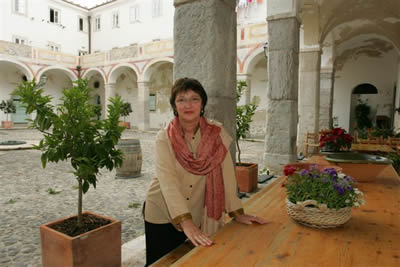
The creator of restaurant ‘A Travessa’ in Lisbon is Viviane Durieu (Belgian origine), read her story and Viviane’s favorite places in Lisbon

Viviane Durieu, creator of ‘A Travessa’ Lisbon, famous restaurant & 17th-century convent

Viviane Durieu is creator of ‘A Travessa’, one of Lisbons best restaurants, set in a 17th-century convent, with a picturesque courty yard.
Lisbon people Viivane Durieu 3

“When I arrived in Lisbon in December 1969, two days before Christmas, I thought the climate and the light were fantastic. Especially because I had arrived from Belgium where it’s cloudy for nine months of the year and we only get a few months of blue sky. I remember being surprised to see the leaves still on the trees at that time of year.

I fell in love with the city, and still I’m fascinated by the humanism of the Portuguese and the beautiful light.
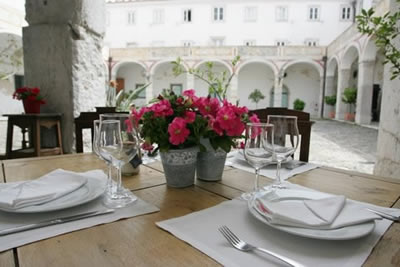
Viviane Durieu restaurant

My background is in photography, I worked in this field until we opened restaurant ‘A Travessa’, which only started as a bit of a joke between me, my husband and a friend.

We opened a small restaurant with good products: coffee that you couldn’t find in Portugal at that time, good bread and good wine, just round the corner from the current ‘A Travessa’, next to the Portuguese Parliament building and surrounded by embassies. Because we were French speakers we got lots of clients from the Belgian and French embassies. It was a hit. We just developed from there and it’s been 30 years this year since we opened. Time flies…..!”

‘A Travessa’ , Travessa do Convento das Bernardas, 12 Bairro da Madragoa – Santo, more details about the restaurant and the menu

“I live in the historic area near the Sao Jorge Castle (Castelo de São Jorge), a delight for residents, with limited car access. The narrow streets of uneven cobbles make life in the centre of the city like living in a village”.

Lisbon entrance Castelo Sao Jorge

Castelo Sao Jorge, entrance

“When I arrived in Lisbon, I use to go to Sintra a lot. As it’s colder there, I felt closer to Belgium and I dreamt about having a house there. World Heritage Site, this historic town lies 40 km from Lisbon, a must for any visitor!”

Sintra Palacio Nacional da Pena

Sintra: National Palace da Pena, now a museum. The very old Palace stands on the top of a hill above the town of Sintra. On a clear day it can easily seen from Lisbon.

“In Lisbon, I like to shop in the Baixa and Chiado areas. I don’t like shopping centers, I prefer traditional shops, it’s much nicer to walk around the town”.
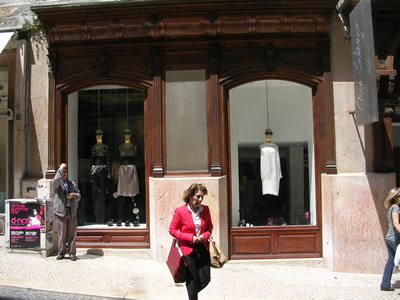
Lisbon shopping Rua do Carmo Ana Salazar

Lisbon, Rua do Carmo, Baixa

“i like going to Belém. The Jeronimus Monastery and the famous classic Belém custard tarts (Pasteis de Belém) , always warm, are real musts! And I like the shows at Centro Cultural de Belém, which has got the best concert hall in Lisbon.”
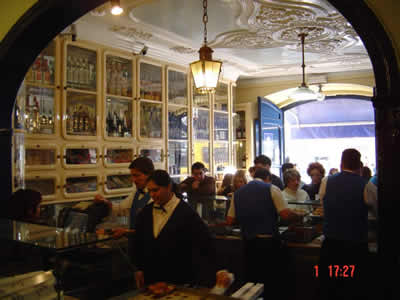
Belem Pasteis de Nata

Antiga Confeitaria, since 1837. The recepe of Lisbon’s most celebrated custard tarts is still a well-kept secret…open 7 days a week.

Lisbon Belem Pasteis de Belem
History: at the beginning of the Nineteenth Century, in Belém, next to the Mosteiro dos Jerónimos (the Heironymite Monastery) there was a sugar cane refinery linked to a small general store. As a result of the liberal revolution of 1820, all convents and monasteries in Portugal were shut down in 1834, the clergy and labourers expelled.
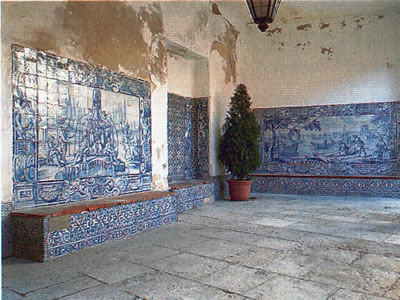
In an attempt at survival, someone from the monastery offered sweet pastries for sale in the shop; pastries that rapidly became known as ‘Pasteis de Belém’.

Graças a Maria Ventura