Lisbon people: young beautiful students, a new semester & Ginja

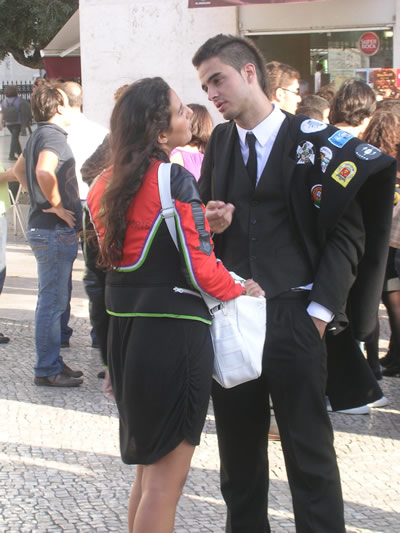
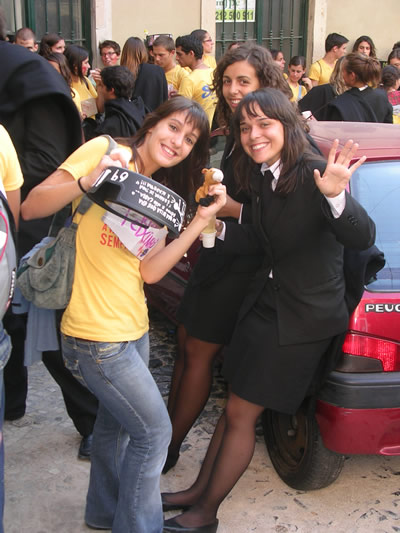
Lisbon students in September, a brand new school year. The new semester brings new textbooks, professors, and classes, many public events and traditions.
Lisbon students September 2008 Ginja

It also brings a lot of fun! The universitary students follow a special dress code.

Lisbon September 2008 students Ginja

Drinking Ginjinja near the tiny Ginja bar on Largo de São Domingos, Ginjinha is a liqueur made of a cherry-like berry called (not surprisingly) ‘Ginja’. The berries are fermented into a brandy that’s slightly bitter, slightly sweet and very sticky. You can order a ‘Ginja’ for little money and with or without a cherry in it. The taste of a Ginjinha is one you won’t forget!

Lisbon Students Mouraria 1

A beautiful dress code!  Mouraria, Largo do Terreirinho
Students Mouraria september 2008 1

Starting a new academic year with rituals, traditions and ceremonies.

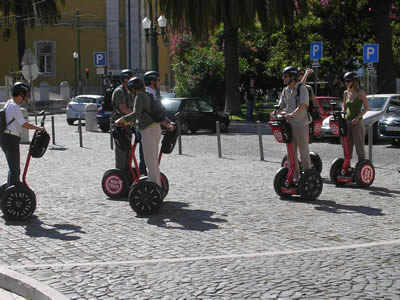
Sightseeing Lisbon: eco friendly RedTour segways, 2 and 4 seat buggies or electric bicycles

Eco transport is new and available to tourists who visit Lisbon. The vehicles are equipped with a talking GPS guide, which provides directions and acts as your tour guide.

Buggies and segways Praca do Commercio

Praça do Comércio Lisbon, RedTour instructors meeting point. RedTour offers tours in Lisboa’s historical neighborhoods on electric vehicles: segways, 2 and 4 seat buggies and electric bicycles.

LisbonTourists with segway steps near Casa dos Bicos

Tourists are making pictures of tourists on Segway steps near Casa dos Bicos, 9 R. Afonso de Albuquerque Lisbon.

Lisbon police on segway steps

Be prepared to become a tourist attraction by yourself, like Portuguese policemen, Lisbon 2008.

Lisbon Buggies Praca do Comercio 2

Praça do Comércio Lisbon. RedTour operates everyday, from 09:00 to 19:00 (April-October) 09:00 to 17:00 (November-March), except Holidays. Meeting point Praça do Comércio /Terreiro do Paço or Largo dos Stephens (near Rua das Flores nº12). For reservations and further information call 00351 21 346 6259 or mail: info@redtourgps.com. Prices start from 6€ per hour, depending on the chosen vehicle. http://www.redtourgps.com/

Lisbon Red Tour car Mouraria

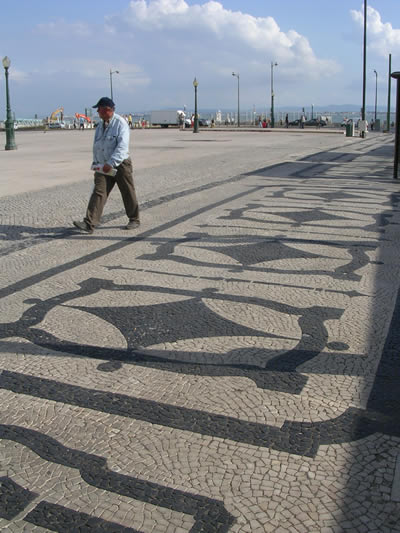
Portuguese pavement, lovely wave design, high heals & Theatre Dona Maria II Lisbon

Portuguese pavement workers are real artists! In Lisbon there’s always a lot of work to do, like in Rua da Rosa in Bairro Alto, one of the oldest districts.

Lisbon pavement workers Bairro Alto

Lisbon, area Bairro Alto

Upon a well compacted trench of argillaceous materials, craftsmen lay a bedding of gravel, which will accommodate the stones, acting as a cement.

Pavement Lisbon wave design Rossio

Lovely wave design “the wide sea”, Lisbon’s Rossio Square, the popular name of the Pedro IV Square (Praça de Dom Pedro IV), the ‘heart’ of Lisbon

Teatro Nacional Dona Maria II.

You can discover the theater (or take the time to enjoy a good show). From Monday to Friday there are guided tours, in several languages.

The pavement mostly is laid out in a repetitive pattern, or recreates symbols that are evocative of Portugal’s nautical past.

Besides: the neoclassical Dona Maria II Theatre was built in 1842 on the site of the former Inquisition Palace where processions, auto-da-fés (execution by burning) and public executions took place from 1531 to 1777.

Lisbon pavement Rua Aurea

Beautiful pavement in Rua Áurea, a shopping street in Baixa

Slippery cobbles & high heels

Besides: despite of the artistic appeal, this pavement is not really safe. The uneven surface makes it difficult to navigate. When the cobbles are wet, they are rather slippery. A reason for ladies not wearing high heels…..don’t forget your sandals!

Lisbon pavement Praca do Comercio

Pavement Praço do Comércio, 2008

a spectacular example of Portuguese calçada, made by hand.

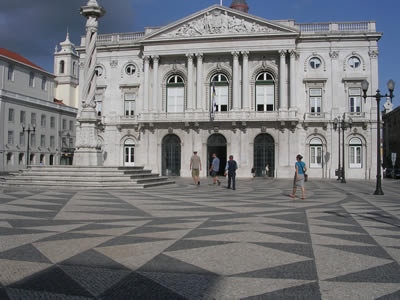
Lisbon Pavement Camara Municipal

Pavement Praça do Municipao with Lisbon’s beautiful City Hall (Câmara Municipal). Visitors can admire the interior on Sunday mornings for free.

Future for pavement workers the future is unsure. Once an activity performed by hundreds of craftsmen in Portuguese cities and villages, traditional paving is increasingly becoming restricted to conservation works or important architectural projects. Less abundant materials, dwindling numbers of craftsmen and criticism to its widespread use are forcing municipalities to consider other alternatives.