The ‘miraculous’ cures of Dr. Sousa Martins & Memorial Statue Lisbon

Dr. José Tomás de Sousa Martins (1843-1897) was a doctor and pharmacist renowned for his work amongst the poor in Lisbon. After his death, a secular cult has arisen around him in which he is thanked for ‘miraculous’ cures.
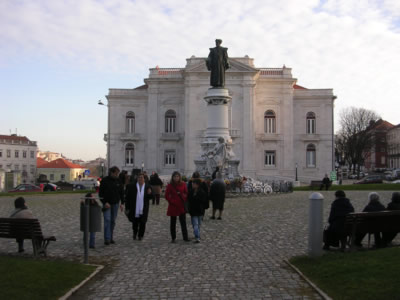
Lisbon Monument Dr Sousa Martins Campo de Santana10

Campo dos Mártires da Pátria Lisbon

Born in Alhandra Dr. Sousa Martins moved to Lisbon in his youth, and qualified in pharmacy (1864) and medicine (1866). He then practiced as a doctor in the Pena area of Lisbon, specialising in the treatment of tuberculosis. His work was entirely on a secular basis, but he was noted in his life for the care he gave to the poor.

Suicide

In 1897, realising that he has contracted tuberculosis himself and could only expect a painful death, he committed suicide.

Lisbon Monument Dr Sousa Martins Campo de Santana8

Campo dos Mártires da Pátria Lisbon

Religious devotion

Yet since the memorial was erected in 1904 at Campo dos Mártires da Pátria outside the main Faculty of Medicine, it has become the focal point for a religious devotion to Dr. Sousa Martins. People who come here believe that by praying to him and asking for his intervention, they will be cured.

After more than 100 years after his life, people still pray to the doctor and burn candles, to ask or thank him for medical cure.

Lisbon Monument Dr Sousa Martins Campo de Santana9

Campo dos Mártires da Pátria Lisbon

It’s quite amazing to see how devoted people are to a dead doctor….

Lisbon Monument Dr Sousa Martins Campo de Santana1

Campo dos Mártires da Pátria Lisbon

Those who have been healed offer their gratitude in the way of marble plaques.

Lisbon Monument Dr Sousa Martins Campo de Santana3

Campo dos Mártires da Pátria Lisbon

The foot of the statue is surrounded by marble plaques giving thanks to him for unexpected cures, candles burn and flowers are placed around the monument.

Lisbon Monument Dr Sousa Martins Campo de Santana7

Campo dos Mártires da Pátria Lisbon

A little child’s picture on a marble plaque… The veneration of dr. Sousa Martins was never recognized by the Catholic Church but it remains until nowadays.

Lisbon Monument Dr Sousa Martins Campo de Santana5

Campo dos Mártires da Pátria Lisbon

Flowers, wax candles, and religious articles are for sale here. In the nearby lovely park is a small cafe “O Coreto’. Besides: this place is located on one of the 7 hills of Lisbon, the view from here is really wonderful.
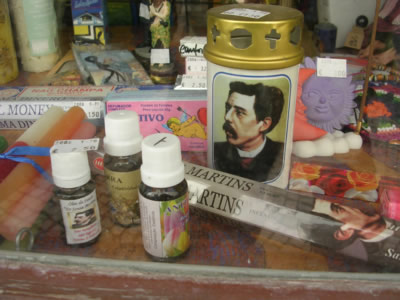
Lisbon dr Sousa Martins wax candles small shops

Candles with dr Sousa Martins’ picture are for sale in lots of small shops in Lisbon.

How to reach this place

From Rossio train-metro Station Lisbon to Pena Palace in Sintra/ Queluz Palace

Rossio train- and metro station (Estação do Rossio) is incredibly unique, located between Rossio and Restauradores in Lisbon.  The beautiful neo-manueline architecture was designed by architect José Luís Monteiro, completed in 1887.

Lisbon Rossio Station at night

Rossio train- and metro station Lisbon

The Neo-Manueline façade dominates the northwest side of the square and is a Romantic recreation of the exuberant Manueline style, typical of early 16th century in Portugal. Its most interesting features are the two intertwined horseshoe portals at the entrance, the watch in a small turret and the abundant sculptural decoration.

Rossio station, Largo do Duque de Cadaval, Lisbon World Cup Football 2010

Near the station you can have a drink at Largo do Duque de Cadaval, which is a really nice square full of open-air cafés.

Lisbon Rossio Station inside Train

Rossio train- and metro station Lisbon

Inside the station, the platform is connected by ramps to the façade level and is covered by a cast-iron structure.  The station is an important example of Romantic (façade) and Cast-iron (platform cover) architecture in Portugal.

Lisbon Station Rossio inside

Rossio train- and metro station Lisbon

Downstairs is Rossio’s metro station (green line). Metropolitano de Lisboa, Lisbon Metro official page (also in English), you’ll find a map with a network diagram and explanation of the metro lines.

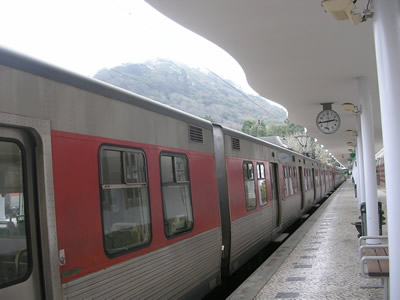
Lisbon Rossio Station train to Sintra

Rossio train- and metro station Lisbon

Visit Sintra and Queluz, easy to reach by train from Rossio train- and metro station

The wonderful Rossio train- and metro station is a must see if you visit Lisbon.

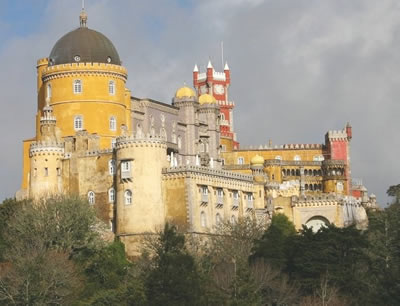
If you like to visit Sintra, the famous World Heritage town and the Pena National Palace just outside Lisbon or the National Palace in Queluz, you can take the train here for a cheap price.

From Rossio Station to Sintra station

Sintra Station.

Trains to Sintra (and vice versa) leave every 15 minutes, a 45 minute trip. The access of trains to the Rossio station is made by a tunnel more than 2600 m long. This tunnel was escavated under the city and is considered one of the most important works of engineering of Portugal in the XIX century.

From Rossio Station Lisbon to Sintra station

Sintra Station

Besides: if you prefer to go by car to visit Sintra, the IC19 superhighway takes you directly from the city and it comes to an end at Sintra . Parking is possible, 10 minutes walk from the center of Sintra.

Sintra Palacio da Pena

The Pena National Palace, built by a noble man for his Portuguese wife

A one-day ticket (around 7 Euro) can be bought at Sintra station and will allow you to get on and off at all the main attractions, like f.i. Pena Palace and The Moorish Castle.

Sintra National Pena Palace July 2011. Picture: Maurits Benschop

Historical area Mouraria Lisbon, fado museum & Amália Rodrigues, queen of fado

No neighborhood in Lisbon is praised more for Fado music than Lisbons historical area Mouraria.

Mouraria Calçada de Santo André balcony with flowers

Mouraria, Calçada de Santo André.

This ‘Bairro‘ (neighborhood) is a maze of little, narrow streets, situated between Graça, Alfama and Costa de Castelo, given it’s name by the first Portugese king, Dom Afonso Henriques (1109 – 1185) , after Lisbon was taken over again by the (Christian) Portugese army from the Moorish overlords. The Moors however kept on living in the city after the conquist and gathered in this area.

Portuguese blues

It is said that the melancholic sounds of the music and singing of the Moorish people was at the base of Fado (meaning fate) music, often described as the Portuguese blues. Its passionate songs overflow with saudade ( yearning), with sorrowful themes like despair, loss, betrayal, jealousy and unrequited love. The little streets of Mouraria are full of typical small grocery stores, old bars (some Fado taverns) and cheap traditional restaurants.

Ginja Cafe in area Mouraria

More history of Fado (and the sad story of the legendary fadista Maria Severa (1820 – 1846) on this website.

Stencilled paste-up of Amalia Rodrigues, Beco dos Cortumes August 2007

Picture: Jef Aerosol. Stencilled paste-up of Amalia Rodrigues, Beco dos Cortumes, Alfama, Lisbon

Amália Rodrigues, Rainha do Fado (‘queen of Fado’) was born near Mouraria on Rua Martim Faz in 1920. She was a genius and worldwide famous Fado singer and lived for many years on Rua de Sao Bento 193. Nowadays her house is a museum, it’s just like she’s still living there…  Casa Amalia Rodrigues ; 30 minutes guided tours from Tuesday – Sunday 10:00 – 13:00 and 14:00-18:00. Metro: Rato.

Amália Rodrigues lived near Mouraria, one of her very famous songs: Ai, Mouraria (Oh Mouraria), da velha Rua da Palma (near the old street ‘Rua da Palma’), onde eu um dia (where one day), deixei presa a minha alma (my soul became a prisoner)…

Amalia Rodrigues tomb Panteao Lisbon

On October 6, 1999, Amália Rodrigues died at the age of 79 in her home in Lisbon.
Portugal’s government promptly declared a period of national mourning. She is now buried at the National Pantheon alongside other Portuguese notables.

Amalia Rodrigues shop Rua Aurea 274

‘Discoteca ‘Amalia’ Rua Aurea 274, a shop specialized in traditional Fado music. Very friendly and professional staff.

For those interested in knowing more about fado music style: the Fado Museum  is located in front of Largo do Chafariz de Dentro (the historic Alfama neighborhood) including a permanent exhibition, a temporary exhibition area, a documentation centre, a store, a small auditorium, a school, and a restaurant/coffee-shop. Saturdays and Sundays, 4h30pm guided tour of the museum featuring the participation of fado singers of different generations.

Open from 10:00 am – 18:00 (closed on Mondays)

Lisbon & lotteries: Rossio Square & story about jackpot queen Leonor

After buying postcards in Lisbons’ touristical shops or kiosks at Rossio Square, you need stamps (selos) to send them to your friends or family. ‘Very sorry, no stamps’ (‘Desculpa, não selos’).

UPDATE 2016: most shops sell stamps. Update 2021: this shop is closed

Lisbon Rossio square kiosk

Rossio (square Dom Pedro V

This square is a traditional meeting point both for Lisboetas (locals) and visitors.

Lisbon Rossio Portugese man drinking a Ginja

Besides, Rossio near Restauradores:

Portuguese like to drink a ‘Ginjinha’, a liqueur made of berries.

Lisbon Rossio lottery

For stamps friendly Portuguese shopowners will explain you how to walk to a nearby postoffice.

Or they tell you to go to ‘Casa da Sorte’ (a lottery shop), where’s a little postoffice inside, Praça Dom Pedro IV, # 120.

Lisbon Rossio lottery Casa da Sorte

As soon as you’re inside, you forget about the stamps….

Portuguese people love lotteries!

Lisbon shopping stamps Casa da Sorte Rainha Dona Leonora

Queen (rainha) Dona Leonor

In the corner of the lottery shop queen (rainha) Dona Leonor, wife of the 15th century king Dom Manuel I.

She created the ‘Foundação da Misericórdia’ (Foundation for Charity) that is still very active in Portugal today. The original purpose of the Foundation was to build and manage hospitals and homes for the old and needy. Today, the Foundation has spread its wings in obtaining funds and they run all forms of Lotteries in Portugal.

Lisbon lottery

Dom Pedro IV Square, or Rossio (big square), in the evening, one of the most beautiful Squares in Lisbon.

Lisbon Rossio

Historical information Rossio:    http://en.wikipedia.org/wiki/Rossio

Bica funicular Lisbon: top tourist spot, June street partys & cool river Tagus cafés

The famous Bica funicular opened on 28 June, 1892, the only stepped street funicular in the city. It climbs the Rua da Bica for 245 metres from the Rua S. Paulo.

Bica funicular Lisbon & partytime in June

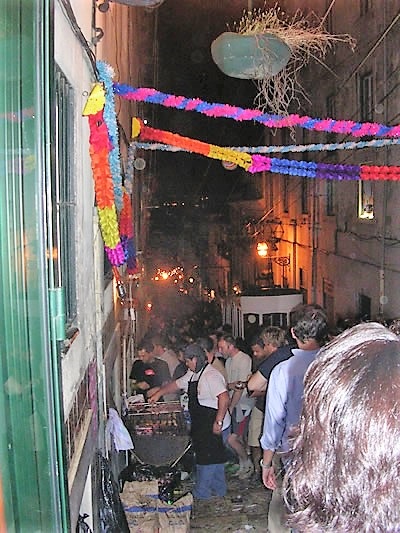
Partying in the small street around the famous Bica funicular, near Bairro Alto , one of the best spots in Europe for a night out. In June, the month of the Festas dos Santos Populares (Feast Days of the Popular Saints), the Lisbon nights are filled with lively festivities that take over the city’s historical center.

On the eve of Saint Anthony day, June 12th, Lisbon turns into one big party! … More….

Lisbon Bica funicular3

The most photographed street in Lisbon and Bica funicular Rua Loreto.

Lisbon has three working street funicularsLavra, Gloria and Bica, which allow its citizens and visitors to move to and from its hilly districts more easily. All are operated by Carris, (including timetables and funicular’s history) the Lisbon city transport undertaking.

Lisbon Adamastor December 08

Viewpoint ‘Adamastor’

Five minutes walk from here is a beautiful viewpoint over the River Tagus: ‘Adamastor’, a popular gathering place in Lisbon, which is officially called the  ‘Miradouro de Santa Catarina’ .

Lisbon Cafe Nooibai terrace

Cafe Noobai

Just below the small Adamastor square, you will find the fantastic terraces of cafe/ bar Cafe Noobai , certainly one of the favourite places of many Lisbon locals and visitors of the city!

Cabo da Roca Portugal: nearest point Europa to USA & how to reach

If your Portugal vacation takes you to Lisbon, don’t miss Cabo da Roca (Roca’s Cape), in the municipality of Sintra, 40 km from LisbonThe magical atmosphere of the westernmost point of mainland Europe (at 9° 29.8′ W), the nearest point between the European Continent and the USA, is really worth a visit! In summertime there’s lots of photo-snapping tourists posing right here.

Cabo da Roca spectacular views

Cabo da Roca Portugal

The views to the Atlantic from here are stunning. The cliff rises 144 meters in height above the cape. Expect strong winds when looking down from the cliff-top. You have to be very careful on windy and rainy days. Take care, it’s a long way down!!

How to get there from Lisbon? Take a train from station Cais do Sodré  to Cascais. Bus 403 travels regularly between Sintra and Cascais stops at Cabo da Roca.

Cao da Roca monument with crusifix

Cabo da Roca, 40 km from Lisbon

Portuguese poet, Luís Vaz de Camões (1524-1580)

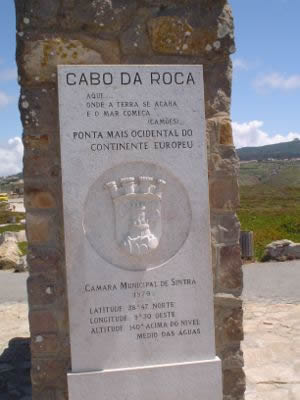
A cross has been erected in this spot as a monument to celebrate the end of the European mainland, and the beginning of the Atlantic ocean. The cross basement bears the words of the famous Portuguese poet, Luís Vaz de Camões, born in Lisbon.

Cabo da Roca Camoes

Cabo da Roca

‘Aqui…
Onde a terra termina e o mar começa…
Ponta mais ocidental do continente europeu’

‘Here…
Where the land ends and the sea begins…
Westernmost point of the European continent’

Cabo da Roca view on Meco beach

Cabo da Roca Portugal

View from Cabo da Roca on the fabulous beaches. On sunny days Meco Beach (Praia do Meco) can be seen. (ca. 45 km). The small house is still a remain of the long Moorisch occupation (700C – 1400C).

Cabo da Roca is at the end of a 30 mile stretch of the coast known as the Portuguese Riviera, 40 km from Lisbon. The Atlantic coast, which stretches to the north and west of Lisbon, is of surprising beauty: here the landscape swiftly changes from high, sweeping cliffs to beaches of white sand, backed by lagoons.
Cabo da Roca Lighthouse

Cabo da Roca Portugal

The construction of the lighthouse (farol) was completed in 1772. It is still active and staffed by a crew of three keepers. Lighthouses in Portugal are owned by the navy (Marinha de Portugal) and operated by the navy’s lighthouse directorate. Portugal has a long distinguished maritime history; the Portuguese first traveled out and around Africa, launching the European age of discovery 600 years ago.

Cabo da Roca church1

Cabo da Roca

Cabo da Roca’s church is being restored at the moment. According to construction workers apartments will be built in this church.

Cabo da Roca tiles in church

Cabo da Roca, azulejos

Beautiful tiles (azulejos) inside the church. The azulejo is a typical form of Portuguese painted, tin-glazed, ceramic tilework. They have become a typical aspect of Portuguese culture. Azulejo comes from the Arabic word az-zulayj, meaning polished stone.

Wherever you go in Portugal, azulejos are to be found inside and outside cafes, churches, palaces, ordinary houses and even ceilings, train- or subway stations. Many azulejos chronicle major historical and cultural aspects of Portuguese history.

Fado history Mouraria Lisbon: a passionate liaison & first Fado singer Maria Severa

Historic area Mouraria contains a tangled street layout just as in Alfama, which has remained since the times of the Moors.

Mouraria Historical Center typical lley

Mouraria, Lisbon, one of Lisbon’s oldest districts.

The Arabs withdrew into this quarter after Lisbon was conquered by the Portuguese – a ghetto for people of different faiths arose. In the 19th C. prostitution and fado, which at this time was considered to be indecent, brought the quarter a bad name.

Mouraria Lisbon: Escadinhas de São Cristóvão. How to get there

Nowadays renovation of houses, which are threatened with falling into ruins, and an improvement in the living standards of the inhabitants of Mouraria has only begun recently. The area is full of typical grocery stores, old bars (taverna’s) and cheap (but good!) small restaurants.

Looking for a vacation stay in Lisbon? My Three bedroom apartment with sunny pátio (30 m2) in Mouraria – (short term rentals).

Mouraria historical center fado Rua da Severa


Largo da Severa’ Lisbon in area Mouraria.

Fado

It is said that the melancholic sounds of the music and singing of the Moorish people was at the base of fado music. The quarter is still today associated with fado: The ‘Casa de Severa’ at Largo da Severa 2 was the home of the legendary fadista Maria Severa Onofriando, who died at age 26 on November 30, 1846, either from suicide or tuberculosis.

Famous performer of fado Amália Rodrigues (”Lady of Lisbon”) the ‘queen of Fado’ was born near Mouraria on Rua Martim Faz.

Mouraria historical center fado plaque

(‘Mouraria, sculpture Berço do Fado‘, fado was born here)

Rua da Mouraria/ corner Rua do Capelão. Maria Severa is regarded as the first fado singer to have risen to fame, attaining a near-mythical status after her death: Maria had a passionate liaison with a nobleman, Conde de Vimioso. The affair ended badly. But the scandal increased fado’s appeal, leading to the publication of its first sheet music.

Fado Maria Severa painting

Famous painting Maria da Severa, regarded as the first fado singer

Fadistas, as fado singers are known, often wear a black shawl of mourning, as Severa did after her heartbreak. Her story epitomizes fado’s connection with saudade, “a feeling of longing or nostalgia”.

Mouraria Historical Center house Maria Severa fado singer

Fadista Maria da Severa’s house

UPDATE 2014:

Maria da Severa’s house is beautifully remodeled, you can enjoy pure fado here and traditional Portuguese food

There is a plaque in Maria Severa’s memory and a stylized fado guitar can be seen on the newly surfaced road where she lived. The memory of the singer is also kept alive in the pub called “Os Amigos da Severa” (the Friends of Severa) in the nearby Rua do Capelao , with a painting of her hanging on the wall.

Mouraria Fado Friends of Maria Severa

Cafe “Os Amigos da Severa” (the Friends of Severa) Mouraria Lisbon

Rua do Capelao 32, owner senhor Antonio Correia Alves Pais

Walk with friends Ans and Loek in Mouraria: a sua saúde ! Picture: Loek Polack

More about this remarkable little bar.

World Cup football 2010 Lisbon: Portugal vs Brazil, Big Screens & fans in Lisbon’s city center

Football is very important in Portugal. A lot of the Portuguese even watch a match on TV while eating their dinner in a restaurant…. At the moment football lovers and tourists from all over the world  follow the matches in Lisbon’s city center. According to the Portuguese and Ronaldo Portugal should be considered among the favorites to take the title in South Africa……

Football Portugal vs Brasilia screen Rossio

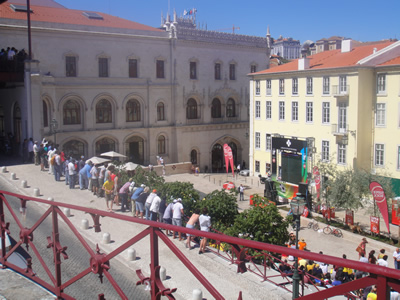
A big screen at Praça da Figueira Square, near Rossio, a very popular tourist attraction, June 25, 2010.
On the background one of the main historical and tourist sites in Lisbon, the Castle of Saint George (São Jorge)

Football Portugal vs Brasilia big screen2

Praça da Figueira

Remarkable: from the 16th to the 19th centuries, Brazil was a colony of Portugal

Football Portugal vs Brasilia Rua Augusta1

Rúa Augusta, Lisbon’s famous boulevard and one of the best-known shopping streets

Football Portugal vs Brasilia beautiful girls

Beautiful Portuguese girls

Football Portugal vs Brasilia Rua Augusta3

Catarina Tomais da Silva and Rui, waiters in Pastelaria Casa Brasilia.Very popular and delicious food! Rua Augusta 267

Football Portugal vs Brasilia cafe near hotel Mundial1

Pastelaria and restaurant “D. João I”, Rua D. Duarte 1-B

Near Praça da Figueira . In the month of June all the streets in the historical center are decorated with garlands and lights (Festas Populares)

Football Portugal vs Brasilia cafe near hotel Mundial 2

Inside the restaurant……

Football Portugal vs Brasilia street near Munidal

…and of course the elephant 😉 sound of the vuvuzelas!

Football world cup Lisbon after the match

After the match…..Portugal vs Brazil: 0-0: both countries happy 😉

Lisbon World Cup 2010 Holland vs Brazil Rossio1

Holland vs Brazil, near the famous Rossio Station.

A big screen at Largo Duque de Cadaval, a beautiful place, full of open sunny open-air cafes and restaurants.

Lisbon World Cup 2010 Holland vs Brazil Rossio2

Holland vs Brazil: 3-1. Dutch and Brazilian football fans are watching the match

Lisbon World Cup 2010 Holland vs Brazil Rossio4

Lisbon’s famous funiculars: Bica, Gloria, Lavra, spectacular viewpoints & ‘Art in movement’

The funiculars Bica, Gloria and Lavra in Lisbon taking you up to spectacular viewpoints (miradouros).

Bica funicular silver tourist information

The (normally yellow) and famous tourist attraction funicular in Bica  (YouTube)

Artist Alexandre Farto  covered the outside of the funicular with mirror-acrylic, called it ‘Espectro’  (Spectre) and pays tribute to the neighbourhood that is reflected in the lift during the journey, as if it were a film…. (From January – June 2010). Amazing!

Bica funicular silver March 2010 3 street

Bica funicular Lisbon

This project  ‘Art in movement’  (“Arte em Movimento”) is part of a Cultural Program for the promotion of Public Art, which CARRIS  (bus & tram services including timetables) intends to carry out in some vehicles of its public service fleet. In 2010, the chosen vehicles were one lift (the Santa Justa) and the 3 funiculars, all of them are national monuments since 2002.

Bica funicular March 2010 hanging laundry

Street view Bica funicular

Typical Portuguese:  hanging laundry, drying in the wind.

Bica funicular silver March 2010 2 street

View from Bica funicular

It climbs the Rua da Bica de Duarte Belo for 245 metres from the Rua Sao Paulo.

Bica funicular March 2010 restaurant cafe

Largo de Santo Antoninho, right next to Bica’s funicular downhill starting point.

Museum Casa dos Bicos Lisbon, restaurants & famous fish cannery shop

Quite close to the historic Alfama neighborhood, a very nice street to walk around at Lisbon’ city center is Rua dos Bacalhoeiros (street of the cod fish sellers). The buildings that face the Tejo River look lovely, but if you take a closer look, they mostly are in a worse condition.

Lisbon Rua dos Bacalhoeiros near Casa dos Bicos

Rua dos Bacalhoeiros Lisbon

Walking from Praça do Comércio in the direction to Alfama, you will get to Rua dos Bacalhoeiros. The famous 28 tram (eletrico) passes here on its way to the Santa Apolonia station.

Lisbon Rua dos Bacalhoeiros terraces near Casa dos Bicos

Rua dos Bacalhoeiros Lisbon 2009

This part of the street is really beautiful. The small restaurants with a terrace outside are popular; even in wintertime when the sun is shining you can enjoy a beer or have lunch outside.

Lisbon Rua dos Bacalhoeiros Adega do Atum near Casa dos Bicos

Rua dos Bacalhoeiros Lisbon

Just near ‘Casa dos Bicos’ is restaurant ‘Adega do Atum‘, The waiters are friendly and not too agressive. They serve traditional fish and meat meals and have the Portuguese Sagres beer on tap (imperial). Try ‘Salade de Atum’ (tuna fish € 7 ) for lunch 🙂

Lisbon Rua dos Bacalhoeiros Casa dos Bicos

Rua dos Bacalhoeiros Lisbon & Casa dos Bicos (House of the pointed stones)

Casa dos Bicos (House of the pointed stones).  

This Palace was built in the early 16th century, a notable part of Lisbon’s heritage and one of the few examples with traces of the 15th C. architecture.

From 1981 to 1982, Casa dos Bicos was the site of excavations, many archaelogical findings were unearthed (ceramic and glass pieces a.o.). Worth a visit!

Lisbon Rua dos Bacalhoeiros3 shop nr 117 Silva & Feijó

Rua dos Bacalhoeiros Lisbon

You will find various shops in this street. Silva & Feijó, on the other side of Casa dos Bicos, sells a.o. wines and typical Portuguese handicrafts.

Lisbon Rua dos Bacalhoeiros lots of restaurants

Rua dos Bacalhoeiros Lisbon

Lunchtime in Lisbon. This part of the street is filled with lots of restaurants, from traditional Portuguese to Chinese.

A Churrasqueira is a restaurant serving grilled meat or fish, many offering as much as you can eat: the waiters move around the restaurant with the skewers, slicing meat onto your plate. Frango de Churrasco with piri piri (a kind of salty roasted chicken spiced with hot red chili sauce) is very popular.

Lisbon Rua dos Bacalhoeiros restaurant espetada

Rua dos Bacalhoeiros Lisbon

Restaurant Churrasqueira Santo António.

Carlos Marcalo, Rua dos Bacalhoeiros 133, invites you to try their ‘espetada‘, a typical Portuguese dish made of large chunks of fish or beef rubbed in garlic and salt with vegetables such as onions and bell peppers.

Lisbon Rua dos Bacalhoeiros shop canned fish

Luís Vieira.

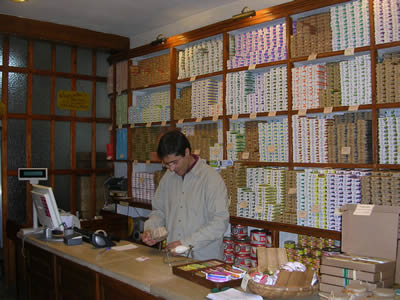
Conserveira de Lisboa (The Lisbon Cannery), nr 34.  Famous! Wonderful very old preserved-fish store with hundreds of colourful tins of the Portuguese favorite fish. This shop opened 80 years ago, nothing has changed.

Lisbon Roa do Comerico shit

Rua do do Comércio ,

The shit of today will fertilize tomorrow...” 😉 a building drawing, just around the corner of Rua dos Bacalhoeiros and Rua da Madalena