Kiosk Adamastor Lisbon Santa Catarina: popular river gathering place & history

Adamastor Lisbon Viewpoint Tagus River december 2010

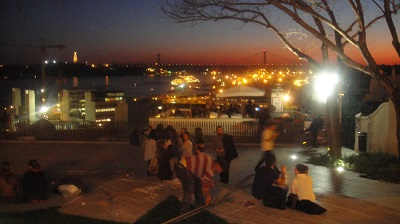
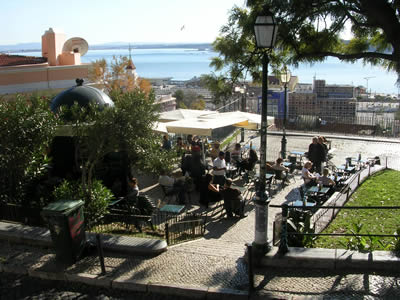
Adamastor’, a popular viewpoint (miradouro) and gathering place in Lisbon which is officially called  Miradouro de Santa Catarina.

Update: Adamastor reopened in October 2019.  It will be open from 08h00 until 23h00. More….: Atlas Lisboa

Lisbon Miradouro de Santa Catarina Adamastor dec 08

Adamastor’ , a popular viewpoint (miradouro)

From this vista point you have the most breathtaking views on the Tagus river, the 25th of April Bridge and the Cristo Rei monument.

Lisbon Adamastor Santa Catarina Beautful Boys

Beautiful boys 🙂

There is a small terrace with a bar serving drinks and toasted sandwiches.

The name Adamastor is chosen because of the large stone statue of the mythical figure ‘Adamastor’ which presides over the space.

Adamastor-santa-catarina2

Adamastor is a Greek-type mythological character invented by the Portuguese poet Luís de Camões in his epic poem Os Lusíadas (first printed in 1572), as a symbol of the forces of nature Portuguese navigators had to overcome during their discoveries.  More…

Lisbon Adamastor gathering place Tagus River5

Adamastor Lisbon: a sunny Sunday in February

Just below of the small Adamastor square, you will find the fantastic terraces of bar ‘noobai. Definitely worth a visit!

Le Marais bar Lisbon near Santa Catarina Tagus river viewpoint

Beautiful!

Restaurant ‘Casa da Índia’ Lisbon: typical Portuguese menu & trade history

Despite the name, Casa da Índia (House of India), is a traditional and cheap restaurant with a Portuguese menu. The name refers to an organization that managed Portuguese trade in overseas goods, like spices, mainly in the 15th and 16th centuries.

Lisbon Casa da India restaurant near Bairro Alto meia dose

Restaurant Casa da Índia (House of India) Lisbon: traditional Portuguese meal, delicious 🙂

Borrego no forno’ (lamb in oven € 6,50). Starters: pão e azeitonas (bread and olives € 1,20), copo de vinho branco (glass of white wine € 1.20), bica pingada (espresso with a drop of milk € 0,60).

Restaurant Casa da india girls 2

Restaurant Casa da Índia (House of India), Lisbon

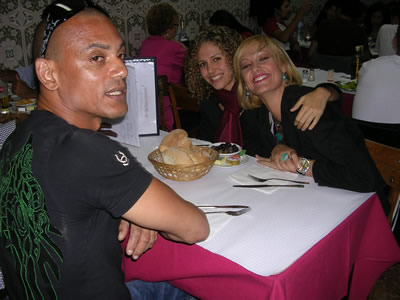
This is one of my favorite restaurants in Lisbon: really good service and a very friendly staff.

Lisbon cheap traditional Portuguese restaurant Casa da India owner

Restaurant Casa da Índia  Lisbon & owner Alvaro

Casa da Índia (House of India) :  spices from India

Owner Alvaro Martim: ‘From 1938 this place is a restaurant. All I know is that it used to be a shop selling spices from India”.

Restaurant Casa da india girl

Restaurant Casa da Índia (House of India) Lisbon

History: The Casa da Índia was established in Lisbon around 1500. This Portuguese organization had been based in Lagos in Southern Portugal, but after Prince Henry the Navigator died in 1460, the ‘House of India’ moved to Lisbon, and was located at the famous Praça do Comércio , Commerce Square). The building was destroyed by the 1755 Lisbon earthquake.

Restaurant Casa da India garlic prawns3

Restaurant Casa da Índia (House of India) Lisbon

Seafood: Gambas á guilho (garlic prawns) 12.50 euro, delicious!! This restaurant is very popular and lively,  the marisqueira (seafood) is divine and cheap.

Portugal probably is the best place in Europe to enjoy seafood; the Portuguese appreciate eating and drinking well!

Lisbon Casa da India cheap traditional Portuguese food3

Restaurant Casa da Índia (House of India) Lisbon

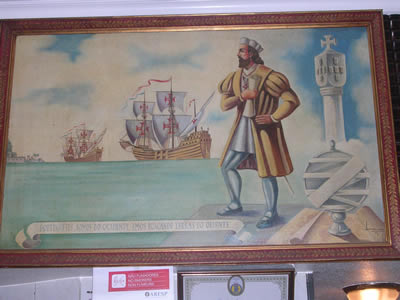
On the wall: the Duke of Viseu (Henry the Navigator), patron of the Portuguese exploration.

Restaurant Casa da India November 2018 & picanha na brasa 10,90 euro

During 1415-1542 Portugal discovered an eastern route to India that rounded the Cape of Good Hope. They discovered Brazil, established trading routes throughout most of southerns Asia, colonized selected areas of Africa and sent the first direct European maritime trade and diplomatic missions to China.

Restaurant Casa da India Lisbon street traditional Portuguese food

Restaurant ‘Casa da Índia’, Rua Loreto 51, near Bairro Alto

Menu & vegetarian options: check facebook

Opening hours: Monday -Saturday: 09:00 – 02:00. Closed on Sundays.

Restaurant Casa da india Frango

Restaurant Casa da Índia (House of India) Lisbon: chicken piri-piri

Nostalgic Moorish kiosks in Lisbon, gathering places & Portuguese snacks

On August 6, 711 Lisbon was taken by the Moors, 400 years later the city returned to Christian rule.  Nowadays the Moorish influence is still present, like the nostalgic kiosks (quiosque), serving traditional Portuguese refreshments and snacks.

Kiosks in Lisbon Camões Square

Kiosk Camões Square (Praça Luís de Camões), Lisbon

Just behind Camões’ statue , close to the statue of Portugal’s famous writer and poet Fernando Pessoa (1888-1935),  still mobbed by many tourists nowadays ; nearby great city views from luxury hotel Bairro Alto’s roof terrace  and, one of my favorites, a cheap and traditional Portuguese restaurant ‘Casa da India’.

Kiosks in Lisbon drinks Principe Real

Small kiosk Park Lisbon Principe Real

After shopping people like to take a break in this wonderful park with lots of exotic plants and trees, near Bairro Alto, posssibly one of the best (and gay) spots in Europe for a night out!

Nearby you’ll find the  Botanical garden , one of Europe’s finest!

Kiosks in Lisbon drinks Principe Real2

Lisbon Kiosk Rua Dom Pedro

Rua Dom Pedro V  is a wonderful avenue for shopping. There’s lots of boutiques, traditional antique shops and art galleries.

Kiosks in Lisbon Sao Roque museum church restaurant

Lisbon kiosk Largo Trindade Coelho

Small kiosk near ‘Casa da Comida’ (’ the house of food’), a new cafetaria/ restaurant in the wonderful bamboo garden of Museum São Roque. This museum and church is home to Italian art from the 16th and 17th centuries.

Kiosks in Lisbon Cais do Sodre train station and ferry

Small kiosk Cais do Sodré, Lisbon

A major bus station is sited outside the front of the Cais do Sodré station, with a Carris small kiosk selling transport passes, tickets and guides.

Cais do Sodré  is Lisbon’s major bus, metro, trainstation (‘Linha de Cascais’ , name of the train line joining Lisbon to Cascais), and ferry terminal.

Wonderful 20 minutes ferry trip idea from here : ferry to Cacilhas at the other side of the river Tagus and how to reach the amazing Cristo Rei monument

Kiosks in lisbon Viewpont city de São Pedro de Alcântara

Lisbon viewpont Miradouro de São Pedro de Alcântara.

This wonderful belvedere will give you a unique insight into the city and magnificent views on the old Moorish castle Castelo de São Jorge.

Kiosks in Lisbon fleamarket Feira da Ladra

Kiosk above Lisbon’s famous flea market Feira da Ladra .

The Moorish influence is still present in areas Alfama and in Mouraria, where the Moors kept on living in the city after the conquist and gathered in this area.

After browsing the market it’s a good idea to have lunch in Restaurant ‘O Panteao de Santa Clara  just above the market, serving real Portuguese food for a good price.

Adamastor Moorish kiosk near Tagus river

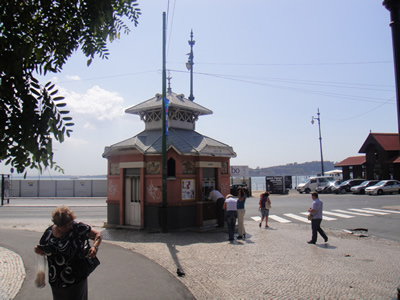
Kiosk river Tagus viewpoint Miradoura de Santa Catarina. Lisbon

Adamastor, a popular gathering place in Lisbon overlooking the Tagus river, which is officially called the Miradouro de Santa Catarina.

From this vista point you have the most breathtaking views on the Tagus river, the 25th of April Bridge and the Cristo Rei monument, nearby my favorite cafe/bar Noobai

Kiosks in Lisbon Sao Paulo near Cais do Sodre

Kiosk Rua de São Paulo, near Cais do Sodré  station Lisbon

On the other side of the road,  Mercado da Ribeira (famous market near the river, since 1882), topped with a Moorish-style dome.

Kiosks in Lisbon snacks1

.

Market Mercado da Ribeira Lisbon: from fresh fish to funeral flowers & foodhall

Near the Cais do Sodre train station, on the other side of the road, you will see the beautiful building of the Mercado da Ribeira (market near the river, since 1882), topped with a Moorish-style dome. Worth a visit!

Mercado da Ribeira

Market Mercado da Ribeira, near the river Tejo, Lisbon

Market: open daily 05:00 – 14:00. Closed on Sundays. Address: Avenida 24 de Julho Lisbon.

Mercado Da Ribeira overview market

Market Mercado da Ribeira Lisbon open food market

The cities biggest open food market is selling everything: from inky octopus and fresh seafood to fabulous fruit, from real Portugese products like ‘hot’ piri-piri to funeral flowers waiting for a dead body…..   :-(

Mercado da Ribeiro Lisbon funeral flowers

Market Mercado da Ribeira Lisbon: funeral flowers

This is Lisbon’s cheapest market. The seafood forms a large part of the Portuguese cuisine with 1001 ways to cook it. Bacalhau is the Portuguese name for cod, a very popular fish, so much that they have a different bacalhau recipe for each day of the year!

Mercado da Ribeira Lisbon fish

Market Mercado da Ribeira, Lisbon: every day fresh fish

There really is something to find for everyone  :-(

Mercado da Ribeira Lisbon June 2014 Pig

Market Mercado da Ribeira, Lisbon -((

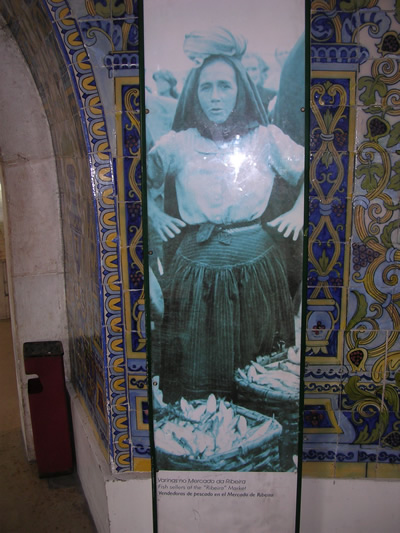
In 2007 the market celebrated a 125 year of existence: beautiful pictures are on the walls from fish sellers (varinas) of the Ribeira Market from a hundred years ago, when the fishermen moored their ship here to sell the fresh fish.
Mercado da Ribeira Lisbon Varinas

Market Mercado da Ribeira Lisbon fish seller (varina, year: 1900)

On Sunday mornings there is a Collectors fair from 09:00-14:00, like coins and stamps. The 2nd floor of the market has also been converted into a touristy ‘cultural’ centre. It sells locally produced items such as port and honey, and handicrafts.

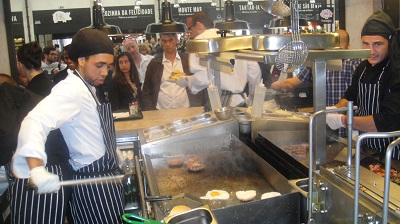
Next to the food market: TIME OUT foodhall & gastronomical area representing the best restaurants and chefs of Lisbon

The area gathers about 30 spaces, providing around 750 seats. The best restaurants and chefs of Lisbon are represented.
TIME OUT foodhall & gastronomical area September 2018
The idea is simple: you grab the food and drinks from one or several restaurants of your choice (not necessarily the same as your family and friends), and go sit in the food court where you’ll be able to interact with everyone there.
 –

Mercado da Ribeira (River Market) Lisbon: Time Out magazine food pavilion

Traditional Portuguese sandwiches & nails

Did you ever try a traditional Portuguese sandwich like the Prego? or a Bifana (pork)?  a Prego is the most popular and incredible garlic steak sandwich in the Portuguese cuisine for many years. The Portuguese eat the prego’s (literally: nails, referring to the full stomach after eating one ;-)   with mustard or piri-piri)

Market Mercado da Ribeira Lisbon Food Hall: Portuguese petiscos (tapas)

Petiscos (Portuguese tapas)

Small plate dishes are called petiscos in Portugal, so basically the same as Spanish tapas. (More….  ). Don’t say this to the Portuguese, the Spanish invasion (1762) is still fresh in their memory…. ;-)

Mercado da Ribeira Lisbon restaurant: fresh seafood

Restaurants and terraces outside the market

Also new are the restaurants outside the old market: we enjoyed fresh Atlantic seafood and a delicious Portuguese wine.

Market Mercado da Ribeira Lisbon: restaurants with terraces

‘Time Out’ Food Hall: Gastronomical area near the market hall
Opened May 18 2014.
Opening hours: Sunday to Wednesday 10am to midnight; Thursday to Saturday 10am to 2pm

Thanks to  Thijs Verhoeven

Lisbon Rossio Square: history cafe Suíça, shoeshine boys & begging hands

The beautiful and very popular tourist attraction Rossio Square, the popular name of the Pedro IV Square (Praça de D. Pedro IV), has been the setting of popular revolts and celebrations, bullfights and executions.

Rossio Lisbon Shoe shine boy

Rossio square 

Nowadays Rossio square is a preferred meeting place of Lisbon natives and tourists alike and the most congested area for traffic in the city center.

Lisbon Rossio Square

Rossio Square Lisbon

This square has been a meeting place for people of Lisbon for centuries. Some of the cafés and shops of the square date from the 18th century, like the Café Nicola, where Barbosa du Bocage , a Portuguese poet, used to meet friends.

Lisbon cafe Nicola Rossio Square

Famous Café Nicola, Praça Dom Pedro IV 26 (founded in 1929).

It was here that the first Portuguese women dared to break the male stranglehold on cafe-going.  Rossio’s cafes are popular for sitting and watching the world go by.

Lisbon Rossio Pastelaria Suica inside

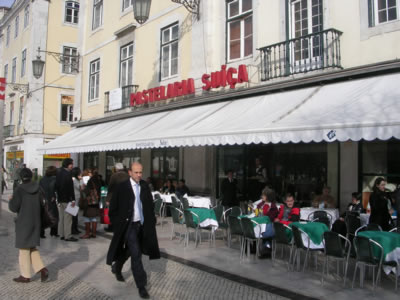
Pastelaria Suíça, Praça Dom Pedro IV 101

UPDATE September 1, 2018

On August 31, 2018 Pastelaria Suiça – a veritable symbol of Rossio – closed its doors forever. It is said a 5  star hotel will be built here ..

Pastelaria Suíça was a traditional Portuguese cafe/restaurant, famous for its huge variety of delicious cakes and pastries.

Lisbon Pastelaria Suica delicious cakes

Pastelaria Suíça, Praça Dom Pedro IV 101

During World War II this place (Suíça means Switzerland) was the meeting point where those in exile negotiated their tickets to freedom.

Lisbon Patelaria Suica Rossio

Pastelaria Suíça terrace, Praça D. Pedro IV 96/101.

Be aware of pickpockets

Locals appreciate this cafe/restaurant just as much as tourists. The waiters are not always very nice. Being a tourist, be aware of pickpockets: while enjoying a delicious cálice de vinho do Porto (a glass of Port Wine), somebody tried to steel my friend’s bag from under her chair. Happily a friendly waiter warned us just in time! Be aware when you visit touristical attractions and terraces.

Nearby you can taste a Ginjinha, a liqueur made of a cherry-like berry, a typical Lisbon spirit.

Kisbon Praca da Figueria view from terrace Suica

From cafe/restaurant Pastelaria Suica ‘s terrace at the back a view of the square Praça da Figueira (English: Square of the Fig Tree) and the São Jorge Castle.

Lisbon Suica Pastelaria street performance living statue

Street performances (‘living statue’), newspaper vendors, street traders (offering cheap watches or ‘jewellery’), lottery ticket sellers, ‘psssst drugs’ sellers and begging hands……….also some lovely shops, like the unique hatmakers shop Chapelaria Azevedo Rua (opened in 1886)

And, of course, in wintertime, the unmistakeable smell of roasted chestnuts (castanhas assadas)

Lisbon Rossio lottery ticket sellers

Lisbon Rossio lottery ticket seller 

Lisbon’s Botanical Garden: designed in 1873, unique & one of Europe’s finest

Tucked away in the Principe Real dictrict, near Bairro Alto, the Botanical Garden (1873) is a lush retreat from the afternoon sun.

April 2018:  reopened after renovations – Video Botanical Garden

Botanical Garden Lisbon entrance

Lisbon’s Botanical Garden (Jardim Botânico)

The University of Lisbon Botanical Garden was designed as a scientific garden, planting began in 1873 through the initiative of two professors, the Earl of Ficalho and Andrade Corvo.

Entrance with beautiful palms: Rua Politécnica 58, Principe Real

Botanical Garden Lisbon ticket office

Lisbon’s Botanical Garden (Jardim Botânico)

Ticket office in the garden. Tickets: cheap. Children up to 6 years: free

Botanical Garden Lisbon Ficus macrophylla

Lisbon’s Botanical Garden (Jardim Botânico)

Ficus macrophylla (moreton bay fig)

The great diversity of plants gathered from every corner of the world under Portuguese rule by its earliest gardeners – the German, E. Goeze, and the Frenchman, J. Daveau – illustrated Portugal’s colonial power at the time, though in Europe it was seen as a small and rather peripheral nation.

Botanical Garden Lisbon couple enjoy the garden

Lisbon’s Botanical Garden (Jardim Botânico)

It’s really wonderful to walk around and sit down for a while in this haven of tranquility and serenity. The park offers the ideal place to explore the vastness and beauty of nature. Wander along mosaic paths under tall palms, take in the scents of the herb garden and visit the colourful butterfly house.

Botanical Garden Lisbon Dracaena Draco dragon tree

Dracaena Draco (dragon tree) Lisbon’s Botanical Garden (Jardim Botânico)

The systematic collections serve various fields of botanical research, demonstrating to the public and visiting schools the great diversity of plant forms and various ecological processes. They also represent an important and effective way of conserving plants whose survival is threatened.

Botanical Garden Lisbon 2 ladies making pics

Lisbon’s Botanical Garden (Jardim Botânico)

Some collections deserve a special mention. The outstanding diversity of palms, brought from all continents, confers an unexpectedly tropical atmosphere to several locations in the garden. Cycads, real living fossils representing ancient and mostly extinct floras, are one of the garden’s hallmarks. Nowadays they are extremely rare and certain species are preserved only in botanical gardens.

Botanical Garden Lisbon Pome granate

Pomegranade, native to semitropical Asia.

The garden is particularly rich in tropical species from New Zealand, Australia, China, Japan and South America, illustrating the mild climate and the special microclimates produced in the garden.

Lisbon Botanical garden

Jardim Botânico da Universidade de Lisboa  FACEBOOK 
Rua Escola Politécnica 58
Website

Open: summer (1 April to 31 October): everyday from 09:00 to 20:00.Weekends and holidays from 10:00 to 20:00.Winter: everyday from 09:00 to 18:00. Weekends and holidays from 10:00 to 18:00. Closed on Christmas and New Years day.                          

Lisbon LX Factory Gastrobar ‘Rio Maravilha’: great river views & disappointing experience

Gastrobar Rio Maravilha (Wonderful River) is situated on the fourth floor of one of the nowadays trendy ‘LX factory’ buildings in the Alcântara (‘bridge’ in Arabic) district in Lisbon, surrounded by huge windows overlooking the Tagus river, the 25 April bridge and the Cristo Rei statue .

Gastrobar Rio Maravilha Lisbon & wonderful view 25 April bridge from a formerly factory building

Very different from the usual 🙂

We didn’t have to wait long before the friendly welcoming staff seated us at a small table near one of the the huge windows: what a wonderful view! The multi flowered designed chairs and the bright pink coloured outfits chosen for the waitresses are quite surprising.

Gastrobar Rio Maravilha, ‘LX factory’ Lisbon & the restaurant’s decor

The whole space is very different from the usual. But you can expect this from those who already are experienced of managing remarkable spaces in Lisbon like unique bar ‘Pensao Amor’ in a former red light district and restaurant ‘Casa do Pasto’ , with sophisticated Portuguese cuisine. A few months ago this place, ‘Rio Maravilha’ was opened, influenced by Brazilian flavors.

Gastrobar Rio Maravilha, ‘LX factory’ Lisbon: squid salad & grilled mushrooms

We decided to order a few small dishes like Salade de Lulas (squid salad, grilled sweet potatoes, onion and croutons) € 15.60, Cogumelos na Brasa (grilled mushrooms, foliage of sour cream and chestnuts) € 13.70, Ovo BT (egg BT) € 9.80, Hambúrguer de Novilho (veal) € 9.10,  and a bottle of white wine: VB Filoco € 12.00.

Surprising : Ovo BT, a poached egg accompanied by cream cheese with some marmalade, parmesan cheese and ibérico pancetta.

Gastrobar Rio Maravilha, ‘LX factory’ Lisbon & wonderful views

Disappointing

The Hambúrguer de Novilho (veal) was not such a good experience: we ate just a little bit of it, due to the unpleasant ‘aftertaste’. According to the waitress nothing was wrong, but both we had no good feeling, also afterwards… (the restaurant is aware of our complaint, they asked to come again to enjoy a better experience, that’s all 🙁  ). BTW: the hamburger was not mentioned on our bill.

Gastrobar Rio Maravilha, LX factory Lisbon, entrance & very friendly staff

Gastrobar Rio Maravilha – eating & dancing
Tuesday from 18:00 – 02:00
Wednesday u/i Saturday 12:30 – 02:00 – Sunday: 12:30 -18:00
Closed on Monday – facebook Rua Rodrigues de Faria, 103

LX Factory | 4th floor, Lisbon  MORE about this area

Lisbon tourist guide Josephine: Mouraria, narrow streets & drinking Ginja

Josephine Lucassen is a professional guide, licensed by the city of Lisbon. She loves it to organise private walking tours for a group of tourists in this old and wonderful city!

Mouraria, Lisbon: Escadinhas de São Cristóvão & Josephine Lucassen, guide

Example: a walking tour through the oldest parts of Lisbon, the popular districts of Alfama and Mouraria, the ancient areas that have survived the earthquake of 1755.

The many winding alleys still show the traces of the Moorish domination (from 711-1108). It is said that Fado music was born in Mouraria around 1820.

São Cristóvão (St. Christopher’s) Church in Mouraria Lisbon

Walk in historic Mouraria area March 18 & NV Lissabon members

Mouraria Lisbon: stairs to Rua de São Cristóvão

The best way to start this walk is from Rua da Madalena and then climb the stairs Escadinhas de São Cristóvão.

Mouraria Lisbon: Rua de São Cristóvão in wintertime

Josephine: “I was born in Holland in a small village in Drente. After some travel jobs (f.i. Hotelplan) I prefered to live in Portugal. I’m happily married to a sympathetic Portuguese man, Jorge. Together we have 2 children. My curiosity and also the beauty of Portugal made me decide to study at the University of Lisbon. Now I am a professional,  licenced tourist guide with a lot of experience and a passion for history”.

Artisanat Portugais vintage & curiosites

‘A Loja’: Artisanat Portugais, vintage & Curiosités, Rua de São Cristóvão 3

Josephine: “On the corner of this street there’s a nice shop for tourists with typical Portuguese pottery and much more. We continue our walk in the small alleys of the Mouraria area and then we enjoy a drink in one of the pubs: the famous Portuguese liqueur Ginja (or Ginjinha), a must when you visit Lisbon!”

A sua saúde! (cheers!) Josephine in Mouraria Lisbon, area with lots of old bars and narrow streets.

Ginjinha, or simply Ginja, is a liqueur made of a cherry-like berry called (not surprisingly) Ginja. The berries are fermented into a brandy that’s slightly bitter, slightly sweet and very sticky. It is a favourite liqueur of many Portuguese. You can order a Ginja for little money, with or without a cherry in it.

Mouraria Lisbon: historical area with tiny steets and small bars

Fado

Josephine: “Now we walk to Rua do Capelão, to visit the house of the first fadista, Maria Severa. Maria died very young after a passionate liaison with a nobleman in 1846.

Also grew up in Mouraria: famous singer Mariza. Amália Rodrigues, ‘queen of Fado’, was born nearby. Fado house Maria da Mouraria

Mouraria, Lisbon, a hidden place: beautiful very old tiles (azulejos)

Portugal is famous for its decorative tiles (azulejos). In Mouraria there’s a hidden place where you find beautiful tiles representing biblical- and scenes of Portugal’s rich history and culture. Azulejos are found on the interior and exterior of churches, palaces and ordinary houses.

Square Martim Moniz February 2013: Kiosk ‘A Preta’:  João (Johnny)

Josephine: “Then we finish our trip enjoying a drink in the sun at square Martim Moniz, nowadays with lots of terraces and food kiosks. This is where the historic Mouraria neighborhood starts, a multicultural area. The food here is also very good.

Lisbon Square Martim Moniz: Kiosk ‘A Preta’: guide Josephine & ???

This man, for both of us completely unknown, asked me to make a picture of him together with this beautiful lady  🙂

Starting point legendary tram 28

This square Martim Moniz is also the starting point for the legendary tram 28, a ‘must- do’ Lisbon attraction.

Alfama, historical area in Lisbon: Escadinhas Santo Estêvão

Private city walking tours

Josephine: “For some years I organize private walking tours for groups. Many tourists miss the hidden gems of Lisbon, simply because they did not know about them!

Lisbon river Tagus viewpoint (miradouro) Santa Catarina or Adamastor

Josephine: “Another idea for a 4-hour walking tour is a start near the river Tagus: Cais do Sodré, famous fish market Mercado do Ribeiro, cute and famous little tram to the top of the Bica area, river Tagus viewpoint Santa Catarina, bohemien neighborhood Bairro Alto, along Sao Bento palace, park in Principe Real with one of the oldest cedar trees in Lisbon. Finally Rossio, a wonderful square with historical buildings and of course: liqueur Ginja!

Tourist attraction Lisbon: sculpture Portuguese poet Fernando Pessoa, kissed by a young girl more than 75 years after his dead….

Tailored Tours

“How about a tour tailored to your specific needs? A walking full day tour combined with old trams and funiculars would be a perfect idea”.

Price: from € 15, 00 per person (4 hours) Full day tour € 25 pp.  Minimum 4 people (max. 10).

Mail josephinelucassen@yahoo.com or call: 00351 966 361 983 . Facebook

“My favorite place in Lisbon? Pffffffff, not easy, one of them is river viewpoint Portas do Sol, especially by night…..amazing!”

Tagus river viewpoint (Miradouro) Portas do Sol, Alfama Lisbon

Historic square ‘Largo do Carmo’ Lisbon: gothic ruins & bloodless military coup

Wonderful Largo do Carmo  is one of my favorite squares in Lisbon!  Beautiful trees, historical buildings, fascinating church ruins, the extraordinary Santa Justa elevator and amazing city views!

Largo do Carmo Lisbon, September 2017

This picturesque square is very popular, well known for the terraces, in addition to being the scene of several shootings, both (science fiction) films or documentaries and commercials. Music and traditional dance are performed here during the summer.

Lisbon Largo do Carmo1

Largo do Carmo Lisbon

Springtime 2014

Lisbon square Largo do Carmo kiosk 2

Largo do Carmo Lisbon

A unique fountain stands under trees right in the middle of the square. The Chafariz (fountain) do Carmo was built here in 1796.

Largo do Carmo wikipedia jacarandas

Largo do Carmo and blossoming jacarandas.

Originally from South America, these beautiful trees of the Bignoniaceae family arrived in Lisbon in the mid-17th century and ever since, between May and June when they’re in flower, they have lovely bunches of lilac-toned petals.

Largo do Carmo Military Police Station

Largo do Carmo Lisbon

Portugal’s history & Carnation Revolution

The headquarters of Carmo (Quartel do Carmo) is a very important building for Portugal’s history. Marcelo Caetano (former dictator António de Oliveira Salazar’s replacer) found refuge in the main Lisbon military police station at the time of the revolution.

On April 25, 1974, the day of  the Carnation Revolution, this building was surrounded by the MFA (Portuguese Armed Forces), which pressured Marcelo Caetano to cede power to general Spínola. It was here where the Estado Novo (New Regime) officially came to an end after almost 50 years. More..

25-abril Carnation Revolution 1974 Lisbon

Largo do Carmo Lisbon April 25 1974

1974: The Carnation Revolution (Revolução dos Cravos) &  Eurovision Song Contest

The Carnation Revolution was a largely bloodless coup. Remarkable: there were two secret signals in the military coup: first the airing of the song “E depois do adeus” (“And after the farewell”) by Paulo de Carvalho, Portugal’s entry in the 6th of April 1974 Eurovision Song Contest, which alerted the rebel captains and soldiers to begin the coup.

Largo do Carmo Lisbon & entrance Carmen Convent

Next, on April 25, 1974 at 12:15 am, the national radio broadcast Grândola, Vila Morena, a song by Zeca Afonso, a progressive folk singer forbidden on Portuguese radio at the time. This was the signal that the MFA gave to take over strategic points of power in the country and “announced” that the revolution had started.

More details, videos and songs on Joana Morais’ blogspot

Here you can also find an entrance to the famous Archeological Museum, the gothic ruins of the 14th century Igreja (church) Convento do Carmo).
 –
Lisbon Largo do Carmo church museum Santa Justa2
Ruins of the Convento do Carmo & horrible earthquake in 1755
Open from Monday- Saturday 10h – 18h, cheap entrance. The construction of this monument started in 1389 by order of Nuno Álvares Pereira. The church was destroyed the first of November of 1755 by the horrible and well known earthquake. A lot of people died. More information..
 –
Lisbon Largo do Carmo church museum Santa Justa3
Largo do Carmo  Lisbon: amazing view over Lisbon
The famous tourist attraction ‘Santa Justa elevator’ (Elevador de Santa Justa video), Rua do Santa Gusta, built around 1900 to connect the Baixa and Chiado districts (around 32 m high), can bring you to the Carmo Square.  
 –
Beautiful city view of Lisbon : Santa Justa Lift and Carmo Convent
From the roof terrace of Pollux, a huge warehouse, Rua dos Fanqueiros 276. There’s a pleasant roof terrace & bar/cafe : LESS

Former Palace garden Lisbon ‘Tapada das Necessidades’: birthday cake & gossip

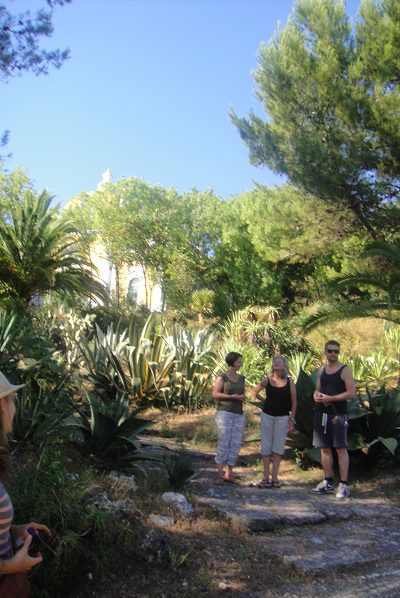
Exotic garden Tapada das Necessidades in Lisbon is a guarded secret even the most Lisboetas don’t know about. Beautiful grounds and palace peeling pink paint, with an incredible cactus garden and a setting for a picnic you usually only see in films. Since a few years it’s open to the public/tourists and it’s free!

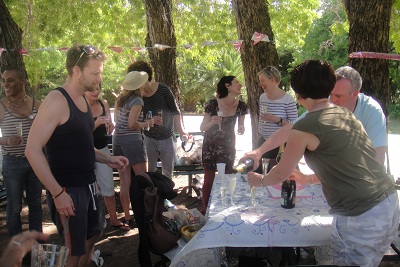
Tapada das Necessidades garden Lisbon: birthday picnic party June 2012

Between the famous Prazeres cemetery (also really worth a visit!) and the river Tagus (Tejo) you can find this large (about 10 ha) exotical park, including a wonderful picnic area, a network of walkways, historical buildings, a garden and 3 lakes. The grounds of the palace contain a remarkable collection of exotic plants known as “Tapada das Necessidades”.

Tapada das Necessidades Lisbon: Lilja & the candy-pink birthday cake, June 2012

Surprise birthday picnic & special birthday cake

Our lovely friend Lilja Plews (70) from England, born in Iceland, was invited for a surprise birthday picnic.

This beautiful lady likes shopping, like handbags, hats and shoes, and she loves to try on every pair of shoes before deciding whether to buy anything at all 😉  . That’s why this special birthday cake: a pink ‘hat’ decorated with elegant ladies shoes and a small handbag on top.

Exotic garden ‘Tapada das Necessidades’ Lisbon: prime location for a picnic or a lazy afternoon

The Palace (Palácio) das Necessidades was built in the 18th century in gratitude for prayers answered by Nossa Senhora das Necessidades (Our Lady of the Needs, a title dedicated to the Virgin Mary), whose first devotional chapel stood on this site.

Nowadays this palace is a Portuguese National Monument

Garden ‘Tapada das Necessidades’ Lisbon: walk through the immense, amazing garden

The ‘Tapada das Necessidades’ has been the stage for some important events in Portuguese history, as exemplified in the famous case of the box that king Dom Pedro V installed at the door, in wich everyone could leave their messages and complaints to the sovereign.

From 1910, the palace remained unoccupied for almost 40 years. In around 1950 it became the headquarters of the Portuguese Ministry of Foreign Affairs.

Garden Tapada das Necessidades Lisbon: Rob and Felipe, June 2012

Sanitairy facilities & trees

It is really wonderful to walk in this garden, you have the feeling that it’s all yours, because there are almost no other people around… In the park are no sanitairy facilities, the guardians at the entrance cried: ” enough trees here”!…. 😉  😉

There are three lakes surrounded by exotic vegetation, sculptures, a waterfall, a fountain and a pool. Really beautiful but faded elegance….

Lilja Plews: “Hello? Thank you! I’m currently in Lisbon.. Yes! Celebrating my 70th birthday”

Small pink-washed cottages & gossip

Besides: officially the few small pink-washed cottages in this park were once the little prince’s playhouses. But there are rumors that young women lived in those little pink houses, being the mistresses of the king …  😉

One of the little pink-painted houses in the garden: playhouse for the little prince?

The abandoned buildings create a mysterious atmosphere…..and inside there’ s a lot of trash..

Tapada das Necessidades garden Lisbon: entrance/exit near the Palace

How to get there? Take the 28 tram to Prazeres.

The main entrance of the park Tapada das Necessidades is through the Largo das Necessidades. This park is open to the public every day of the week – including Saturdays and Sundays, the entrance is guarded but entry is free.

The Palace (Palácio) das Necessidades, June 2012

Facebook

Open: wintertime 8h – 18h (from Monday u/i Friday), from 10h – 18h (Saturday and Sunday). Summertine 8h – 19h (from Monday u/i Friday), from 10h – 19h (Saturday/Sunday)