‘Shoemakers’ street Lisbon: 19th C. Art Nouveau strip club, peep shows & picanha

In the 19th century, Baixa was Lisbon’s commercial heart, with streets named according to their trades. Rua dos Sapateiros means ‘the shoemakers’ street.

Lisbon Rossio Rua dos Sapateiros1 Arco do Bandeiro

The entrance to the Rua dos Sapateiros is spanned by the decorative arch Arco do Bandeiro.

This bears the name of the wealthy sponsor Pires Bandeiro who commissioned it at the end of the 18th C.

Rua dos Sapateiros2 Art Nouveau old Cinema peep shows

Strip Club Rua dos Sapateiros Lisbon

Strip club & Art Nouveau style

Passing through the arched gateway on Rossio you see one of Lisbon’s remaining examples of Art Nouveau: this old movie house, the Animatógrafo , is a strip club nowadays. Lisbon’s earliest cinema hall opened in 1907, by brothers Ernesto and Joaquim Correia Cardoso. It has remained unaltered since then. The beautiful facade is adorned with a highly detailed Art Nouveau style, which consists of Azulejos tiled panels, which depict Edwardian styled females surrounded by fruits and flowers.

Rua dos Sapateiros: cafes, cheap traditional Portuguese restaurants & peep shows2

Rua dos Sapateiros Lisbon

It was not easy to make a picture without snapping visitors going in and out, because this beautiful house is rather popular….. 🙂

Traditional restaurants & picanha meat, ‘melt-in-your mouth’

Rua dos Sapateiros Lisbon: cheap traditional cafes, restaurants & peep shows5 Restaurant Adego Mo

Restaurant Ádega da Mo’, R. dos Sapateiros 199, Lisbon

Restaurant ‘Adega da Mo‘ is  a typical Portuguese restaurant.

Almoçar (lunch): Picanha, (meat from Brazil) is generally considered to be the number one cut, even better than beef fillet. Picanha (pick-ahn-yeh) is much better than a steak, meltin-in-your mouth….: € 7.50

Lisbon Leitaria Camponeza22

Rua dos Sapateiros Lisbon

Another beautiful example of Portuguese Art Nouveau in this street is Leitaria ‘A Camponeza’

Rua dos Sapateiros Lisbon: cheap traditional cafes, restaurants & peep shows street

Rua dos Sapateiros, Lisbon

Restaurant ‘Casa de Pasto’ Lisbon: culinary traditions & Mick Jagger

Inspired by the late 19th-century traditional Lisbon eating houses favored by the bourgeoisie, restaurant Casa de Pasto serves very tasty Portuguese dishes. Worth a visit!

Restaurant Casa de Pasto Lisbon: wonderdul vintage decoration

Cool Cais do Sodré riverside area & a former brothel

Restaurant Casa do Pasto opened in December 2013 by the hand of chief Diogo Noronha, a.o. responsible for the very successful ‘Lx Factory’ (a former industrial area surrounded by restaurants, galleries, studios, an open air market on Sundays), and the unique nearby bar Pensão Amor’, a former brothel.

Restaurant Casa de Pasto Lisbon & the very sympathic waiter

Beside this imposing space there are two more dining rooms: the first is small (but beautiful), with a long, narrow table, ideal for group dinners that do not exceed ten people. For a more romantic meal is advised the room with only two small tables where stands out an antique chaise longue and corner with images of saints.

Restaurant Casa de Pasto Lisbon, area Cais do Sodré: mouthwatering dishes!

Our lunch (almoçar): delicious tuna steak (atum) and vegetables (ca. 20 euro), home made chips, costeletas de borrego (lamb, ca. 15 euro, 2 glasses of wine, water and a dessert (sobremesa): a total of around 60 euro.

This restaurant goes back in time, but mixes modern cooking methods with Portugal’s culinary traditions.

Restaurant Casa de Pasto Lisbon vintage decoration dessert 2

Restaurant Casa de Pasto Lisbon: dessert ‘Wild Desire’ a combination of fruits with chocolate (facebook)

Casas de Pasto (litt. houses of pasture) & Portuguese history

Lisbon people (Lisboetas) once had the curious custom of going to stroll gardens to withdraw from the city in order to enjoy some pleasures of the countryside, usually on Sundays. They organized family picnics or simply had lunch in the old Casas de Pasto, so called because initially only giving fodder to the animals while the owners were negotiating at the fair. In many of them, still retain the rings that held the animals.

Casa de Pasto portas da Amadora alfacinhas retro 2

A ‘Casa de Pasto’, near Amadora, close to Lisbon, late 19th century/beginning 20th century. Picture: Arquivo Municipal de Lisboa

With the time the owners of the Casas do Pasto also began to feed the animal owners and so flourished a business that came to give rise to modern restaurants.

Source: Folclore Online de Portugal

Restaurant Casa de Pasto February ’15, Lisbon: Erika Reusens and Luc De Leersnyder

Bordalo Pinheiro: traditional Portuguese ceramic designs

One of the corner tables is next to the bookcase with traditional Portuguese Bordalo Pinheiro (1846–1905)ceramic designs, a very famous Portuguese artist known for his illustration, caricatures, sculpture, considered the first Portuguese comics creator. More….

Restaurant Casa de Pasto , Rua do São Paulo 20, Cais do Sodré, Lisbon

Big plastic pig

Restaurant Casa de Pasto is located in a typical Portuguese 19th-century antique building, on the first floor. Very easy to find: look for the big plastic pig hanging on the wall

Location: Rua São Paulo 20, Cais do Sodré, Lisbon. Closing time: 02:00. Reservation advised. Average price: 20.00 euro. Phone: (+351) 963 739 979.

Hours: Monday to Saturday from 12:00 to 15:00 and 20:00 to 23:00 (Thursday, Friday and Saturday until 24:00. Closed: Sunday. Facebook

Restaurant Casa de Pasto Lisbon & one of the funny bathrooms

May 2014, The Rolling Stones in Lisbon: Rock in Río YouTube, Mick Jagger dined at this fine restaurant.  Mick Jagger & restaurant chef Diogo Noronha  (facebook)

Remarkable Cemetery of ‘Pleasures’ Lisbon & resting place Portuguese celebrities

This remarkable ‘city of the deads’ is really an interesting place to visit.  Famous Portuguese personalities are buried here, mainly actors,  TV talk show hosts, singers, writers & painters

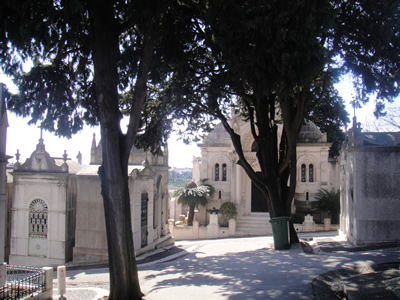
‘City of the deads’: cemetery of ‘Pleasures’ Lisbon: a funerary chapel & 4 garbage bins……??  😉

Famous fado artist Amália Rodrigues 

The mortal remains of  Amália Rodrigues, the famous fado artist,  were transferred to the National Pantheon  in Lisbon (under enormous pressure from her admirers and a change in the law requiring a minimum of four years before repatriation).

Cemetery of ‘Pleasures’ Lisbon
City of the deads: cemetery of ‘Pleasures’ ? (Cemitério dos Prazeres)

After the city of Lisbon was hit by an outbreak of cholera in 1833, causing thousands of deaths,  it was urgent to create a large cemetery for both rich and poorer victims. It has the weird name of  Cemetery of ‘Pleasures’, called after the nearby neighborhood (Prazeres) with the same name. Many of its tombs are big mausoleums, some with the size of small chapels.

Cemetery of Pleasures Cemitério dos Prazeres 2 Lisbon

Cemetery of ‘Pleasures’ Lisbon & one of the 70 ‘streets’

Tranquility & landing/take-off zone of Lisbon’s airport

Once you enter the cemetery the sound of the city fades and the tranquility overwhelms you. Beautiful trees, a strange atmosphere and joyful singing of birds. You imagine yourself walking in a previous century, only disturbed by plane noise, rather loud, every 10 minutes. The cemetery is located close to the landing/take-off zone of Lisbon’s airport.

As far as I know nobody at this cemetery seems to complain 😉 🙂

Cemetery of Pleasures Cemitério dos Prazeres 3 Lisbon

Cemetery of ‘Pleasures’ Lisbon

Most of the Prazeres mausoleums belong to rich, old or ‘important’ families, like f.i. the Palmela family. Many of the mausoleums are richly elaborated, have fine sculptures and decorations. There are also statues of the deceased. It’s like a ‘city in a city’ for the dead, with well-defined lanes (70! ) and funerary chapels that were built to look like little houses.

Cemetery of Pleasures Cemitério dos Prazeres 4 Lisbon river view

Cemetery of ‘Pleasures’ Lisbon

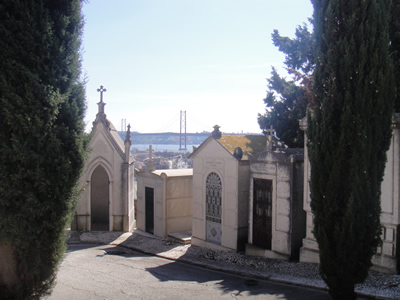
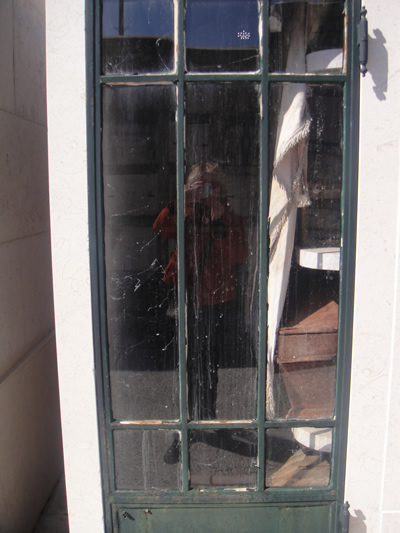
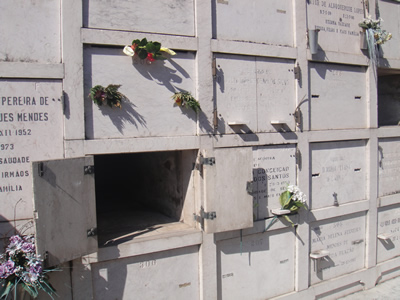
The unusual about a lot of these graves is that they have little “front doors” with glass windows through which you can see the caskets and remnants of the dead and their visitors. Most of the trees are a species cypress (Cupressus sempervirens), much used in Portuguese cemeteries.

Cemetery of Pleasures Cemitério dos Prazeres 5 Lisbon river Tejo views

The cemetery also provides great views over the Alcântara valley, the river Tagus and the 25 April Bridge (Ponte 25 de Abril).

Until 1985, the great Portuguese poet Fernando Pessoa was burried here. Thereafter his mortal remains were transferred to the cloisters of the Mosteiro dos Jerónimos

Cemetery of Pleasures Cemitério dos Prazeres 7 Lisbon

Cemetery of ‘Pleasures’ Lisbon

An example of a ‘front door’ with glass windows through which you can see the caskets.

Cemetery of Pleasures Cemitério dos Prazeres 8 Lisbon

Cemetery of ‘Pleasures’ Lisbon

TRAM 28 – last stop

The cemetery, one of the largest of the Portuguese capital, can be reached by taking Electrico 28, which is a traditional and charming Lisbon tram, to its last stop in Prazeres. Open every day of the week from 09:00 – 17:00 (May – September 09:00 – 18:00). Largo dos PrazeresPraça São João Bosco 

More about cemeteries in Portugal

Cemiterio Prazeres entrance

Cemetery of ‘Pleasures’ Lisbon : entrance

YouTube

MUDE museum in Lisbon: an ode to art, design & fashion, full of extraordinary pieces

MUDE Museum in Lisbon is really worth a visit! The fashion collection contains work by famous designers like Balenciaga, Pierre Balmain and Paco Rabanne.

Mude design Museum3

Sofa Joe – Jonathan de Pas, Italy (1932-1991)

The Collection results of the Francisco Capelo’s work and dedication, started in the 1990s, with more than 1,200 design and 1,500 fashion pieces most of it haute couture. The collection portrays the history of design and fashion from the 1930s to the present, being an exceptional collection to Portugal and to the international scene.

Mude Mode and design Museum Lisbon 14

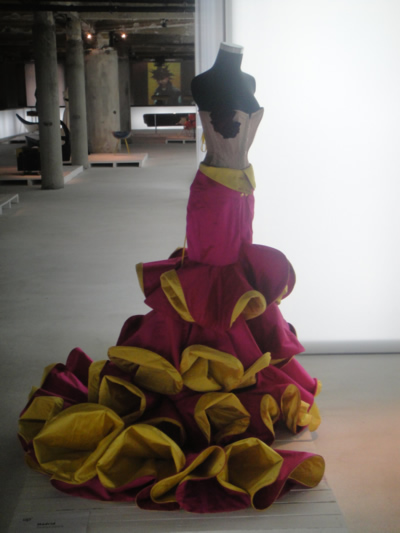
Designers of this beautiful dress: the Portuguese duo Storytailors.

MUDE is a space for all 20th and 21st century design forms, from graphic to urban, taking in fashion and equipment; from mass production to the creation of the artist. A space to considering design, researching into its holdings, developing an editorial policy, a temporary programme and educational activity that provides different spaces for the sharing of ideas. It must also, however, be a space for experimentation and creation, showing the proposals of new creators, encouraging new research and creating dialogues with the visual arts and architecture, the cinema and dance, music, science.

Mude design and fashion Museum 4


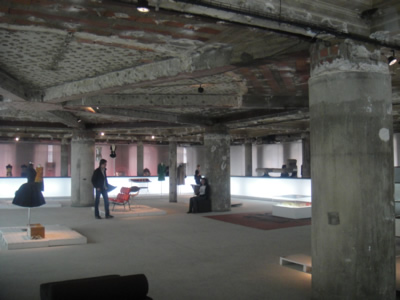
The unique building has a long history. Local architects Joana Vilhena and Ricardo Carvalho have left the interior in the rough state they found it, with walls, columns, and ceilings stripped of finishes. More……. A wonderful idea! It’s located in the middle of Lisbon’s historic Pombaline center. Eight floors occupy in total a floor area of appr. 14.000 m2. The renovation is still in progress.

Mude Mode and design museum Lisbon 5

Aristocratic elegance: Christobal Balenciaga (Spain 1895-1972)

Mude Mode and design museum 6

Pierre Poulin‘s (France, 1927) long sofa Amphys which can be arranged in different positions

Mude Mode and design museum Lisbon

Paco Rabanne (Spain, 1934). Calf length boots, metallised leather (1965)

Mude Mode and design museum 10

Also, there’s a lot of design showpieces, wonderful movie clips and music

Design and fashion were assembled in a complementary manner, with each piece chosen through a concept-based museum dialogue, and not according to personal tastes. Comprised of furniture and small everyday objects, both unique and mass-produced, the collection reflects 20th century’s major design trends and movements.

Mude Mode and design museum Lisbon Beatles

MUDE (MUseum and DEsign) which means ‘change’ in Portuguese), Rua Augusta 24 Lisbon.

Opening hours: from Tuesday to Thursday and Sunday: 10:00 am-20:00 pm
Friday and Saturday: 10:00 am-22:00 pm. Closed on Monday. You can visit the museum for free.

Mude Mode and design Museum Lisbon 13

Thanks to Graça Rodrigues, Head of Communication & Press

Museum of Decorative Arts Fress Lisbon: Portuguese 17th-18th C. nobility collection & arts and crafts ateliers

Would you like to see how the Portuguese nobility lived in their luxury palaces during the 17th and 18th Century? If you are planning to visit Lisbon take the opportunity to visit the Museum of Decorative Arts, the former city palace.

Museum of Decoratve Arts Lisbon 1

Museum of Decorative Arts Fress Lisbon (Museu Artes Decorativas Fress) 2014: visitors from Holland Ans de Graaf and Loek Polack & tour guide Margarida Serra

The Portuguese nobility, during the 17th and 18th Century among the world’s wealthiest, embraced the sumptuous style of ‘Versailles’ and acquired lavishly decorated items throughout the continent.  “While everyone else in Europe was leveraged in that period, the Portuguese were fully financed.” More….

But there’s much more to see in this Museum, like the beautiful Portuguese tiles (azulejos).  And a visit to the ateliers next to the museum is a wonderful experience!

Museum of Decorative Art Fress Lisbon King Jose Room 2

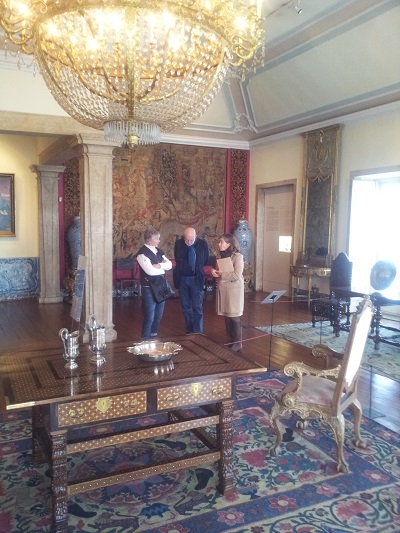
Museum of Decorative Arts Lisbon: King Jose room (1714 – 1777):  exuberantly carved furnishings in ‘Rococo’ style. Remarkable rosewood table (movie)

An example of a noble house in the 17th and 18th centuries. Portuguese aristocrats loved shopping, also in other countries: beautiful decorative arts including textiles, furniture, paintings, jewelry, collections of silverware, woven fabrics, China crockery and ceramics.

Museum of Decorative Arts 2009 2

Entrance Museum of Decorative Arts Lisbon: ‘Coupé Berlin, 18th Century.

In 2009 I also wrote about this museum, at that time you were not allowed to take pictures. Now you can wander freely from room to room and take time to make photos. The Museum has suffered several changes and it is really worth a visit.

Museum Decorative Arts Fress Lisbon Panel azulejos children 2

Museum of Decorative Arts Fress Lisbon: a beautilful tile panel & guided tour for children

Besides preservation, exhibition and research of the peaces in display, the Museum also promotes information throughout different audiences, converging the guided tours, as well as carrying out conferences and thematic arts- and craft workshops.

Museum of Decorative Arts Fress Lisbon- Portuguese Chairs Room

Museum of Decorative Arts Lisbon: new is a room with beautiful antique Portuguese chairs

The Ricardo do Espírito Santo Silva (1900 – 1955) Foundation

Ricardo do Espírito Santo Silva was the third son of a Portuguese banker with a remarkable name, because Espírito Santo means ‘Holy Ghost’.  This business man, art lover and Maecenas, and besides famous as one of the most renowned Portuguese bankers, donated to Portugal the wonderful Azura Palace and a decorative art collection.

Ana Sim-Sim, our guide to the traditional Art & Crafts Ateliers and mr. Artur Sousa

Make a visit to the ateliers: an extraordinary experience!

In the former Palace there are 18 traditional Arts & Craft ateliers. Besides restoration of ancient pieces, new ones are manufactured with high technique and artistic quality, incorporating traditional techniques and methodes. A wonderful combination of modernity and tradition! Very creative people are at work here, dedicated to traditional breeding and restoration of old pieces (cabinet-making, inlays, wood carving, chiselling, book decoration, trimings and upholstery)

Museum Decorative Arts Fress Lisbon beautiful patio for lunch

Museum of Decorative Arts Lisbon: romantic and quiet patio to enjoy lunch, but today it’s raining  🙁

The Museum’s Cafetaria (there’s also a space inside for rainy days): from 12:30 to 14:30 you can enjoy soup, dish, vegetarian pie, salad, bread and olives, dessert, fruit, cold tea / juice, water, coffee (€ 10.00). The buffet changes every day.

Museum of Decorative Arts Fress Lisbon formeer palace entrance ateliers

Museum of Decorative Arts Lisbon, Largo das Porta do Sol 2 & entrance to Arts & Crafts Ateliers

The Foundation Ateliers are open to guided tours without pre-booking on Monday (11 am + 3 pm), Wednesday (11 am + 3 pm) and Thursday (3 pm). In English or Portuguese (in other languages according availability). Pre-booked guided tours are available from Monday to Friday. Call (00351) 21 881 46 39/00 ​

View from one of the Museum’s windows February 2014: popular tourist viewpoint Portas do Sol

Museum of Decorative Arts, Largo das Portas do Sol, 2 , located in the historic area Alfama, one step away from one of Lisbon’s most popular tourist attractions: viewpoint (miradouro) Portas do Sol: stunning river Tagus views!

Musum of Decorative Arts Lisbon atelier1

Mr. Artur Sousa at work in one of the Museum’s ateliers. Website (FRESS) with presentation: (several Movies)

Museum of Decorative Arts, Largo das Portas do Sol  Alfama , easy to reach by legendary tram 28.

Facebook  Closed: New year’s Day, Easter, May 1st and Christmas (December 25). Adults 4.00 euro, free entrance children aged 12 or under. Open: 10:00 to 17:00.

Bar ‘da Velha Senhora’ Lisbon: burlesque, revue & the day Cesária Évora died

If you like burlesque performances, glittering revue shows and cabaret a must-go place is bar “da Velha Senhora” (Old lady’s bar) in Lisbon! Video:

‘Hallooooooooooooooooooo!”  2 beautiful ladies invite you to enjoy the show

Bar da Velha Senhora” Cais do Sodré, Lisbon

While eating traditional Portuguese snacks (“petiscos“) you can enjoy various artistic performances. This bar is in the same typical Portuguese 18th-century building as Pensão Amor” (a former ‘love’ guesthouse), with a wonderful unique décor . Also really worth a visit!

Stage Bar ”da Velha Senhora” Cais do Sodré, Lisbon

Inside, almost everything complies with the burlesque theme and imagery of Lisbon in the early twentieth century. The building itself – a cultural and artistic project – witnesses the time that thirsty sailors docked in the harbor and spent their free time drinking booze and have fun with women.

Bar ”da Velha Senhora” Cais do Sodré, Lisbon

Former Lisbon’s red light district

The stories of prostitutes and sailors are inseparable from Cais do Sodré, formerly known as Lisbon’s red light district with bars named after northern European capitals (like Copenhagen, or Roterdão, Rotterdam) to attract their sailors who stepped off their boats here.

But times have changed: nowaydays it is a great area to go out at night! Musicbox is a trendy hotspot for live bands and DJ’s, disco clubs Tokyo and Jamaica became two of the most loved alternative clubs in Lisbon.

Bar ”da Velha Senhora” & DJ Rycardo Lisbon, December 17, 2011

The day Cesária Évora died

I will never forget the day Cesária Évora died, December 17, 2011. Early in the evening we went to Bar da Velha Senhora. When DJ Rycardo started to play the famous and wonderful songs of Cesária, suddenly all the people in the bar started spontaneously clapping their hands and some began to cry … I still get goosebumps thinking about that day…!

Bar ”da Velha Senhora” & DJ Rycardo Lisbon: the day Cesária Évora died

A woman jumped on the table and started to dance…….   Amazing!

Popular singer Cesária Évora, “the Barefoot Diva’, has made Cape (Cabo) Verde famous all over the world. She generally performed in bare feet, as a sign of solidarity for the large number of women and children back home in the Cape Verdean Islands who cannot afford shoes.

Cesária Évora: ‘Miss Perfumado (youtube). More about former Portuguese colony Cape Verde (from 1456-1975)

Bar ”da Velha Senhora” Cais do Sodré, Lisbon

Rua Nova do Carvalho 38, Cais do Sodré, Lisbon, tel. (00351)351 213 468 479. Open: Tuesday to Sunday 6pm to 4am . FACEBOOK

Metro: Cais do Sodré. Facebook.com/bardavelhasenhora

Restaurant Pharmacia Lisbon: surprising menu, integrated museum & ‘LSD’ cocktail

Restaurant Pharmacia in Lisbon is integrated into the Pharmacy Museum just near Tagus river viewpoint (miradouro) Santa Catarina or Adamastor. The remarkable décor is inspired by pharmacies of the past, the menu is a surprise!

Restaurant Pharmacia Lisbon – the garden in summertime on a Sunday afternoon

Restaurant Pharmacia is integrated into the Museum of Pharmacy (Museu da Farmácia). In Portuguese farmácia literally means “Drug Store” and it truly holds onto its name, since it is located at the building of the Portuguese National Drug Store Association. The remarkable interior is inspired by classic old pharmacies.

Restaurant Pharmacia Lisbon – very nice waiters dressed in white lab coats

When you enter the restaurant, you are shown to your table by somebody wearing a white lab coat. The menu is mainly focused on Portuguese cuisine, and “petiscos”  (small dishes), but the restaurant also has a bar, serving all kinds of drinks and light snacks. One of its fine features is the outside terrace. The restaurant does not close after lunch and ‘a la carte’ service throughout the day is available.

Restaurant Pharmacia Lisbon: long lunch with good friend Erika Reusens

We enjoyed a delicious lunch, coffee and wine included € 45,70 . For dinner you also have the choice of a special menu of several dishes (€ 28, without drinks).

Restaurant Pharmacia Lisbon, integrated into the Museum of Pharmacy

Inaugurated in June 1996, the Pharmacy Museum is the only museum of Universal History in Portugal and one of the most complete in the world. The collection is based on pieces that represent 5000 years of history of health in civilizations as diverse as Ancient Egypt, Mesopotamia, Rome, Greece, Islam, South America, China, Tibet, Japan, Africa, and modern Europe. YouTube movie Pharmacy Museum of Lisbon

Museum open from Monday– Friday: 10am – 6pm. Closed Saturdays, Sundays and Holidays.

Restaurant Pharmacia Lisbon

Inside the building you will find the wall of old medicine cabinets full of glass drug containers, medicine vials, and bottles of all kinds. Also the wallpaper is a tribute to the pharmacy. Your plain water will be served in an old ether bottle, the bottle holder is wearing a red cross logo…

Restaurant Pharmacia Lisbon: restaurant inside & vintage items

The remarkable interior uses almost exclusively vintage and antique items and some pieces that are on loan from the museum. The menu card is a pharmacy notebook and even your soup will be served in a small vial.

But the comparison with a pharmacy stops here: the food in a hospital is totally different.... 😉 😉

Restaurant Pharmacia Lisbon – bottle of wine served in a measuring cup

Even the bottle of wine is served in a plastic measuring cup…. And the cocktails here all have ‘drug’ names, like ‘LSD’ cocktail (whisky and ginjinha). How about a cocktailibuprofen’ ? (Cachaça licor and lemon juice), or try a paracetamol cocktail (honey, melon and ginger beer)  😉

Restaurant Pharmacia Lisbon, Rua Marechal Saldanha 1, Lisbon.

Facebook

Restaurant Pharmacia is overlooking the Tagus river

Nearby: Miradouro (viewpoint) Adamastor.

More……..

……your coffee…….

BTW: famous artist Damien Hirst tried his hand at the restaurant business in 1998 when he opened the art-filled Pharmacy Restaurant + Bar in London. Filled with pseudo-scientific pharmacy-themed items, Hirst curated every design element from metallic pill-printed wallpaper and pill-shaped ashtrays.

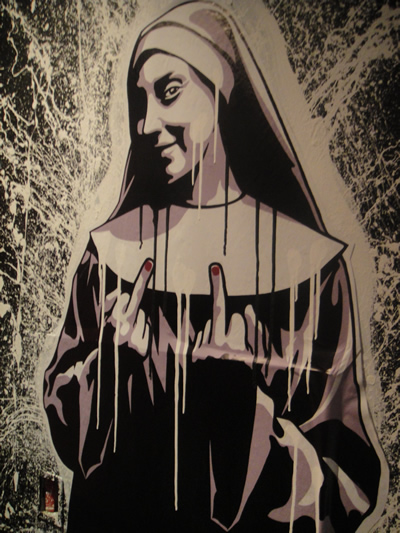
Former Palace Santa Catarina Lisbon: ‘Pop Up’ 2010, Tiago Chagas & kissing nuns

UPDATE 2017: this former palace is now a hotel

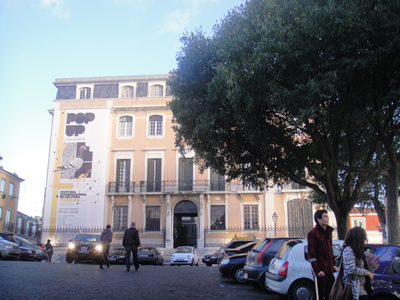
Right next to one of the most popular viewpoints (miradouros) ovoer the river Tagus (Tejo) in Lisbon Adamastor,  you’ll find Palácio Verride, a former 18th- century Palace, better known as Palácio de Santa Catarina.

Viewpoint Adamastor Lisbon Tagus River Santa Catarina Palace POP UP kissing nuns

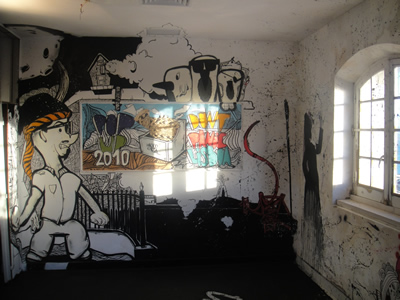
‘Pop Up’ 2010 Art Gallery Santa Catarina Palace: Artwork Tiago Chagas

The municipality of Lisbon is the owner of the former Palace, and excellent art exhibitions are regularly held here, like in December 2010: ‘Pop Up’ Art Gallery, a urban culture international festival that challenges creators of multiple areas of artistic expression to intervene in vacant or abandoned urban spaces, giving them new life through art.

Cultural agenda Lisbon

Viewpoint Adamastor Lisbon Tagus River Santa Catarina Palace POP UP art entrance

‘Pop Up’ art 2010: the former Palace’s stairs in the hall

Youtube video ‘Pop Up 

‘Pop Up’ started in 2009 in Lisbon city, but intends to become an international platform of urban culture exchange, bringing together artists and talents from different cities around the world, aiming to promote Lisbon cultural identity in and out of doors.

Viewpoint Adamastor Lisbon Tagus River Santa Catarina Palace1 POP UP

Palace Verride (known as Santa Catarina) Palace Lisbon. This year, ‘Pop Up’ had “Urban Nomads” for a theme and pigeons as their icon.

The 18th- century Santa Catarina Palace’s history dates back to the first half of the 18th century. The Palace has seen various uses, a number of different owners and successive work campaigns. The Baron and Viscount of Moledos, Francisco de Paula Silva Tovar, deputy to the constitutional courts, resided there in the 1820s.

Recently the MUDE museum (art, design & fashion) housed here, nowadays located in Baixa area, really worth a visit!

Viewpoint Adamastor Lisbon Tagus River beautiful Santa Catarina Palace POP UP

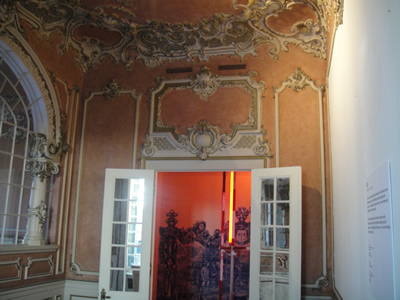
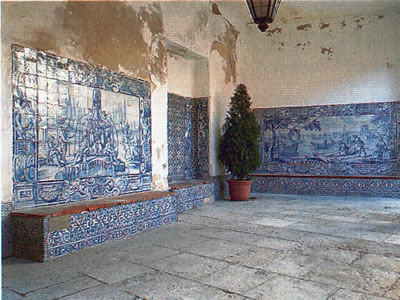
Beautiful ornamented ceilings and azulejos (Portuguese tiles)

Happily many of the original rooms of the old Palace are still preserved, such as ornaments in the ceilings and beautiful tiles. In the 1980s, the well-known architect and painter João de Almeida, made several changes.  The Lisbon City Council purchased the palace in 2003.

Viewpoint Adamastor Lisbon Tagus River Santa Catarina Palace POP UP1

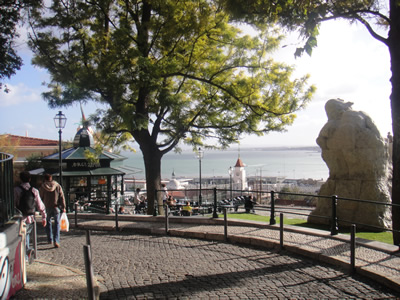
Popular river Tagus viewpoint right next to the Santa Catarina Palace:  Adamastor viewpoint and Moorish kiosk (quiosque) cafe.

‘Adamastor’  is a popular viewpoint (miradouro) and gathering place in Lisbon ovelooking the river Tagus, which is officially called the Miradouro de Santa Catarina.

Viewpoint Adamastor Lisbon Tagus River Santa Catarina Palace POP UP Don't Panic Lisboa

‘Pop Up’ 2010 Palace Santa Catarina: artwork Tiago Chagas,  ‘Don’t Panic’ Lisbon

‘Don’t Panic’ is a unique free publication directed towards young people and emerging artists in areas like music, design, fine arts, cinema, theater, literature, graffiti, dance, fashon, clubbing and many others

YouTube video ‘Don’t panic’ Lisbon

Viewpoint Adamastor Lisbon Tagus River Santa Catarina Palace POP UP nuns 2

‘Pop Up’  2010: Santa Catarina Palace Lisbon: artwork Tiago Chagas

Restaurant ‘Chaminés do Palácio’ Lisbon, great lunch & Palace of Independence

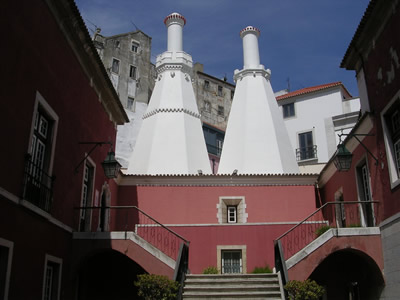
There are a lot of high quality restaurants crowding the downtown streets of Lisbon, but if you like to enjoy a great Portuguese lunch located in the heart of Lisbon in a pleasant and historic environment, I can recommend ‘Chaminés do Palácio’ (‘the chimneys of the Palace’).

Independece Palace Lisbon Restaurant Chamines do Palacio chimneys

Restaurant ‘Chaminés do Palácio’ (‘the chimneys of the Palace’) Lisbon

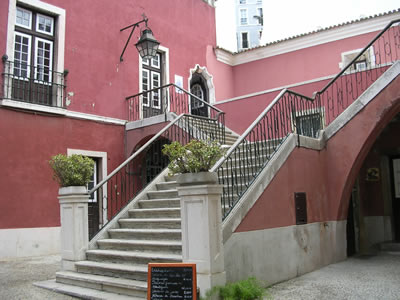
The restaurant’s entrance and the beautiful patio of the Palácio da Independência  (Palace of Independence), located near Rossio Square on the north side of the Largo de São Domingos. The building’s foundation stone was laid in 1509 and some of Manueline details from this time can still be detected in the inner courtyard, for example the door decorations. The two conical kitchen chimneys are reminiscent of the royal palace at Sintra.

Restaurant Chemines do Palacio Lisbon Independence Palace 1

Restaurant ‘Chaminés do Palácio’ (‘the chimneys of the Palace’) Lisbon

Paulo Saraiva de Reffóios (with sunglasses): “Recently I started (February 2009) this restaurant. I used to work as a hotel director for 20 years but besides I always had a real passion for Portuguese gastronomy and for many years I enjoyed cooking for friends”. “At the moment you are welcome to enjoy a (Portuguese) lunch here (June 2009), dining is possible on request from 12 persons”.

The other 2 gentlemen are José Cardoso (and daughter Filipa) and Henrique Santos, ‘Lucinda Tudo Bom’ wine producers. At the table a delicious bottle of Douro wine: Fraga Alta (High Crag) Douro Doc 2003.

Lisbon Restaurant Chamines do Palacio Independence Palace Rossio Paulo owner

Restaurant ‘Chaminés do Palácio’ (‘the chimneys of the Palace’) Lisbon

My friend Erika Reusens and Paulo Saraiva de Reffóios, the very friendly and always joking restaurant owner. Our choice for lunch: salada de rucola com requeijao (salad with cream cheese) € 8; salmão fumada com boulgour (smoked salmon with bulgur) € 12; agua (water) € 2,50; um copo do vinho branco (glass of white wine) € 2,50; bread and delicious salted butter € 3.

Lisbon Restaurant Chamines do Palacio Independence Palace inside

Restaurant ‘Chaminés do Palácio’ (‘the chimneys of the Palace’) Lisbon

Visit the Independece Palace: each Friday at 15:00

If you wish you can enjoy your lunch inside of this beautiful building.The name Palácio da Independência (‘Independence Palace’) recalls a curious event that occured in 1640: a conspiracy against the Spanish occupation. If you are in Lisbon you can visit the palace. More information…….

Independent Palace restaurant Chamines do Palacio azulejos ship

Restaurant ‘Chaminés do Palácio’ (‘the chimneys of the Palace’) Lisbon: beautiful tiles

The walls of this former palace are decorated with beautiful azulejos (Portuguese tiles). The azulejo is a form of Portuguese painted, tin-glazed, ceramic tilework. They have become a typical aspect of Portuguese culture. Azulejo comes from the Arabic word az-zulayj, meaning polished stone.

Independence Palace restaurant Chemanes do Palacio patio garden 1

Restaurant ‘Chaminés do Palácio’ (‘the chimneys of the Palace’) Lisbon

Wherever you go in Portugal, azulejos are to be found inside and outside cafes, churches, palaces, ordinary houses and even ceilings, train- or subway stations. Many azulejos chronicle major historical and cultural aspects of Portuguese history.


 Independence Palace Rossio 12 entrance restaurant Chamines do Palacio

Restaurant ‘Chaminés do Palácio’ (‘the chimneys of the Palace’) Lisbon

‘Chaminés do Palácio’, Largo de Sao Domingos 11.  Mail: chaminesdopalacio@gmail.com

Tlm (0351) 919450754

Visit ‘Palace of Independence’ Lisbon & conspiracy Spanish occupation 1640

The beautiful Palácio da Independência (Palace of Independence), located in Lisbon close to the Rossio Square (near national theatre D. Maria II ), on the north side of the Largo de São Domingos , is known by two names.

Lisbon Indepence Palaca near Rossio Suqare Entrance

Palácio da Independência (Palace of Independence) Lisbon

It was given its original name of Palácio de Almada in honor of its former owner, the Count of Almada. The name Palácio da Independência (‘Independent Palace’) recalls a curious event that occured in 1640. Philip II of Spain had occupied Portugal in 1580, a year later he was recognized as King of Portugal.

Independence Palace Rossio entrance1 restaurant

Palácio da Independência (Palace of Independence) Lisbon

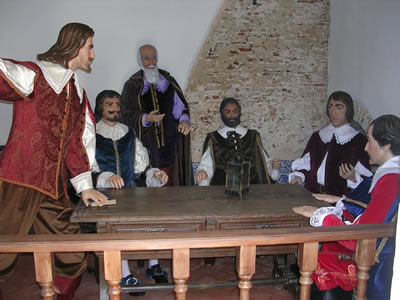
The loss of some colonies and the intense pressure of taxes levied to finance the Spanish wars led about 60 years later to a conspiracy among several of the Portuguese nobility. On December 1st, 1640 there ensued a successful rebellion, followed by the restoration of Portugal’s independence.

Independence Palace Lisbon near Rossio the conspiracy room

Palácio da Independência (Palace of Independence) Lisbon

About 40 conspirators prepared for the action under the leadership of the Duke of Bragança (or Braganza) in the grounds of this palace.

Lisbon Independence Palace near Rossio garden azulejos

Palácio da Independência (Palace of Independence) & garden Lisbon

The Duke, from who’s grandmother the royal family descended, was crowned João IV, King of Portugal. From a neighboring monastery the nobles reached the palace garden from across part of the old 14th C. city wall and gathered there in a small, isolated pavillion. It has even been suggested that there was an underground path linking the garden with the Baixa along which people could pass unseen.

Independence Palace Rossio garden azulejos 1

Palácio da Independência (Palace of Independence) Lisbon

Beautiful azulejos (tiles) representing the story of the conspiracy

Lisbon Independence Palace near Rossio

Palácio da Independência (Palace of Independence) Lisbon

The building’s foundation stone was laid in 1509 and some of Manueline details from this time can still be detected in the inner courtyard, for example the door decorations. Two conical kitchen chimneys are reminiscent of the royal palace at Sintra.

Independence Palace Lisbon near Rossio kitchen chimneys

Palácio da Independência (Palace of Independence) Lisbon

The Sociedade Historica da Independência de Portugal has its seat in this Palace. This society has awarded itself the task of keeping alive the memory of the happenings of December 1st, 1640 and the general consciousness of Portugal’s national history.

Every year on December 1st official memorial events take place both in the Palácio da Independência and at the nearby square Praça dos Restauradores

Independence Palace Lisbon Ana Maria Proserpio

Palácio da Independência (Palace of Independence) Lisbon

Ana Maria Proserpio, Directora dos Serviços Culturais (Director of Portuguese Cultural Services). In Ana Maria’s hand the keys of the palace. If you are in Lisbon you can visit the palace .

Monday to Friday from 10am to 1pm and 2pm to 6pm | Sat. and Sunday is also possible  (visits have a minimum of 5 people).
Price: € 3 per person or € 25 per group.

Palácio da Independência
Largo de São Domingos, 11
1150-320 Lisboa

Phone: 21 324 14 70 Facebook  Email: ship.geral@ship.pt