
The Portuguese appreciate eating and drinking well. The influence of Portugal’s former colonial possessions is clear, especially in the wide variety of spices used, like piri piri (small, fiery chilli peppers), as well as cinnamon, vanilla and saffron.

Restaurant/cafe ‘A Vaidosa Terreirinho Ginginha’ & owner José Maria
CLOSED. UPDATE March 2019: due to eviction (despejos) after 34 years ( !!) this restaurant is closed. What a shame 🙁 🙁

Restaurant ‘A Catedral do Fado’:
5 minutes walk (also open on Sundays): restaurant ‘A Catedral do Fado’, good food, local prices :-). Rua Marquês Ponte de Lima 5, Mouraria, Lisbon
Discover 900 years old area Mouraria, shops fado, bars & restaurants

Owner José Maria & his wife Laurinda
Pataniscas de Bacalhau & rice, delicious!
The Portuguese cuisine is rich, filling and full-flavoured. There’s also Arab and Moorish influences, especially in the south.

Restaurant José Maria in Mouraria Lisbon January 2017
Lunch with Paula: delicious bacalhau à brás (salt cod): 6 euro pp
Portuguese breakfast
Traditionally just coffee and bread, often enjoyed in a cafe (pastelaria). Recommended: toast (tosta mista) with ham & cheese (queijo e presunto), or delicious sweet pastries like pastéis de nata, real calorie bombs! Coffee: strong (bica) with milk (galão – garoto), tea (chá) with or without sugar (açúcar). The pastalerias are often a part of the social life in the neighbourhood.
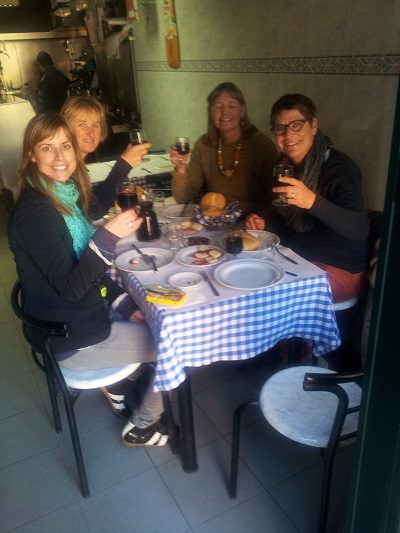
Historical area Mouraria Lisbon Restaurant José Maria & his wife Laurinda
Lunch with Dutch friends, February 4, 2015: Denise, Jolanda, Margriet and Feikje
Local priced restaurants and useful information about area Mouraria

February 2019: a city trip to Lisbon with 3 generations of the Kollmer family from the Netherlands 🙂 🙂
Good quality & local prices
In this tiny restaurant in Mouraria you can enjoy a 3 course meal (starter, like cheese/ham, soup, main course, dessert, water, coffee and wine) for only about 9-10 euros pp. Not open on Sundays.

Laurinda’s bitoque is the best of Lisbon!! 🙂 🙂
If you prefer meat, and don’t feel like experimenting, try a ‘bitoque’. It’s steak and fries, with a fried egg, garlic and rice (ca. 7 euro).

Typical Portugues & very popular: grilled sardines
Bill for 3 persons: around 30 euro
Grilled sardines recipe by Rochelle Ramos:

Restaurant owner Laurinda & delicious fresh fish
How to recognize cheap and really Portuguese restaurants?
A little bit disorderly, but very clean; a big TV screen, people like watching TV while eating (a lot of football, futebol), TL-tubes on the ceiling and paper table-covers. Prices (in Lisbon) between 8 and 15 euro (three courses and wine).

January 2016: what a wonderful surprise! 🙂 Erika, Loek, Luc & Ans
Football
In Portugal there’s a lot of seafood restaurants, many with very beautiful displays of lobsters, shrimp, oysters, and crabs, but a big TV-screen, football (futebol!) is also really important….!! 😉
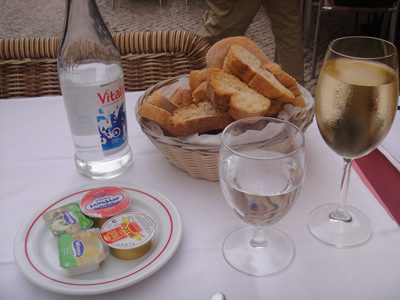
Starters, typical Portuguese (not free in more expensive restaurants)
Be prepared: in the more expensive restaurants you have to pay for starters like bread, cheese and often olives or shrimps (camarao) (from 3 – 10 euro).

Restaurant Jose Maria & Laurinda November 2018
Unrequested starter dishes
You won’t pay for starters if you don’t eat them, the waiter will take them away (não, obrigado), ‘no thank you’. The waiter will probably bring you some unrequested starter dishes: as those are not free, feel free not to touch them and they will not be charged on your bill (but check it, especially in restaurants with lots of tourists!). NOT in this place 🙂
Or, they ‘offer’ you a glass of portwine (and charge 4-7 euro on the bill). Tips are not usual in Portugal, but a few euro is ok.

Espetada: a typical Portuguese dish: 6.90 €
The espetada is a typical Portuguese dish made usually of large chunks of beeff rubbed in garlic and salt, skewered onto a bay leaf stick cooked over hot coals or wood chips.

Roasted apple (sobremesa: dessert)
Lunch (almoçar): between 12:00 and 15:00. Dinner from 19:00
Like in all mediterranean countries lunch (almoçar), is a big affair for Portuguese, served between noon and 3 o’clock, often in a restaurant (and often paid by the employer).
Menu list with 2 price columns
When dining in Lisbon, you will notice that some restaurants have a menu list with 2 price columns. The cheaper list is for half-portions (meia dose), the higher priced list is for full-portions (dose)
Usually three courses, including soup (sopa) like f.i. caldo verde (a soup of cabbage and potatoes).

Caldo Verde, a popular soup of Portuguese and Brazilian cuisine.
Fish, like codfish (bacalhau) or charcoal-grilled sardines (sardinhas assadas) or meat (rabbit and pork are very popular), Coelho a caçador (rabbitstew, in red wine), accompanied with a small bottle of red or white wine (uma garaffa de vinho branco ou tinto) or Vinho Verde (a young sparkling ‘green’ wine, low-alcohol).

Chicken (frango) piri-piri (the African devil..), is also a very popular dish. Restaurant Casa da Índia, in Bairro Alto
Nun’s bellies & bacon from heaven 😉
Desserts (sobremesas): crême brulée (pudim flan), chocolate mousse and a big variety of almond cakes (amêndoa). Toucinho do céu (bacon from heaven) or barriga de freiras, (nun’s bellies), recipes originally created by nuns in the 17th and 18th Century. Often cheese (queijo), from sheep or goat’s milk. Very popular is ‘queijo da Serra” from the region of Serra da Estrela in the north.
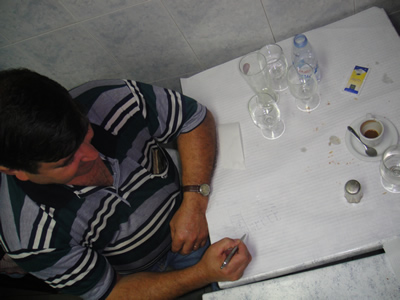
Mouraria Lisbon, tiny restaurant Marie-Jose and Laurinda
Bill: no credit cards
In the smaller restaurants the bill is usually written on the paper table cloth…you can pay in cash only. Our bill for 2 persons? 20 euro, incl. a glass of home made Aguardente bagaceira……(litt. firewater)

Mouraria, Rua do Terreirinho 58 Lisbon near starting point starting point legendary tram 28 at square Martim Moniz.
Hi,
I just discovered this blog about my home, Lisbon, and I’m liking what I’ve read.
Just a small correction though (I hope you don’t mind), crême brulée here is called ‘leite creme’. Pudim flan is a type of pudim that’s kind of similar, but not exactly the same as leite creme. 🙂
Cheers!