
The unmistakable smell of roasted chestnuts (castanhas assadas) is announcing autumn’ s arrival in Portugal. ‘Quentes e boas’! ‘(Get’ em hot!). This cry goes out on the Lisbon streets.

Lisbon city centre in autumn
Much to the chagrin of many, the traditional paper cone made out of the Yellow Papers has been replaced by soulless paper packages, which takes something away from the ritual of chestnuts.

Baixa area, the commercial heart of Lisbon
St. Martin’s Day is celebrated on November 11
It’s called Magusto. This day is the peak of three days, often with very good weather, known as Verão de São Martinho (Saint Martin’s summer).

St. Martin’s Day dinner at home with friends, November 2018
The Portuguese celebrate St. Martin’s Day with jeropiga (a traditional delicious sweet liqueur wine) and roasted chestnuts (castanhas assadas).

Rossio, Lisbon in December & Christmas trams
Traditions
On St. Martin’s Day traditions dictate that family and friends gather around a glowing hearth or bonfire.
How to roast chestnuts in the oven

Roasted chestnuts
Chestnuts are roasted, traditional alcoholic drinks are served, like água-pé (a watered kind of wine), jeropiga, vinho novo (young wine), or the slow smooth burn of aguardente (‘firewater’, alcoholic drinks between 29 and 60 percent).

Tradition: chestnuts and jeropiga
Because this pagan festival is a celebration of life, there is food and drink and plenty of fun: in some regions people smother themselves with ashes, black themselves up and sing around the fire.
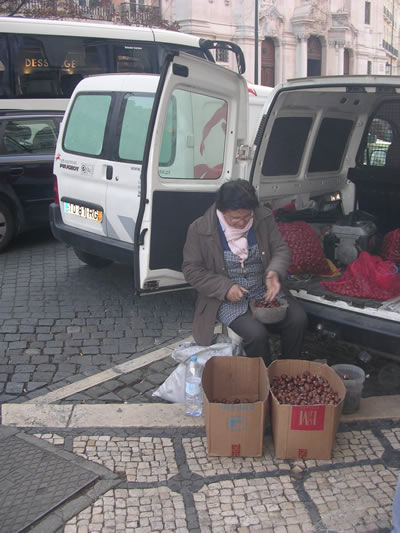
Largo do Chiado, Lisbon