Museum of Decorative Arts Fress Lisbon: Portuguese 17th-18th C. nobility collection & arts and crafts ateliers

Would you like to see how the Portuguese nobility lived in their luxury palaces during the 17th and 18th Century? If you are planning to visit Lisbon take the opportunity to visit the Museum of Decorative Arts, the former city palace.
Museum of Decoratve Arts Lisbon 1

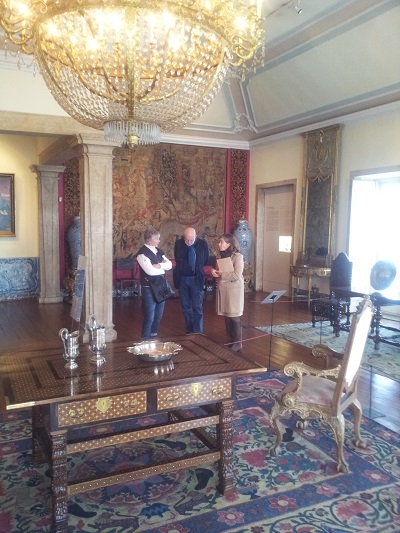
Museum of Decorative Arts Fress Lisbon (Museu Artes Decorativas Fress) 2014: visitors from Holland Ans de Graaf and Loek Polack & tour guide Margarida Serra

The Portuguese nobility, during the 17th and 18th Century among the world’s wealthiest, embraced the sumptuous style of ‘Versailles’ and acquired lavishly decorated items throughout the continent.  “While everyone else in Europe was leveraged in that period, the Portuguese were fully financed.” More….

But there’s much more to see in this Museum, like the beautiful Portuguese tiles (azulejos).  And a visit to the ateliers next to the museum is a wonderful experience!

Museum of Decorative Art Fress Lisbon King Jose Room 2

Museum of Decorative Arts Lisbon: King Jose room (1714 – 1777):  exuberantly carved furnishings in ‘Rococo’ style. Remarkable rosewood table (movie)

An example of a noble house in the 17th and 18th centuries. Portuguese aristocrats loved shopping, also in other countries: beautiful decorative arts including textiles, furniture, paintings, jewelry, collections of silverware, woven fabrics, China crockery and ceramics.

Museum of Decorative Arts 2009 2

Entrance Museum of Decorative Arts Lisbon: ‘Coupé Berlin, 18th Century.

In 2009 I also wrote about this museum, at that time you were not allowed to take pictures. Now you can wander freely from room to room and take time to make photos. The Museum has suffered several changes and it is really worth a visit.

Museum Decorative Arts Fress Lisbon Panel azulejos children 2

Museum of Decorative Arts Fress Lisbon: a beautilful tile panel & guided tour for children

Besides preservation, exhibition and research of the peaces in display, the Museum also promotes information throughout different audiences, converging the guided tours, as well as carrying out conferences and thematic arts- and craft workshops.

Museum of Decorative Arts Fress Lisbon- Portuguese Chairs Room

Museum of Decorative Arts Lisbon: new is a room with beautiful antique Portuguese chairs

The Ricardo do Espírito Santo Silva (1900 – 1955) Foundation

Ricardo do Espírito Santo Silva was the third son of a Portuguese banker with a remarkable name, because Espírito Santo means ‘Holy Ghost’.  This business man, art lover and Maecenas, and besides famous as one of the most renowned Portuguese bankers, donated to Portugal the wonderful Azura Palace and a decorative art collection.

Ana Sim-Sim, our guide to the traditional Art & Crafts Ateliers and mr. Artur Sousa

Make a visit to the ateliers: an extraordinary experience!

In the former Palace there are 18 traditional Arts & Craft ateliers. Besides restoration of ancient pieces, new ones are manufactured with high technique and artistic quality, incorporating traditional techniques and methodes. A wonderful combination of modernity and tradition! Very creative people are at work here, dedicated to traditional breeding and restoration of old pieces (cabinet-making, inlays, wood carving, chiselling, book decoration, trimings and upholstery)

Museum Decorative Arts Fress Lisbon beautiful patio for lunch

Museum of Decorative Arts Lisbon: romantic and quiet patio to enjoy lunch, but today it’s raining  🙁

The Museum’s Cafetaria (there’s also a space inside for rainy days): from 12:30 to 14:30 you can enjoy soup, dish, vegetarian pie, salad, bread and olives, dessert, fruit, cold tea / juice, water, coffee (€ 10.00). The buffet changes every day.

Museum of Decorative Arts Fress Lisbon formeer palace entrance ateliers

Museum of Decorative Arts Lisbon, Largo das Porta do Sol 2 & entrance to Arts & Crafts Ateliers

The Foundation Ateliers are open to guided tours without pre-booking on Monday (11 am + 3 pm), Wednesday (11 am + 3 pm) and Thursday (3 pm). In English or Portuguese (in other languages according availability). Pre-booked guided tours are available from Monday to Friday. Call (00351) 21 881 46 39/00 ​

View from one of the Museum’s windows February 2014: popular tourist viewpoint Portas do Sol

Museum of Decorative Arts, Largo das Portas do Sol, 2 , located in the historic area Alfama, one step away from one of Lisbon’s most popular tourist attractions: viewpoint (miradouro) Portas do Sol: stunning river Tagus views!
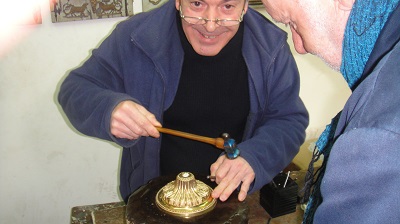
Musum of Decorative Arts Lisbon atelier1

Mr. Artur Sousa at work in one of the Museum’s ateliers. Website (FRESS) with presentation: (several Movies)

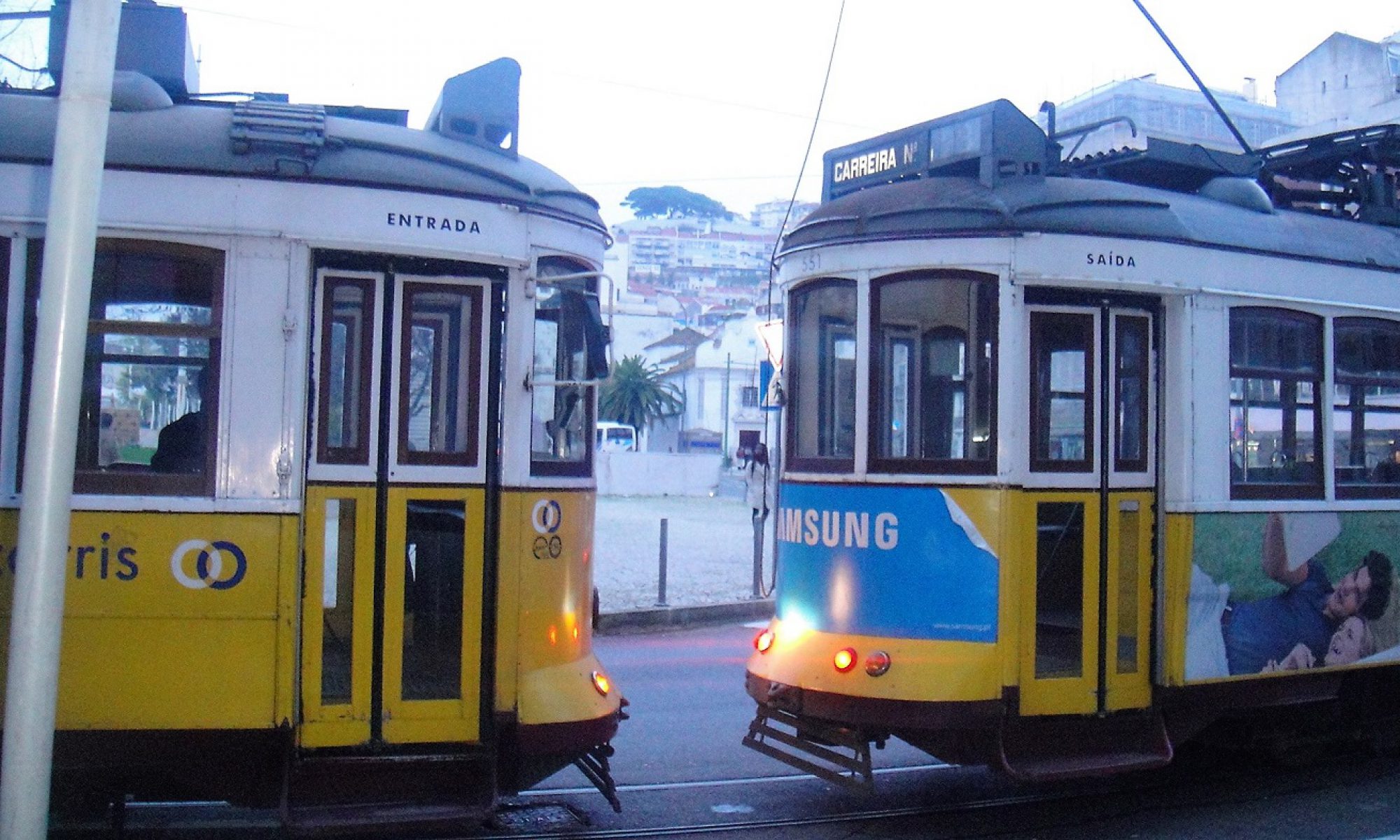
Museum of Decorative Arts, Largo das Portas do Sol  Alfama , easy to reach by legendary tram 28.

Facebook  Closed: New year’s Day, Easter, May 1st and Christmas (December 25). Adults 4.00 euro, free entrance children aged 12 or under. Open: 10:00 to 17:00.

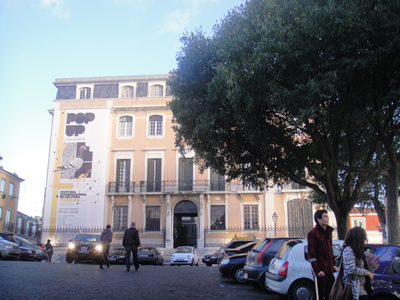
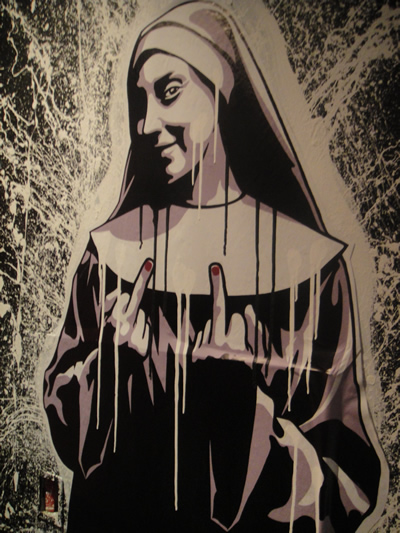
Former Palace Santa Catarina Lisbon: ‘Pop Up’ 2010, Tiago Chagas & kissing nuns

UPDATE 2017: this former palace is now a hotel

Right next to one of the most popular viewpoints (miradouros) ovoer the river Tagus (Tejo) in Lisbon Adamastor,  you’ll find Palácio Verride, a former 18th- century Palace, better known as Palácio de Santa Catarina.

Viewpoint Adamastor Lisbon Tagus River Santa Catarina Palace POP UP kissing nuns

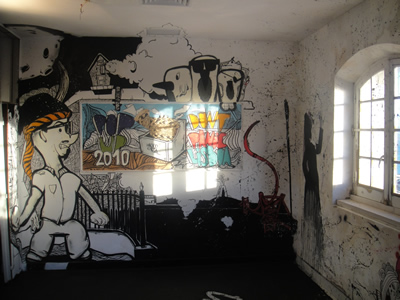
‘Pop Up’ 2010 Art Gallery Santa Catarina Palace: Artwork Tiago Chagas

The municipality of Lisbon is the owner of the former Palace, and excellent art exhibitions are regularly held here, like in December 2010: ‘Pop Up’ Art Gallery, a urban culture international festival that challenges creators of multiple areas of artistic expression to intervene in vacant or abandoned urban spaces, giving them new life through art.

Cultural agenda Lisbon

Viewpoint Adamastor Lisbon Tagus River Santa Catarina Palace POP UP art entrance

‘Pop Up’ art 2010: the former Palace’s stairs in the hall

Youtube video ‘Pop Up 

‘Pop Up’ started in 2009 in Lisbon city, but intends to become an international platform of urban culture exchange, bringing together artists and talents from different cities around the world, aiming to promote Lisbon cultural identity in and out of doors.

Viewpoint Adamastor Lisbon Tagus River Santa Catarina Palace1 POP UP

Palace Verride (known as Santa Catarina) Palace Lisbon. This year, ‘Pop Up’ had “Urban Nomads” for a theme and pigeons as their icon.

The 18th- century Santa Catarina Palace’s history dates back to the first half of the 18th century. The Palace has seen various uses, a number of different owners and successive work campaigns. The Baron and Viscount of Moledos, Francisco de Paula Silva Tovar, deputy to the constitutional courts, resided there in the 1820s.

Recently the MUDE museum (art, design & fashion) housed here, nowadays located in Baixa area, really worth a visit!

Viewpoint Adamastor Lisbon Tagus River beautiful Santa Catarina Palace POP UP

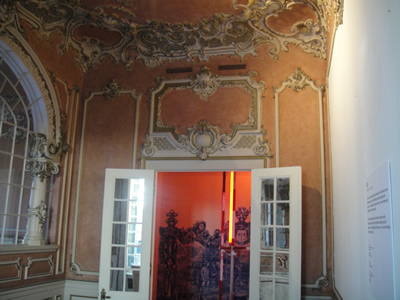
Beautiful ornamented ceilings and azulejos (Portuguese tiles)

Happily many of the original rooms of the old Palace are still preserved, such as ornaments in the ceilings and beautiful tiles. In the 1980s, the well-known architect and painter João de Almeida, made several changes.  The Lisbon City Council purchased the palace in 2003.

Viewpoint Adamastor Lisbon Tagus River Santa Catarina Palace POP UP1

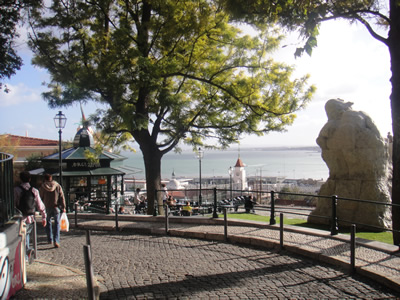
Popular river Tagus viewpoint right next to the Santa Catarina Palace:  Adamastor viewpoint and Moorish kiosk (quiosque) cafe.

‘Adamastor’  is a popular viewpoint (miradouro) and gathering place in Lisbon ovelooking the river Tagus, which is officially called the Miradouro de Santa Catarina.

Viewpoint Adamastor Lisbon Tagus River Santa Catarina Palace POP UP Don't Panic Lisboa

‘Pop Up’ 2010 Palace Santa Catarina: artwork Tiago Chagas,  ‘Don’t Panic’ Lisbon

‘Don’t Panic’ is a unique free publication directed towards young people and emerging artists in areas like music, design, fine arts, cinema, theater, literature, graffiti, dance, fashon, clubbing and many others

YouTube video ‘Don’t panic’ Lisbon

Viewpoint Adamastor Lisbon Tagus River Santa Catarina Palace POP UP nuns 2

‘Pop Up’  2010: Santa Catarina Palace Lisbon: artwork Tiago Chagas

Visit ‘Palace of Independence’ Lisbon & conspiracy Spanish occupation 1640

The beautiful Palácio da Independência (Palace of Independence), located in Lisbon close to the Rossio Square (near national theatre D. Maria II ), on the north side of the Largo de São Domingos , is known by two names.

Lisbon Indepence Palaca near Rossio Suqare Entrance

Palácio da Independência (Palace of Independence) Lisbon

It was given its original name of Palácio de Almada in honor of its former owner, the Count of Almada. The name Palácio da Independência (‘Independent Palace’) recalls a curious event that occured in 1640. Philip II of Spain had occupied Portugal in 1580, a year later he was recognized as King of Portugal.

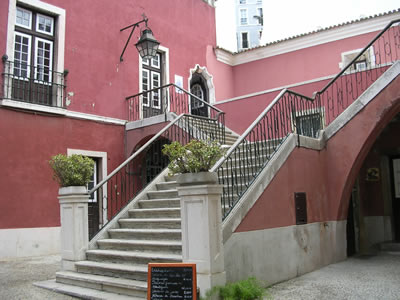
Independence Palace Rossio entrance1 restaurant

Palácio da Independência (Palace of Independence) Lisbon

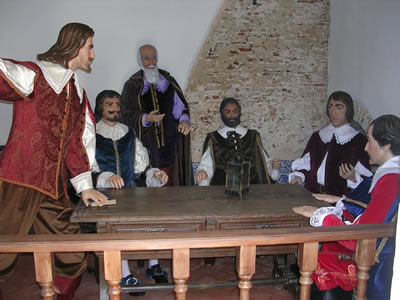
The loss of some colonies and the intense pressure of taxes levied to finance the Spanish wars led about 60 years later to a conspiracy among several of the Portuguese nobility. On December 1st, 1640 there ensued a successful rebellion, followed by the restoration of Portugal’s independence.

Independence Palace Lisbon near Rossio the conspiracy room

Palácio da Independência (Palace of Independence) Lisbon

About 40 conspirators prepared for the action under the leadership of the Duke of Bragança (or Braganza) in the grounds of this palace.

Lisbon Independence Palace near Rossio garden azulejos

Palácio da Independência (Palace of Independence) & garden Lisbon

The Duke, from who’s grandmother the royal family descended, was crowned João IV, King of Portugal. From a neighboring monastery the nobles reached the palace garden from across part of the old 14th C. city wall and gathered there in a small, isolated pavillion. It has even been suggested that there was an underground path linking the garden with the Baixa along which people could pass unseen.

Independence Palace Rossio garden azulejos 1

Palácio da Independência (Palace of Independence) Lisbon

Beautiful azulejos (tiles) representing the story of the conspiracy

Lisbon Independence Palace near Rossio

Palácio da Independência (Palace of Independence) Lisbon

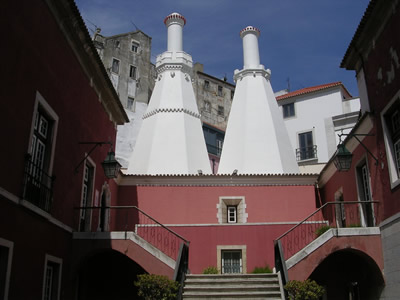
The building’s foundation stone was laid in 1509 and some of Manueline details from this time can still be detected in the inner courtyard, for example the door decorations. Two conical kitchen chimneys are reminiscent of the royal palace at Sintra.

Independence Palace Lisbon near Rossio kitchen chimneys

Palácio da Independência (Palace of Independence) Lisbon

The Sociedade Historica da Independência de Portugal has its seat in this Palace. This society has awarded itself the task of keeping alive the memory of the happenings of December 1st, 1640 and the general consciousness of Portugal’s national history.

Every year on December 1st official memorial events take place both in the Palácio da Independência and at the nearby square Praça dos Restauradores

Independence Palace Lisbon Ana Maria Proserpio

Palácio da Independência (Palace of Independence) Lisbon

Ana Maria Proserpio, Directora dos Serviços Culturais (Director of Portuguese Cultural Services). In Ana Maria’s hand the keys of the palace. If you are in Lisbon you can visit the palace .

Monday to Friday from 10am to 1pm and 2pm to 6pm | Sat. and Sunday is also possible  (visits have a minimum of 5 people).
Price: € 3 per person or € 25 per group.

Palácio da Independência
Largo de São Domingos, 11
1150-320 Lisboa

Phone: 21 324 14 70 Facebook  Email: ship.geral@ship.pt

Museum Casa dos Bicos Lisbon, restaurants & famous fish cannery shop

Quite close to the historic Alfama neighborhood, a very nice street to walk around at Lisbon’ city center is Rua dos Bacalhoeiros (street of the cod fish sellers). The buildings that face the Tejo River look lovely, but if you take a closer look, they mostly are in a worse condition.

Lisbon Rua dos Bacalhoeiros near Casa dos Bicos

Rua dos Bacalhoeiros Lisbon

Walking from Praça do Comércio in the direction to Alfama, you will get to Rua dos Bacalhoeiros. The famous 28 tram (eletrico) passes here on its way to the Santa Apolonia station.

Lisbon Rua dos Bacalhoeiros terraces near Casa dos Bicos

Rua dos Bacalhoeiros Lisbon 2009

This part of the street is really beautiful. The small restaurants with a terrace outside are popular; even in wintertime when the sun is shining you can enjoy a beer or have lunch outside.

Lisbon Rua dos Bacalhoeiros Adega do Atum near Casa dos Bicos

Rua dos Bacalhoeiros Lisbon

Just near ‘Casa dos Bicos’ is restaurant ‘Adega do Atum‘, The waiters are friendly and not too agressive. They serve traditional fish and meat meals and have the Portuguese Sagres beer on tap (imperial). Try ‘Salade de Atum’ (tuna fish € 7 ) for lunch 🙂

Lisbon Rua dos Bacalhoeiros Casa dos Bicos

Rua dos Bacalhoeiros Lisbon & Casa dos Bicos (House of the pointed stones)

Casa dos Bicos (House of the pointed stones).  

This Palace was built in the early 16th century, a notable part of Lisbon’s heritage and one of the few examples with traces of the 15th C. architecture.

From 1981 to 1982, Casa dos Bicos was the site of excavations, many archaelogical findings were unearthed (ceramic and glass pieces a.o.). Worth a visit!

Lisbon Rua dos Bacalhoeiros3 shop nr 117 Silva & Feijó

Rua dos Bacalhoeiros Lisbon

You will find various shops in this street. Silva & Feijó, on the other side of Casa dos Bicos, sells a.o. wines and typical Portuguese handicrafts.

Lisbon Rua dos Bacalhoeiros lots of restaurants

Rua dos Bacalhoeiros Lisbon

Lunchtime in Lisbon. This part of the street is filled with lots of restaurants, from traditional Portuguese to Chinese.

A Churrasqueira is a restaurant serving grilled meat or fish, many offering as much as you can eat: the waiters move around the restaurant with the skewers, slicing meat onto your plate. Frango de Churrasco with piri piri (a kind of salty roasted chicken spiced with hot red chili sauce) is very popular.

Lisbon Rua dos Bacalhoeiros restaurant espetada

Rua dos Bacalhoeiros Lisbon

Restaurant Churrasqueira Santo António.

Carlos Marcalo, Rua dos Bacalhoeiros 133, invites you to try their ‘espetada‘, a typical Portuguese dish made of large chunks of fish or beef rubbed in garlic and salt with vegetables such as onions and bell peppers.

Lisbon Rua dos Bacalhoeiros shop canned fish

Luís Vieira.

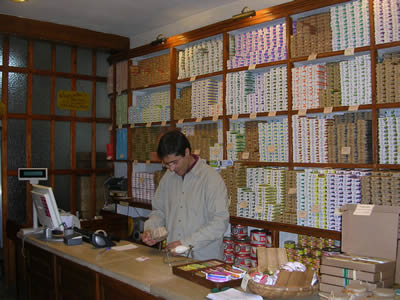
Conserveira de Lisboa (The Lisbon Cannery), nr 34.  Famous! Wonderful very old preserved-fish store with hundreds of colourful tins of the Portuguese favorite fish. This shop opened 80 years ago, nothing has changed.

Lisbon Roa do Comerico shit

Rua do do Comércio ,

The shit of today will fertilize tomorrow...” 😉 a building drawing, just around the corner of Rua dos Bacalhoeiros and Rua da Madalena

Museum of Decorative Arts Lisbon, former Palace, lovely tiles & fascinating collection

In this wonderful former Palace in Lisbon (Museu-Escola de Artes Decorativas), Museum and school, it’s forbidden to make pictures. After taking a few ones a guard warned me. Suddenly, walking from room to room, 4 guards kept an eye on me …..

Lisbon Museum of Decorative Arts1

The entrance: ‘Coupé Berlin, 18th Century.

Portugal’s most important furniture collection can be viewed here: valuable wooden Portuguese, French and English furniture dating from the 15th to the 18th C.

You can wander freely from room to room and get right up close to the pieces on display.

Lisbon Museum of Decorative Arts3

The grand staircase leading to 1st floor has lovely tiles.

An on-site collection of tiles (azulejos), several of which originallly pertained to the Palace, while others were integrated therein during the restorations works, in the end of the 1940s.

In the 17th C. former city palace of the Count of Azurara , currently houses the Museum of Decorative Arts. Banker Ricardo do Espirito Santo Silva, acquired the palace in 1947 and donated his collection to the museum.

Lisbon Museum of Decorative Arts4

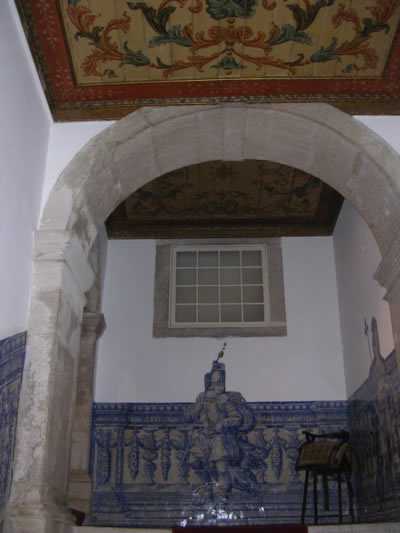
Beautiful ceiling and azulejos! Sorry, no more pictures (the guards…).

The museum has a remarkable collection of faience, local silver and ceramics, paintings, bedrooms, dining rooms and dressing rooms. Each room is more ornated than the next, in an aristocratic environment. Anyone interested in decorative arts in general and the Portuguese Empire in particular will find this collection fascinating.

Lisbon Museum of Decorative Arts7

Museum of Decorative Arts, Alfama

Largo das Portas do Sol, 2 . More information, videos and Museum shop  http://www.fress.pt/  . Near the famous viewpoint (miradouro) Portas do Sol (‘Gates to the Sun’)

Closed: New year’s Day, Easter, May 1st and Christmas (December 25). Cost Adult 4.00, free entrance for children aged 12 or under. Opening hours 10 a.m to 5 a.m. Lovely patio with cafetaria-restaurant.