National palace Queluz Lisbon: sexual orgies, juicy stories & queen Carlota Joaquina

The National Palace in Queluz is one of Lisbon’s top tourist attractions, easy to reach by train from Lisbon or from Sintra. From outside the palace looks romantic, but what happened behind these walls when the Portuguese royal family lived here, about 200 years ago?

National Palace in Queluz Lisbon district & wonderful French-styled garden

History of Portugal & exorbitant decorated rooms in Rococo style 

While walking around in the many exorbitant decorated rooms of the National Palace in Queluz (Palácio in Portuguese , you realize that a ‘one afternoon’ visit is too short. Each room represents a piece of history of Portugal, as well as of Brazil.

Information in English is quite basic, unfortunately. In case you don’t like a group tour guide: there’s real good info at f.i. Wikipedia.

National Palace in Queluz & Robillion staircase: ingeniously designed steps adorned with statuary

Discovery of Brazilian gold & the wealth of Portuguese colonies

Queluz’s Palace architecture is representative of the final extravagant period of Portuguese culture that followed the discovery of Brazilian gold in 1690.

The National Palace in Queluz & YouTube video: an impression

Brazil was a Portuguese colony from 1500 till 1822; nowadays the Portuguese is still the language of the majority of people in Brazil.

National Palace in Queluz & one of the 2 sphynxes dressed in 18th-century costume

Foreign artists, architects & newly enriched aristocracy

From the beginning of the 18th century many foreign artists and architects were employed in Portugal to satisfy the needs of the newly enriched aristocracy; they brought with them classical ideas of architecture which derived from the Renaissance.

In its design, Queluz is a revolt against the earlier, heavier, Italian-influenced Baroque which preceded the Rococo style throughout Europe.

National Palace in Queluz district Lisbon, the ballroom & tourists , June 2017

Royal residence from 1794 – 1807 & Queen Maria I : a very sad story

Dom Pedro III started the construction of the Palácio de Queluz in 1747.  He married his 17 years younger niece D. Maria, Princess of Brazil, (1734-1816) in 1760. The couple had a happy marriage and they got six children.

But queen Maria suffered from religious mania and melancholia. This acute mental illness (perhaps due to porphyria) made her incapable of handling state affairs after 1792.

National Palace in Queluz district Lisbon & “Sala de Mangas” (Japonese drawings) decorated with tile panels (azulejos) illustrating the wealth of Portugal’s colonies

1794: Ajuda Palace destroyed by fire & smallpox

When the palace of Ajuda burnt down in 1794, the court was forced to move to the Queluz Palace, where the ill queen Maria would lie in her apartments all day. Visitors would complain of terrible screams that would echo throughout the palace. Her condition worsened after the death of her husband and the deaths from smallpox of her elder son and her daughter and their infant son. Maria died in Rio de Janeiro, aged 82. More……

National Palace in Queluz district Lisbon & one of the excessive decorated rooms

The juicy story about Queen Carlota Joaquina (‘the fury’ of Queluz)

Queen Maria‘s second son João (John, nicknamed ‘the Clement‘), took over the government in her name. In 1816, he succeeded his mother as monarch of the Portuguese Empire .
On May 8, 1785 Carlota Joaquina (1775 – 1830) of Spain was officially married to the future king João VI. The marriage was not consummated until 9 January 1790, when Carlota was 15 years old.

Doña Carlota Joaquina of Spain (Carlota Joaquina de Borbón y Borbón-Parma). Picture: Wikipedia

 –

Marriage Joaquina Carlota with corpulent João (John) VI & the miracle of nine handsome children

Joaquina’s husband was good-natured, indolent, corpulent and almost as ugly as she was. His religious observances bored her, and they were quite incompatible. Nevertheless, she gave birth to nine children and, because they were all handsome, it was rumoured that especially the younger ones had a different father.

National Palace in Queluz district Lisbon & the empire bedroom

Sexual orgies 

After the birth of the ninth child the couple began to live separate lives. It was rumoured that Joaquina had bought a retreat where she indulged in sexual orgies. Source: Vortex magazine, WikiPedia

Movie trailer YouTube (English spoken) Carlota Joaquina Princesa do Brazil

Several Movies and TV series have been made about Carlota Joaquina‘s life. She had a bad reputation: infidel, manipulative and nymphomaniac. Carlota was religious, faced men and also transgressed the social norms of the time, which caused her to have many conflicts, also with the Portuguese authorities.

National Palace in Queluz district Lisbon & “Sala de Mangas” decorated with beautiful tile panels

Napoleon Bonaparte & transfer of the Portuguese court to Brazil in 1807

Anticipating the invasion of Napoleon’s army, Joaquina’s husband João VI ordered the transfer of the Portuguese royal court to Brazil before he could be deposed.

Carlota Joaquina fought until the last minute not to leave for Brazil, asked for help from her parents, but diplomatic agreements made it difficult for Spanish kings to participate in Portuguese affairs.

National Palace in Queluz district Lisbon & entrance restaurant June 2017

Carlota Joaquina & caipirinha, Brazilian’s famous cocktail

Caipirinha is the national drink in Brasil and also very popular in Portugal. It is said that Carlota Joaquina invented the drink when she lived in Brazil, mixing her beloved Cachaça liquor (a spirit distilled from fermented sugarcane juice) with fruit and sugar. Supposedly, she drank incredible quantities of the liquor, and the palace had to order dozens of bottles for her each month.

Delicious! 🙂 😉 Caipirinha Recipe (and video)

Ingredients of the caipirinha. Picture: Wikipedia

‘Secret Histories of Portuguese kings’

“The nymphomaniac wife of King João VI, Carlota Joaquina, will have been the ‘inventor of caipirinha“, according to writer and journalist Alexandre Borges. Book: ‘Histórias Secretas de Reis Portugueses’ (‘Secret Histories of Portuguese Kings’), in a new edition.

As the Napoleon wars ended, Carlota returned with the king and the family to Portugal in 1821. She died at the Queluz Palace in 1830 at the age of 54.  It is speculated whether she died because of natural causes or whether she, in fact, killed herself.

National Palace in Queluz Lisbon district

On the assassination Carlos I in 1908, the palace passed into the ownership of the state. Portugal was in the turmoil of revolution and the monarchy fell two years later.  Since 1940 it has been open to the public as a museum.

Prices, opening times & how to get to the Palace in Queluz from Lisbon

  • Location: Largo do Palácio, Queluz, Portugal
  • Open everyday, except main public holidays, from 10.00 a.m. to 5.00 p.m. my experience: during luchtime (12:00 – 14:00) there are not many visitors
  • Palace and Gardens 5 €, Gardens 3.5 € (over 65 yrs.) 10 € adult. More info
  • Train: Lisbon-Sintra line, get off at Queluz/Belas (ca. 1 km walk to the Palace, easy to find)

National Palace in Queluz Lisbon district

More….

Unique former Palace Chiado Lisbon (1781), elegant dining areas & history

The atmosphere is great in this former palace in the heart of Lisbon. Once the recidence of a nobleman who loved to party, now everyone is welcome to admire the beautifully restored rooms, while enjoying fine food and drinks.

Welcome! Palace (Palácio) Chiado Lisbon & very nice waiter Aélio

History: Barão (Baron) Joaquim Pedro Quintela, 1st Conde de Farrobo

This elegant palace in Chiado (name of a square and its surrounding area) in Lisbon was built in 1781, where the aristocracy and bons vivants danced, enjoyed lavish banquets and admired new works of art. Baron de Quintela was born in this palace.

Palace (Palácio) Chiado Lisbon (built in 1781 & a mobile phone….. )

Baron de Quintela: excesses and inordinate feasting

The future 2nd Baron of Quintela and 1st Conde of Farrobo was born in this palace, on 11 December 1801. Despite his importance in political, social and cultural life in Portugal at the time, he will always be remembered for his excesses and revels.

And intrinsically associated with the palace is the famous Portuguese expression ‘farrobodó‘ (from ‘forrobodó’ which literally means having a great party 😉 ).

More about the palace and its history…..

Palace (Palácio) Chiado Lisbon: beautifully restored, April 2016

Renewed Palácio Chiado opened February 2016: fine dining & entertainment

The former home of Baron Quintela opened to the public under the name Palácio Chiado.
The restoration works took more then one and a half year. The historic rooms nowadays host alternatives for fine dining and other forms of entertainment for Lisbon residents and visitors. The palace will also have a varied cultural program.

Palace (Palácio) Chiado Lisbon: beautifully restored, 1st floor April 2016

7 chefs & 7 gastronimical concepts

On the ground floor is a bar, with tables for dining, but simply chill out with a drink is also a possibility. There are seven chefs and their 7 gastronimical concepts, from sushi to burgers, and about 250 seats. The idea is to grab the plate and sit where you want.

It feels a bit like Time Out Ribeira Market in a more sophisticated setting.

Palace (Palácio) Chiado Lisbon & tea for 2 and a chocolate cake

Tea bags & small wooden cake forks

We decided to order tea for two (1 st floor) and a small chocolate cake to share, because we just had lunch.

In this elegant palace with grandeur and beautiful frescoed ceilings we expected an elegant soft pastel designed tea set and gold colored spoons, but not just teabags to dip in our cups and small wooden cake forks to eat the cake?  😉 😉

Chá (tea) for 2 persons: 4 euro. Bolo de chocolate (chocolate cake) 2.50 euro

Palace (Palácio) Chiado Lisbon & one of the beautiful frescoed ceilings

Restaurants:

The historic salons of the Palácio Chiado now host seven prestigious fine dining area’s.

Traditional Portuguese snacks (petiscos), cocktails & sparkling wines with fish and shellfish, hamburgers, steaks, light and healthy meals, seafood and sushi.

More details about the restaurants

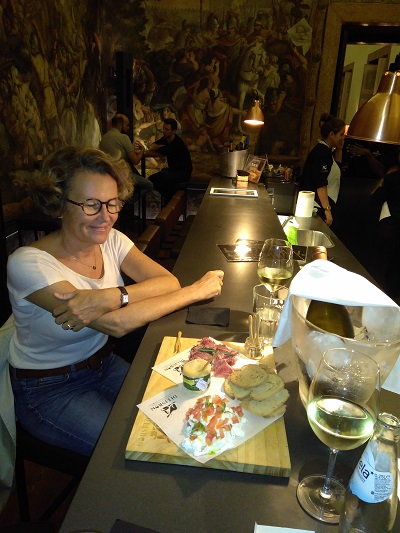
palace-chiado-lisbon-tapas-erika-reusens

Palace (Palácio) Chiado Lisbon & Erika Reusens

Palácio Chiado Lisbon: really worth a visit!
Rua do Alecrim, 70 – Lisbon
Wonderful Website (also in Enlish)   FACEBOOK
Sunday till Wednesday from 12:00 – 24:00
Thursday till Saturday from 12:00- 02:00

Video inauguration of the Chiado Palace with hundreds of guests

Despite occupying a considerable area of Rua do Alecrim, the Palace has only one entry, at number 70.

Palace (Palácio) Chiado Lisbon

Baron Quintela Room for private events (your own aristocratic party? 😉  )

Seating 16 to 25, Quintela Room can be hired for private events, for a discreet meal, a dinner with friends, or professional events. More…..

Palace (Palácio) Chiado Lisbon & dining area

Square Martim Moniz Lisbon: tram 28, dancing & aphrodisiacs

Update January 2019: unfortunlately the streetfood kiosks disappeared on this square 🙁  , soon plans will be announced about the ‘new look’.

At this square there’s the starting point of the legendary tram 28, a ‘must do’ Lisbon attraction.

Square Martim Moniz : Kiosk ‘A Preta’ (‘The Black’) : João (Johnny) and his sister Luiza Gabriel

Kiosk with a tropical touch. João and his sister Luiza (DJ Lady G Brown) serve super good hamburgers, delicious pinchos (meat on a stick), salades and fresh juices. They were born in Angola, a former colony of Portugal (from the 16th century to 1975). They moved to Lisbon in 1982. Johnny worked a few years in Amsterdam and he speaks a little Dutch (‘lekker!‘)

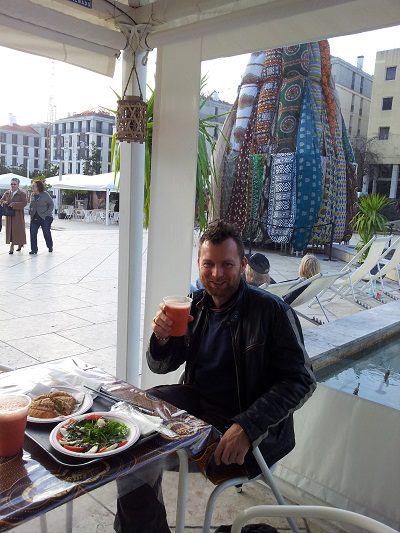
Kiosk ‘A Preta’ Square Martim Moniz Lisbon; hamburger with salad and potatoes € 5,50. Delicious! Salad: 4.00 €

Square Martim Moniz, located in the most multicultural area in Lisbon is nowadays a place where you can enjoy a light (also vega) meal in the sun: a meeting of cultures that will host delicacies from the four corners of the world, in the weekends there’s a market selling biological products, shops, music and shows.

Castle of Saint Jorge (Castelo de São Jorge ) overlooking square Martim Moniz Lisbon

Here you can eat samosas, or a pizza, or ice cream, or a hamburger, or a vegetarian snack … drinking a cold beer, listen to live music or a DJ and enjoy the warm summer evenings. The Castelo de São Jorge overlooking the historical centre of Lisbon, and the entire square has a view of the castle.

Square Martim Moniz : vegetarian kiosk Erva & Carla Contige

Kiosk with green cuisine: vegetarian, vegan and macrobiotic specialities, made with fresh ingredients and prepared with love by Carla Contige…. You must try the salad, full of fruit, greens and seeds, or a Vega burger (€ 5).

Square Martim Moniz : kiosk mr. Leader (BBQMM)

Kiosk with a cook of Chinese origin. I tasted his creation of an empadão, a mix of minced meat and mashed potatoes.

Empadão (pie) mix: minced meat with mashed potatoes, linguiça (smoke cured pork sausage seasoned with garlic and paprika), bacon an dried chili peppers

Delicious! ( 3.50 euro)

Square Martim Moniz Mercado de Fusão

Aphrodisiacs and liqueurs like Licor de Merda (made of shit)  😉

The Liqor de Merda was born in 1974. It is a Portuguese alcoholic drink and the literal translation is “Shit liqueur”. Portugal went through a turbulent period marked by the struggle bewteen left and right. It was made to “honour” the government and, despite being a milk licor, it is said that it’s made with the best different types of shit.

Square Martim Moniz Kiosk ‘A Preta’ : here you can enjoy sun and music (DJ is Rycardo)

YouTube Square Martim Moniz Lisbon

On Thursdays and Fridays from 3 PM to midnight there’s a DJ ( Soul, Funcky, Reggae, World Music, Jazz and more..) to liven up the square and to get you in the mood for the weekend.

Square Martim Moniz Lisbon: people are invited to dance for ONE BILLION RISING

There’s also a stage on the square, always ready to host concerts, lectures, workshops and much more….. A Fun Track is also available in one of the kiosks, which rents pedal karts, streetsurfing boards, scooters, skateboards and roller skates for both children and adults.

Square Martim Moniz Lisbon, Christmas period

Every day the kiosks are open from 10:00 till midnightOn Thursdays and Fridays from 3 PM to midnight there’s a DJ . Every Saturday and Sunday a Fusion market is held here, Mercado de fusão (10h às 19h), bringing together the Martim Moniz retail trade with famous shops in the city.

Near this square is the starting point of the legendary tram 28.

Knight & hero Martim Moniz

Stylized depiction in the square Martim Moniz metro station

Hotel Mundal rooftop terrace Ans de Graaf Jan 16

Saint Jorge Castle Lisbon: view from rooftop terrace hotel Mundial square Martim Moniz & Ans de Graaf from Holland

History Saint Jorge Castle & hero Martim Moniz

Who was Martim Moniz? He was a hero! He sacrificed himself in 1147. According to the legend, Martim Moniz was a knight participating in the Christian invasion force, led by king Afonso I of Portugal. At one point in the siege of São Jorge Castle, he saw the Moors closing the castle doors. He led an attack on the doors, and sacrificed himself by lodging himself in the doorway, preventing the defenders from fully closing the door.

Rob Plews December 2012 Praca Martim Moniz kiosk A Preta

Friend Rob Plews: square Martim Moniz Lisbon 2016

Lisbon LX Factory Gastrobar ‘Rio Maravilha’: great river views & disappointing experience

Gastrobar Rio Maravilha (Wonderful River) is situated on the fourth floor of one of the nowadays trendy ‘LX factory’ buildings in the Alcântara (‘bridge’ in Arabic) district in Lisbon, surrounded by huge windows overlooking the Tagus river, the 25 April bridge and the Cristo Rei statue .

Gastrobar Rio Maravilha Lisbon & wonderful view 25 April bridge from a formerly factory building

Very different from the usual 🙂

We didn’t have to wait long before the friendly welcoming staff seated us at a small table near one of the the huge windows: what a wonderful view! The multi flowered designed chairs and the bright pink coloured outfits chosen for the waitresses are quite surprising.

Gastrobar Rio Maravilha, ‘LX factory’ Lisbon & the restaurant’s decor

The whole space is very different from the usual. But you can expect this from those who already are experienced of managing remarkable spaces in Lisbon like unique bar ‘Pensao Amor’ in a former red light district and restaurant ‘Casa do Pasto’ , with sophisticated Portuguese cuisine. A few months ago this place, ‘Rio Maravilha’ was opened, influenced by Brazilian flavors.

Gastrobar Rio Maravilha, ‘LX factory’ Lisbon: squid salad & grilled mushrooms

We decided to order a few small dishes like Salade de Lulas (squid salad, grilled sweet potatoes, onion and croutons) € 15.60, Cogumelos na Brasa (grilled mushrooms, foliage of sour cream and chestnuts) € 13.70, Ovo BT (egg BT) € 9.80, Hambúrguer de Novilho (veal) € 9.10,  and a bottle of white wine: VB Filoco € 12.00.

Surprising : Ovo BT, a poached egg accompanied by cream cheese with some marmalade, parmesan cheese and ibérico pancetta.

Gastrobar Rio Maravilha, ‘LX factory’ Lisbon & wonderful views

Disappointing

The Hambúrguer de Novilho (veal) was not such a good experience: we ate just a little bit of it, due to the unpleasant ‘aftertaste’. According to the waitress nothing was wrong, but both we had no good feeling, also afterwards… (the restaurant is aware of our complaint, they asked to come again to enjoy a better experience, that’s all 🙁  ). BTW: the hamburger was not mentioned on our bill.

Gastrobar Rio Maravilha, LX factory Lisbon, entrance & very friendly staff

Gastrobar Rio Maravilha
Tuesday from 18:00 – 02:00
Wednesday u/i Saturday 12:30 – 02:00 – Sunday: 12:30 -18:00
Closed on Monday – facebook Rua Rodrigues de Faria, 103

LX Factory | 4th floor, Lisbon  MORE about this area

Lisbon tourist guide Josephine: Mouraria, narrow streets & drinking Ginja

Josephine Lucassen is a professional guide, licensed by the city of Lisbon. She loves it to organise private walking tours for a group of tourists in this old and wonderful city!

Mouraria, Lisbon: Escadinhas de São Cristóvão & Josephine Lucassen, guide

Example: a walking tour through the oldest parts of Lisbon, the popular districts of Alfama and Mouraria, the ancient areas that have survived the earthquake of 1755.

The many winding alleys still show the traces of the Moorish domination (from 711-1108). It is said that Fado music was born in Mouraria around 1820.

São Cristóvão (St. Christopher’s) Church in Mouraria Lisbon

Walk in historic Mouraria area March 18 & NV Lissabon members

Mouraria Lisbon: stairs to Rua de São Cristóvão

The best way to start this walk is from Rua da Madalena and then climb the stairs Escadinhas de São Cristóvão.

Mouraria Lisbon: Rua de São Cristóvão in wintertime

Josephine: “I was born in Holland in a small village in Drente. After some travel jobs (f.i. Hotelplan) I prefered to live in Portugal. I’m happily married to a sympathetic Portuguese man, Jorge. Together we have 2 children. My curiosity and also the beauty of Portugal made me decide to study at the University of Lisbon. Now I am a professional,  licenced tourist guide with a lot of experience and a passion for history”.

Artisanat Portugais vintage & curiosites

‘A Loja’: Artisanat Portugais, vintage & Curiosités, Rua de São Cristóvão 3

Josephine: “On the corner of this street there’s a nice shop for tourists with typical Portuguese pottery and much more. We continue our walk in the small alleys of the Mouraria area and then we enjoy a drink in one of the pubs: the famous Portuguese liqueur Ginja (or Ginjinha), a must when you visit Lisbon!”

A sua saúde! (cheers!) Josephine in Mouraria Lisbon, area with lots of old bars and narrow streets.

Ginjinha, or simply Ginja, is a liqueur made of a cherry-like berry called (not surprisingly) Ginja. The berries are fermented into a brandy that’s slightly bitter, slightly sweet and very sticky. It is a favourite liqueur of many Portuguese. You can order a Ginja for little money, with or without a cherry in it.

Mouraria Lisbon: historical area with tiny steets and small bars

Fado

Josephine: “Now we walk to Rua do Capelão, to visit the house of the first fadista, Maria Severa. Maria died very young after a passionate liaison with a nobleman in 1846.

Also grew up in Mouraria: famous singer Mariza. Amália Rodrigues, ‘queen of Fado’, was born nearby. Fado house Maria da Mouraria

Mouraria, Lisbon, a hidden place: beautiful very old tiles (azulejos)

Portugal is famous for its decorative tiles (azulejos). In Mouraria there’s a hidden place where you find beautiful tiles representing biblical- and scenes of Portugal’s rich history and culture. Azulejos are found on the interior and exterior of churches, palaces and ordinary houses.

Square Martim Moniz February 2013: Kiosk ‘A Preta’:  João (Johnny)

Josephine: “Then we finish our trip enjoying a drink in the sun at square Martim Moniz, nowadays with lots of terraces and food kiosks. This is where the historic Mouraria neighborhood starts, a multicultural area. The food here is also very good.

Lisbon Square Martim Moniz: Kiosk ‘A Preta’: guide Josephine & ???

This man, for both of us completely unknown, asked me to make a picture of him together with this beautiful lady  🙂

Starting point legendary tram 28

This square Martim Moniz is also the starting point for the legendary tram 28, a ‘must- do’ Lisbon attraction.

Alfama, historical area in Lisbon: Escadinhas Santo Estêvão

Private city walking tours

Josephine: “For some years I organize private walking tours for groups. Many tourists miss the hidden gems of Lisbon, simply because they did not know about them!

Lisbon river Tagus viewpoint (miradouro) Santa Catarina or Adamastor

Josephine: “Another idea for a 4-hour walking tour is a start near the river Tagus: Cais do Sodré, famous fish market Mercado do Ribeiro, cute and famous little tram to the top of the Bica area, river Tagus viewpoint Santa Catarina, bohemien neighborhood Bairro Alto, along Sao Bento palace, park in Principe Real with one of the oldest cedar trees in Lisbon. Finally Rossio, a wonderful square with historical buildings and of course: liqueur Ginja!

Tourist attraction Lisbon: sculpture Portuguese poet Fernando Pessoa, kissed by a young girl more than 75 years after his dead….

Tailored Tours

“How about a tour tailored to your specific needs? A walking full day tour combined with old trams and funiculars would be a perfect idea”.

Price: from € 15, 00 per person (4 hours) Full day tour € 25 pp.  Minimum 4 people (max. 10).

Mail josephinelucassen@yahoo.com or call: 00351 966 361 983 . Facebook

“My favorite place in Lisbon? Pffffffff, not easy, one of them is river viewpoint Portas do Sol, especially by night…..amazing!”

Tagus river viewpoint (Miradouro) Portas do Sol, Alfama Lisbon

Elegant tea- and lunchroom ‘Versailles’ Lisbon: old-fashioned service & funny pastries

If you like to visit one museum during your stay in Lisbon make it the Gulbenkian. It’s the collection of the Armenian oil billionaire who made Lisbon his home. It covers everything from Egyptian to 20th Century art.

Tea- and lunchroom (Pastelaria, Pâtisserie) Versailles Lisbon september 2017

Elegant tea- and lunchroom Versailles (from 1922)

After visiting the Gulbekian Museum, a must-do is to go to the nearby and wonderful old tea and lunchroom Versailles (1922) at Avenida da República, which has it’s own bakery. The homemade cakes and pastries are delicious, like the famous Portuguese Pasteis de natas.

Tea- and lunchroom (Pastelaria) Versailles Lisbon & delicious funny ‘bird’ pastries 😉

Elegant setting in informal and friendly atmosphere

The decor is rich, with chandeliers, gilt mirrors, stained-glass windows, tall stucco ceilings, and black-and-white marble floors. It looks like it could be straight of Paris…!

Mostly elderly people and greats of the Lisbon cafe scene enjoy their bica (espresso) here.

Tea- and lunchroom (Pastelaria) Versailles Lisbon, February 2017 : NV Lissabon

History

When lunchroom Pastelaria Versailles was inaugurated on November 25 in the year 1922, the objective was to turn into a symbol of the fashionable Avenidas Novas, an elegant and new neighborhood in Lisbon.

Construction fury first halve of 20th century

The construction fury replaced many of the beautiful small palaces and stylish houses of the first halve of the 20th century by today’s unattractive buildings at Avenida da República, but happily PastelariaVersailles’ is still there!  🙂 🙂

Tea- and lunchroom (Pastelaria) Versailles Lisbon, February 2017 & NV Lissabon

Silver-plated tea sets

The wide variety of snacks includes codfish balls and toasted ham-and-cheese sandwiches. They are also famous for their confectioneries served in a glass.

As an old-fashioned and formal touch, immaculately attired waiters serve customers from silver-plated tea sets. In addition to coffee and tea, the house specialty is hot chocolate.

Tea- and lunchroom (Pastelaria) Versailles Lisbon , February 2017 & NV Lissabon

Grande dame‘ of Lisbon’ & part of national heritage

Pastelaria Versailles, long known as the ‘grande dame‘ of Lisbon’ was recently declared a part of the national heritage. It still serves the famous Mozambique black tea that was introduced in 1662.

Lunch, served in a back room, is of such Portuguese specialties as codfish with almonds. Most visitors come here for tea or coffee, served with sandwiches and snacks. Desserts, including duchesses (whipped-cream cakes) are justifiably famous.

Pastelaria Versailles street 2

Entrance tea- and lunchroom Versailles in Lisbon

Tea and lunchroom Versailles Lisbon
Open: daily from 7:30 till 22:00 
Metro: Saldanha.
.

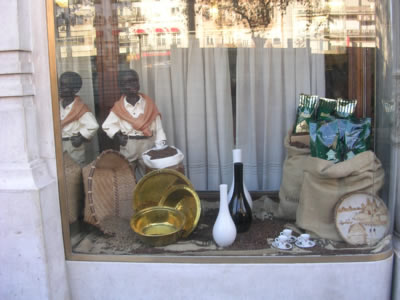
Versailles 3 window dressing

Window dressing Pastelaria Versailles representing Portugal and former colonies  🙁     🙁

Instagram


From Rossio train-metro Station Lisbon to Pena Palace in Sintra/ Queluz Palace

Rossio train- and metro station (Estação do Rossio) is incredibly unique, located between Rossio and Restauradores in Lisbon.  The beautiful neo-manueline architecture was designed by architect José Luís Monteiro, completed in 1887.

Lisbon Rossio Station at night

Rossio train- and metro station Lisbon

The Neo-Manueline façade dominates the northwest side of the square and is a Romantic recreation of the exuberant Manueline style, typical of early 16th century in Portugal. Its most interesting features are the two intertwined horseshoe portals at the entrance, the watch in a small turret and the abundant sculptural decoration.

Rossio station, Largo do Duque de Cadaval, Lisbon World Cup Football 2010

Near the station you can have a drink at Largo do Duque de Cadaval, which is a really nice square full of open-air cafés.

Lisbon Rossio Station inside Train

Rossio train- and metro station Lisbon

Inside the station, the platform is connected by ramps to the façade level and is covered by a cast-iron structure.  The station is an important example of Romantic (façade) and Cast-iron (platform cover) architecture in Portugal.

Lisbon Station Rossio inside

Rossio train- and metro station Lisbon

Downstairs is Rossio’s metro station (green line). Metropolitano de Lisboa, Lisbon Metro official page (also in English), you’ll find a map with a network diagram and explanation of the metro lines.

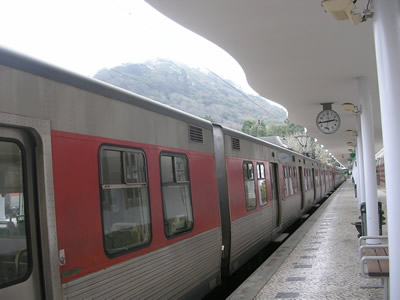
Lisbon Rossio Station train to Sintra

Rossio train- and metro station Lisbon

Visit Sintra and Queluz, easy to reach by train from Rossio train- and metro station

The wonderful Rossio train- and metro station is a must see if you visit Lisbon.

If you like to visit Sintra, the famous World Heritage town and the Pena National Palace just outside Lisbon or the National Palace in Queluz, you can take the train here for a cheap price.

From Rossio Station to Sintra station

Sintra Station.

Trains to Sintra (and vice versa) leave every 15 minutes, a 45 minute trip. The access of trains to the Rossio station is made by a tunnel more than 2600 m long. This tunnel was escavated under the city and is considered one of the most important works of engineering of Portugal in the XIX century.

From Rossio Station Lisbon to Sintra station

Sintra Station

Besides: if you prefer to go by car to visit Sintra, the IC19 superhighway takes you directly from the city and it comes to an end at Sintra . Parking is possible, 10 minutes walk from the center of Sintra.

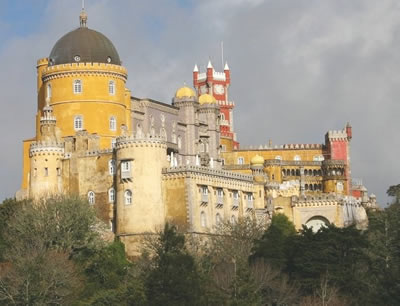
Sintra Palacio da Pena

The Pena National Palace, built by a noble man for his Portuguese wife

A one-day ticket (around 7 Euro) can be bought at Sintra station and will allow you to get on and off at all the main attractions, like f.i. Pena Palace and The Moorish Castle.

Sintra National Pena Palace July 2011. Picture: Maurits Benschop

Village Underground Lisbon: creative community & Polly Robbins

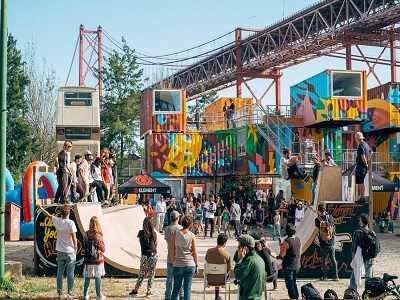
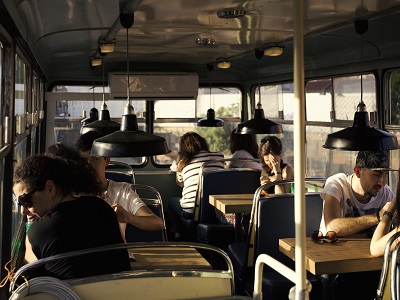
How about a delicious dinner in a dubble-decker retro bus beneath the 25th April Bridge? A great experience, but Village Underground in Lisbon offers much more! It’s a coworking center for creative- and event industries located at the Santo Amaro station in Alcântara, next to the Carris vintage trams & buses Museum.

village-underground-lisbon-1

Village Underground Lisbon in summertime

Lisbon: the hippest place to be

For years, Lisbon was somewhat off the beaten track for young travellers, or millennials seeking a new home. The Portuguese capital crumbled romantically while London, Paris, Barcelona and more recently Berlin enjoyed the cultural status. Yet in the last 10 years the city has seen an explosion in culture, tourism and entrepreneurialism, and is now surpassing its European rivals as the hippest place to be!

village-underground-polly-robbins-november-2016-3

The Village Underground in Lisbon & Polly Robbins, November 2016

Who are you and how have you found yourself at Village Underground?

Polly Robbins: “I come from London. I love London, but the pace of life is crazy and I felt like spending some time in another European capital. Lisbon particularly attracted me because I’m interested in urban cultural development. I studied sociology, looking at how art movements develop in cities, and for the last 3 years I’ve been running a business in London that takes over empty spaces and makes them into venues for culture”.

village-underground-lisbon-dubble-decker-buses-and-containers-3

Village Underground Lisbon

Ex-pats & tourists in Lisbon

Polly Robbins: ‘I heard about Village Underground Lisbon from a contact who knows the London branch. So I contacted Mariana (Director VU), got some funding from the EU Erasmus Young Entrepreneurs scheme, and here I am. At Village Underground I am developing marketing and communications, specifically for the ex-pat and tourists in Lisbon. I’m also developing ways for the co-working community to share their skills and feel more part of a community”.

village-underground-lisbon-live-music

Village Underground Lisbon

So what is Village Underground?

Polly:” It’s a project that began in London in 2009 when a group of friends had a crazy idea to hoist to some decommissioned tube train carriages onto the roof of a building and create a co-working space in Shoreditch. Mariana Duarte Silva, who is the Director of Village Underground Lisbon, was working in London when she came across the space and took a desk to set up her own music agency. She fell in love with it and brought the concept back to Lisbon, where the doors opened in 2012″.

village-underground-lisbon-dubble-decker-bus

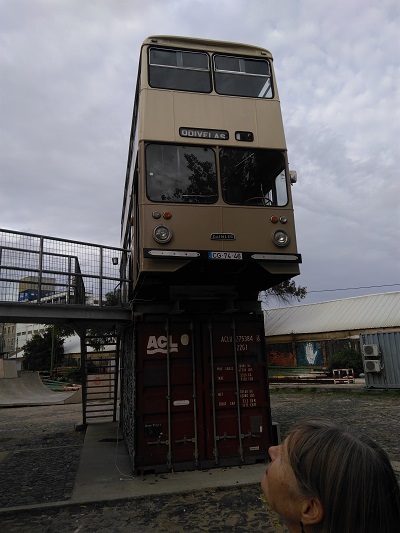
Village Underground Lisbon & one of the retro dubble-decker buses

Creative community

Polly: “Village Underground Lisboa sits at the end of the municipal tram yard, beneath the iconic Ponte 25 de Abril. It consists of 14 shipping containers which act as a co-working space for the creative industries. There are about 35 people working here, in web design, graphic design, video making, branding, theatre and music”.

village-underground-lisbon-dubble-decker-bus-december-16-2

Village Underground Lisbon & one of the dubble-decker retro buses, November 2016

Cafe/restaurant & events from January 2017

“There are 2 converted retro buses, one is a café, open to the public every lunchtime and for dinner on Fridays and Saturdays. And in addition, there’s a warehouse space used for events and exhibitions, a recording studio, a large space outside used for events and a skate ramp.

There is a great range of events going on at Village Underground, from parties with electronic and live music, to markets, to exhibitions and performance. Starting January 2017 these will be hosted every Friday and Saturday”.

village-underground-lisbon-dinner-dubble-decker-bus-december-2nd-16

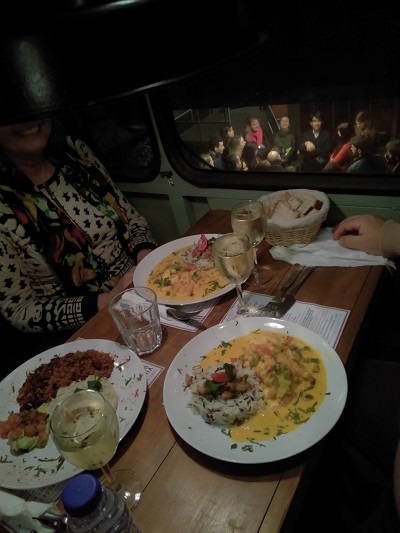
Village Underground Lisbon & delicious dinner in a dubble-decker retro bus 🙂

Tasty food & affordable prices

Our dinner: tapas; Peixe (fish): Moqueca de camarão com arroz selvagem (shrimp Moqueca with wild rice)Chili com carne com basmati de coentros (Cili con carne, basmati rice with coriander): wine , water, sobremesa (dessert). Bill: 77 euro (3 persons). A vegetarian dish is also available.

village-underground-lisbon-dinner-dubble-decker-bus-december-16-view-window

Village Underground Lisbon & a group of visitors

Why should people visit Village Underground?

Polly: “It’s a really interesting space to be in physically, particularly if you like to be surrounded by cool architecture, street art and disused trams and buses! The café serves incredibly tasty food and the team working there is lovely. The people who gravitate towards Village Underground are an amazing bunch – I’ve been warmly welcomed! They come from all walks of life and you don’t have to be chatting too long before you discover that they’re involved in all sorts of weird and wonderful projects”

Village Underground Lisbon delicious lunch January 2017

Village Underground Lisbon & delicious lunch in a dubble-decker retro bus

Muito obrigada! Great food & great service 🙂 🙂

Mafalda Rodrigues, Tania Pines & Mafalda Pais

Village Underground Lisbon delicious lunch January 2017 2

Village Underground Lisbon & delicious lunch in a dubble-decker retro bus

Vegetarian dish, sandwich with salmon, sweet potatoes, 2 glasses of wine, small bottle of water & coffee: 18 euro


Village Underground Lisbon

Both the interior and the terrace have free Wi-Fi. There is free parkingThe only entrance to the Cafeteria is the main gate of the Carris Museum, located at Rua Primeiro de Maio, 103.

Metro Station Lisbon area Baixa-Chiado: free escalators & avoid hundreds of stairs

Metro Station Baixa-Chiado is a unique and impressive subway, opened in 1998, created by architect Álvaro Siza Vieira.

Metro Station Baixa Chiado Rua do Crucifixo entrance

Metro station entrance Baixo-Chiado Lisbon, Rua do Crucifixo.

Metro station Baixo-Chiado is one of the most important transfer stations, and one of the most crowded of Lisbon.

Metro Station Baixa Chiado entrance tiles

Metro station Baixo-Chiado Lisbon

Beautiful white tiles are covering the station walls.

This metro station has an entrance in the Baixa city center as well as one at a much higher level in the Chiado district, linked by a series of escalators.

Metro Station Baixa Chiado escalator

Metro station Baixo-Chiado Lisbon

Instead of walking (hundreds of stairs from Baixa to Chiado), an alternative and free way is to use the escalators inside the metro station, reaching the Chiado district ca. 5 minutes later.

Of course, walking is also interesting…..  🙂

Metro Station Baixa Chiado metro lines

Metro station Baixo-Chiado Lisbon

The Lisbon Metro operates from 6h30 to 01.00. Tickets: cheap 🙂

Metropolitano de Lisboa : Lisbon Metro official page.

Metro Linha Azul (blue line) Metro Linha Amarela (yellow line) Metro Linha Verde (green line) and Metro Linha Vermelha (red line).

Also including a special section on subway art of Lisbon Metro stations with stunning examples of contemporary azulejos (Portugues tiles).

Metro Station Baixa Chiado escalators up to Chiado

Metro Station Baixa-Chiado

Escalators up to the Chiado district.

Metro station Largo do Chiado Pessoa

Cafe ‘A Brasileira’, Largo do Chiado, near the entrance of the Chiado metro station.

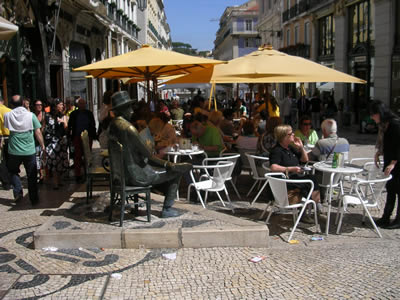
The bronze sculpture of Portugal’s famous writer and poet Fernando Pessoa (1888-1935),  is extremely popular. More…….

Restaurant Bairro do Avillez Lisbon: suprising seating areas & tasty dishes

José Avillez’ new restaurant in Lisbon, Bairro do Avillez (Avillez’ ‘neighborhood’) is located in Chiado. A spacious and spectacular location, with 2 separated seating areas.

restaurant-bairro-do-avillez-lisbon-window-erika-pateo-2016

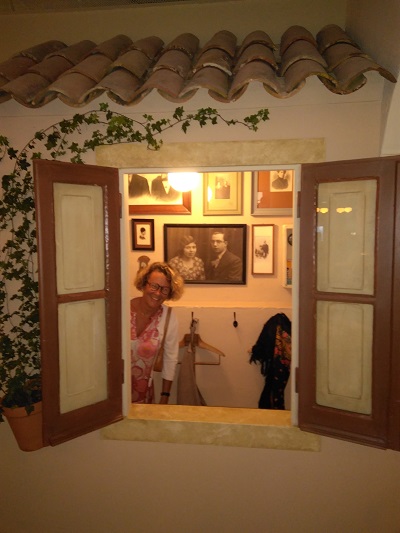
Patio Restaurant Bairro do Avillez decorated as a traditional downtown Lisbon neighborhood & ‘neighbor’ Erika Reusens 😉

 2 Michelin stars

José Avillez is one of the most renowned chefs in Portugal. He currently owns six restaurants, five in Lisbon and one in Oporto. His cooking style, contemporary and of Portuguese inspiration, has earned him a Michelin star in 2012 (restaurant Belcanto in Lisbon) and, in 2014, it received a second one, making it the first restaurant in Lisbon to have this honour).

restaurant-bairro-do-avillez-lisbon-wonderful-pateo-typical-lisbon-neighborhood

Restaurant Bairro do Avillez Lisbon & wonderful decorated spacious patio

Patio restaurant representing a traditional Lisbon neighborhood

The Patio restaurant is really surprising: a huge open kitchen and a wonderful creative decoration. A large skylight lets in plenty of natural light. There are different doors, typical Portuguese tiles and closed- or open windows to give you the idea of being in a traditional downtown Lisbon neighborhood, where people often hanging out of their windows. YouTube

restaurant-bairro-do-avillez-lisbon-august-16-dinner

Restaurant Bairro do Avillez Lisbon & our dinner end of August 2016

Our dinner: 2 couvert 7.00, Bife de Lombo (tenderloin steak) 18.00; Legumes Salteados (sautéed vegetables) 4.00; French fries € 3.00; 1 Bife Tártaro (tartar steak) € 14.00; água Vitalis (bottle of water) 3.00; Wine: Casa Passarella (bottle of white wine) 16.00; (by the glass 4.00). Desert: Avelã (hazelnut cream); Mil Folhas Pastel de Nata 6.00 (litt. ‘thousand sheets’ Pastel de Nata (famous Portuguese egg tart pastry) 6.00.

Bill for 2 persons: 91.00.

restaurant-bairro-do-avillez-lisbon-august-16-dinner-dessert-pastel-de-nata-2

Restaurant Bairro do Avillez Lisbon & delicious desserts

Bairro Avillez patio restaurant: tasty dishes & great ambiance

Once we were seated it took quite some time before a waiter came to our table. This restaurant just opened its doors, it’s understandable. The food was tasty, rather expensive in Lisbon (ca. € 45 p.p.), but the great ambiance was worth it!  🙂

restaurant-bairro-do-avillez-lisbon-entrance-taberne-aug-16

Restaurant Bairro do Avillez Lisbon & Taberna (Tavern)

Three concepts in one space: restaurant, tavern & grocery/gift store

Once you enter number 18 of Rua Nova da Trindade there’s the Taberna (tavern), a good idea to enjoy lunch, dinner or an ‘in-between’ snack in the afternoon. In de Tavern it is not possible to make reservations.

Mercearia (grocery & gift store)

Not just cheeses, sausages and canned goods but also kitchen accessories, books and aprons. More…... (website José Avillez). The charcuterie specialties rely on the advice of the illustrious shop in Lisbon:  Manteigaria Silva’.

restaurant-bairro-do-avillez-lisbon-august-16-mercearia-grocery-store

Restaurant ‘Bairro’ do Avillez Lisbon & the grocery store’s creative decoration

Bairro do Avillez, Rua Nova da Trindade 18. Lisbon

Opening hours: Taberna (tavern) & Mercearia (grocery/gift shop): daily from 12:00 pm till midnight.

Patio restaurant: daily, from 12:00 pm to 15:00 pm and from 19:00 pm till midnight. Closed on public holidays, December 24 (dinner) and 25. Phone: (351) 215 830 290 (reservations). Facebook

restaurant-bairro-do-avillez-lisbon-wonderful-patio-erika-reusens

Patio Restaurant Bairro do Avillez Lisbon, Erika Reusens & the friendly waitress